Dog Dental Care: Preventing Periodontal Disease at Home
A practical, evidence-informed guide to dog dental care — what matters, what works, common mistakes, and when to consult a professional.
For informational purposes only. This article is educational and is not a substitute for professional medical advice, diagnosis, or treatment. Always consult a qualified healthcare provider about anything affecting your health. Read full disclaimer.
Dog Dental Care: Preventing Periodontal Disease at Home
(Not medical or veterinary advice — consult a qualified clinician or veterinarian for personal guidance.)
Introduction
Dental health in dogs is a critical component of their overall well-being, often underestimated by pet guardians. Just like humans, dogs can suffer from a range of oral health issues, with periodontal disease being one of the most common chronic conditions affecting adult canines. This progressive inflammatory condition affects the structures supporting the teeth, including the gums, periodontal ligament, and alveolar bone. If left unaddressed, periodontal disease can lead to pain, tooth loss, and potentially systemic health problems as bacteria from the mouth can enter the bloodstream. Proactive home dental care is a cornerstone in preventing the onset and progression of this prevalent disease, contributing significantly to a dog's comfort and longevity.
Why this matters
Periodontal disease in dogs is not merely a cosmetic issue; it's a serious health concern that can profoundly impact a dog's quality of life. The initial stages often manifest as gingivitis—inflammation of the gums—which can be reversible with proper care. However, without intervention, it can advance to periodontitis, leading to irreversible damage.
The consequences of advanced periodontal disease include:
- Chronic Pain: Dogs often suffer in silence. Pain from inflamed gums, exposed tooth roots, and infected teeth can make eating difficult and affect their general demeanor.
- Tooth Loss: As the bone and supporting structures are destroyed, teeth become loose and eventually fall out or require extraction.
- Systemic Health Issues: Bacteria from the mouth can travel through the bloodstream to other organs, potentially contributing to conditions affecting the heart, kidneys, and liver.
- Halitosis (Bad Breath): While often considered an aesthetic issue, bad breath is a common sign of bacterial overgrowth and infection in the mouth, indicating underlying problems.
- Compromised Immune System: Persistent infection in the mouth can place a continuous strain on a dog's immune system.
Recognizing the significance of these potential outcomes highlights why consistent and effective home dental care, coupled with regular veterinary check-ups, is essential. It's an investment in a dog's long-term health and happiness, helping to prevent unnecessary suffering and costly professional interventions down the line.
Key principles (evidence-informed)
Effective dog dental care relies on a multi-faceted approach, rooted in principles supported by veterinary science. The goal is to minimize plaque accumulation and tartar formation, which are the primary culprits in periodontal disease.
- Plaque Control: Plaque is a sticky film of bacteria, food particles, and saliva that constantly forms on tooth surfaces. If not removed, it hardens into tartar (calculus). Daily removal of plaque is the most critical aspect of home dental care.
- Tartar Prevention: Once plaque hardens into tartar, it creates a rough surface that attracts more plaque and bacteria. Tartar cannot be removed by brushing alone; it requires professional scaling and polishing under anesthesia. Therefore, preventing tartar formation through consistent plaque control is paramount.
- Mechanical Action: The most effective way to remove plaque is through mechanical abrasion. Brushing with a pet-specific toothbrush and toothpaste provides this action.
- Dietary Influence: While not a substitute for brushing, certain diets designed for dental health can help reduce plaque and tartar. These diets often have a specific kibble size, shape, and texture that provides a gentle abrasive action on the tooth surface as the dog chews. Some may also contain ingredients that chemically reduce plaque or tartar.
- Chewing Activities: Providing appropriate dental chews or toys can also contribute to mechanical plaque removal, particularly on the chewing surfaces of the teeth. These should be safe, digestible, and specifically designed for dental benefits. Hard items like bones or antlers can cause fractured teeth and should be avoided.
- Regular Veterinary Assessment: Even with diligent home care, regular veterinary dental check-ups are essential. A veterinarian can assess the overall oral health, identify early signs of periodontal disease, and recommend professional cleaning when necessary. The World Small Animal Veterinary Association (WSAVA) and the American Veterinary Medical Association (AVMA) emphasize that routine professional dental cleaning under anesthesia is often necessary to address plaque and tartar below the gumline, which home care cannot reach.
By combining these principles, guardians can create a comprehensive dental health routine that significantly reduces the risk of periodontal disease and supports their dog's overall health.
Practical daily habits
Establishing a consistent daily routine for dog dental care is crucial for preventing periodontal disease. Patience, positive reinforcement, and gradual introduction are key to success.
Tooth Brushing
This is considered the gold standard for home dental care.
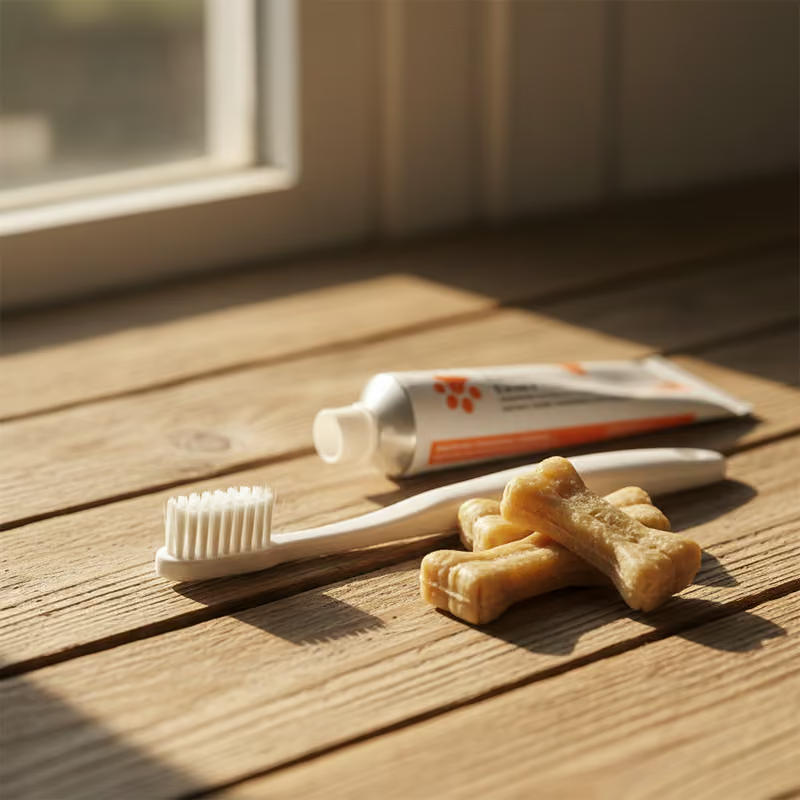
- Gather Supplies: Use a toothbrush designed for dogs (finger brush, long-handled pet brush, or even a soft-bristled human toothbrush for smaller dogs) and pet-specific toothpaste. Never use human toothpaste, as it contains ingredients like fluoride and xylitol that are toxic to dogs.
- Introduction (Gradual):
- Start by letting your dog lick the pet toothpaste off your finger.
- Once they accept the taste, gently rub a small amount of toothpaste on their gums and teeth with your finger.
- Introduce the brush by letting them lick toothpaste off it.
- Then, gently lift their lip and try to brush just a few teeth, focusing on the outside surfaces (the side facing the cheek).
- Technique: Brush in small circles, focusing on the gumline, where plaque tends to accumulate most. Aim for at least 30 seconds per side, ideally two minutes total. Even brushing the outside surfaces of the teeth is beneficial, as these are most prone to plaque and tartar buildup.
- Frequency: Ideally, brush daily. If daily is not feasible, aim for at least three times a week. Consistency is more important than perfection.
- Positive Reinforcement: Always praise your dog and offer a treat after brushing to create a positive association.
Dental Chews and Treats
These can supplement brushing but are not a substitute.
- Selection: Choose chews that are specifically designed to reduce plaque and tartar and are approved by reputable veterinary dental organizations (e.g., Veterinary Oral Health Council - VOHC). Look for products with appropriate size and texture for your dog.
- Safety: Ensure chews are digestible and do not pose a choking hazard or risk of tooth fracture. Avoid overly hard items like bones, antlers, or ice cubes.
- Moderation: Dental treats are often caloric, so factor them into your dog's daily food intake to prevent weight gain.
Dental Diets
Some commercial dog foods are formulated to promote oral health.
- Mechanism: These diets often have a unique kibble design that mechanically scrapes the tooth surface during chewing, or they may contain ingredients that chemically interfere with plaque and tartar formation.
- Consultation: Discuss dental diet options with your veterinarian, especially if your dog has specific dietary needs or health conditions.
Oral Rinses and Water Additives
These can be used as an additional measure, but again, they do not replace brushing.
- Function: Oral rinses and water additives typically contain antibacterial agents or ingredients that reduce plaque adhesion.
- Application: Follow product instructions carefully. Water additives are simply added to your dog's drinking water.
- Effectiveness: Their effectiveness can vary, and they are generally considered supportive measures rather than primary preventative tools.
By integrating these practices into your dog's daily routine, you can significantly contribute to their oral hygiene and overall health. Remember, patience and positive reinforcement are your greatest tools in making dental care a comfortable and routine part of your dog's life.
Common mistakes to avoid
Even with good intentions, pet guardians can inadvertently make mistakes that hinder effective dental care or even cause harm. Being aware of these pitfalls is crucial.
- Using Human Toothpaste: This is a significant error. Human toothpaste often contains fluoride, which is toxic if ingested by dogs, and xylitol, an artificial sweetener that is highly poisonous to canines and can cause a rapid drop in blood sugar and liver failure. Always use toothpaste specifically formulated for dogs, which is safe to swallow.
- Ignoring Bad Breath: Many guardians dismiss "doggy breath" as normal. In most cases, halitosis is a strong indicator of bacterial overgrowth and underlying oral disease, such as periodontal disease or tooth decay. It's a sign that professional attention is likely needed.
- Relying Solely on Dental Chews/Treats: While beneficial, dental chews and treats are not a complete substitute for regular tooth brushing. Their effectiveness is often limited to certain tooth surfaces, and they do not adequately remove plaque from the crucial gumline area. They should be considered supplemental.
- Using Hard Objects for Chewing: Providing bones (cooked or raw), antlers, hooves, or very hard plastic toys can lead to fractured teeth. Fractured teeth are extremely painful and often require costly root canals or extractions. Always choose chews that are appropriately flexible and safe.
- Starting Too Late: Introducing dental care early in a dog's life (as a puppy) makes it much easier for them to accept brushing as a routine. Waiting until a dog is older and already experiencing dental issues can make the process more challenging and less effective.
- Inconsistency: Sporadic brushing or dental care attempts are less effective than a consistent routine. Plaque starts to accumulate within hours, and calcifies into tartar within days. Daily or at least every-other-day brushing is needed to significantly impact plaque control.
- Skipping Veterinary Dental Check-ups: Home care is foundational, but it cannot address issues below the gumline or remove established tartar. Regular veterinary dental examinations and professional cleanings under anesthesia, as recommended by organizations like the AVMA and WSAVA, are essential for comprehensive oral health.
- Lack of Patience and Positive Reinforcement: Forcing a dog into dental care can create a negative association, making future attempts difficult or impossible. Gradual introduction, short sessions, praise, and treats are vital for making the experience positive for your dog.
- Not Addressing Underlying Pain: Dogs are masters at hiding pain. If a dog suddenly resists dental care, eats differently, or shows changes in behavior, it could indicate oral pain or an underlying dental problem that requires immediate veterinary attention.
Avoiding these common mistakes will significantly enhance the effectiveness of your home dental care efforts and contribute to your dog's overall oral health.
When to see a professional
While diligent home dental care is crucial, there are specific signs and situations that warrant a visit to a veterinary professional. Recognizing these indicators and seeking timely veterinary attention can prevent progression of disease, alleviate pain, and protect your dog's overall health.
You should consult your veterinarian if you observe any of the following:
- Persistent Bad Breath (Halitosis): As mentioned, this is often the most common and earliest sign of underlying oral disease.
- Red, Swollen, or Bleeding Gums: These are classic symptoms of gingivitis, which, if left untreated, can progress to more severe periodontal disease. You might notice blood on chew toys or in their water bowl.
- Difficulty Eating or Chewing: This could manifest as reluctance to eat hard food, chewing on one side of the mouth, dropping food, or showing signs of pain when eating.
- Pawing at the Mouth or Rubbing Face: These behaviors can indicate oral discomfort or pain.
- Excessive Drooling: While some drooling is normal for certain breeds, an increase in drooling, especially if it's thick or blood-tinged, can be a sign of an oral problem.
- Loose or Missing Teeth: These are clear indicators of advanced periodontal disease or trauma.
- Visible Tartar Buildup: If you can see hard, brownish-yellow deposits on your dog's teeth, especially along the gumline, professional cleaning is needed as home brushing cannot remove established tartar.
- Changes in Behavior: Lethargy, irritability, or reluctance to be touched around the head can sometimes be subtle signs of oral pain.
- Lumps or Bumps in the Mouth: Any abnormal growths on the gums, tongue, or inside the cheeks should be evaluated by a veterinarian immediately, as they could indicate benign or malignant tumors.
- Any Signs of Pain or Discomfort: If you suspect your dog is in oral pain for any reason, a veterinary examination is warranted.
Furthermore, even in the absence of obvious symptoms, regular veterinary dental check-ups are recommended, typically annually, as part of your dog's routine wellness examinations. Your veterinarian can assess the overall oral health, identify subtle issues, and recommend a professional dental cleaning under anesthesia when necessary. The American Veterinary Dental College (AVDC) and the American Animal Hospital Association (AAHA) strongly advocate for regular professional dental care as a vital part of preventative health.
Frequently asked questions
What causes bad breath in dogs?
Bad breath (halitosis) in dogs is most commonly caused by bacteria accumulating in the mouth, leading to plaque, tartar buildup, and periodontal disease. These bacteria produce volatile sulfur compounds that cause the foul odor. Less commonly, bad breath can indicate underlying systemic health issues like kidney disease, liver disease, or diabetes, so it warrants veterinary attention if persistent.
How often should I brush my dog's teeth?
Ideally, you should brush your dog's teeth daily. This frequency is most effective at removing plaque before it hardens into tartar. If daily brushing is not feasible, aiming for at least three times a week can still significantly contribute to plaque control and better oral health. Consistency is key.
Is it too late to start brushing my older dog's teeth?
It's never too late to start a dental care routine for your dog, regardless of age. While it might take more patience to introduce brushing to an older dog, the benefits of improved oral hygiene are significant. If your older dog already has significant plaque and tartar, or signs of periodontal disease, a professional veterinary dental cleaning will likely be necessary before you can effectively implement home care.
What kind of toothpaste should I use for my dog?
You should always use toothpaste specifically formulated for dogs. These toothpastes are safe for ingestion and come in flavors dogs often enjoy. Never use human toothpaste, as it contains ingredients like fluoride and xylitol, which are toxic to dogs if swallowed.
Are dental chews and water additives effective for preventing periodontal disease?
Dental chews and water additives can be beneficial as part of a comprehensive dental care routine, but they are not a substitute for regular tooth brushing. Certain products, particularly those recognized by organizations like the Veterinary Oral Health Council (VOHC), have demonstrated efficacy in reducing plaque and tartar. However, they are best used as supplemental tools to enhance mechanical cleaning or inhibit bacterial growth, rather than as standalone solutions.
Key takeaways
- Dental health is vital for overall health: Periodontal disease is common and can lead to pain, tooth loss, and systemic health issues.
- Daily brushing is the gold standard: Regular mechanical removal of plaque is the most effective home care strategy. Use pet-specific toothpaste and brush.
- Be consistent and positive: Establish a routine early, use positive reinforcement, and be patient to make dental care a positive experience.
- Avoid common pitfalls: Never use human toothpaste or excessively hard chews.
- Supplements, not substitutes: Dental diets, chews, rinses, and water additives can complement brushing but cannot replace it.
- Professional care is essential: Regular veterinary dental check-ups and professional cleanings under anesthesia are crucial for addressing issues below the gumline and removing established tartar.
- Watch for warning signs: Bad breath, red gums, difficulty eating, or pawing at the mouth all warrant a veterinary visit.
Related reading
Keep exploring this topic with our related, evidence-reviewed guides:
- Dog Ear and Eye Care: Preventing Infections at Home — A practical, evidence-informed guide to dog ear infection — what matters, what works, common mistakes, and when to consult a profe…
- Cat Dental Disease: Signs, Prevention, and Professional Cleaning — A practical, evidence-informed guide to cat dental disease — what matters, what works, common mistakes, and when to consult a prof…
- Rabbit Health Care: Diet, Dental Growth, and Housing — A practical, evidence-informed guide to rabbit health — what matters, what works, common mistakes, and when to consult a professio…
- Cat Hydration and Kidney Health: Preventing Urinary Problems — A practical, evidence-informed guide to cat hydration — what matters, what works, common mistakes, and when to consult a professio…
- Horse Health Essentials: Hooves, Teeth, Colic, and Conditioning — A practical, evidence-informed guide to horse health — what matters, what works, common mistakes, and when to consult a profession…
- Senior Dog Care: Arthritis, Cognition, and Comfort at Home — A practical, evidence-informed guide to senior dog care — what matters, what works, common mistakes, and when to consult a profess…
Sources
- American Veterinary Medical Association (AVMA)
- World Small Animal Veterinary Association (WSAVA)
- American Veterinary Dental College (AVDC)
- Veterinary Oral Health Council (VOHC)
- American Animal Hospital Association (AAHA)
- National Institutes of Health (NIH) - General principles of oral health and bacterial role.
Sources
Evidence & citations
- Every claim in this animal health guide is backed by primary data — browse the zoonotic and one-health statistics in our sourced statistics library.
- Writing about this topic? Researchers, journalists and educators can cite our animal health guidance with ready-made APA, MLA and Chicago references.
My notes on this one
The short version of 12 minutes of reading — what stuck with me while writing “Dog Dental Care: Preventing Periodontal Disease at Home”, what the sources back up, and what I'd actually do about it.
What I'd take away
01 · Why this matters
The consequences of advanced periodontal disease include: Recognizing the significance of these potential outcomes highlights why consistent and effective home dental care…
02 · Key principles
By combining these principles, guardians can create a comprehensive dental health routine that significantly reduces the risk of periodontal disease and supports their dog's overall health.
03 · Practical daily habits
Establishing a consistent daily routine for dog dental care is crucial for preventing periodontal disease.
04 · Tooth Brushing
Frequency: Ideally, brush daily. If daily is not feasible, aim for at least three times a week. Consistency is more important than perfection.
05 · Dental Chews and Treats
Safety: Ensure chews are digestible and do not pose a choking hazard or risk of tooth fracture. Avoid overly hard items like bones, antlers, or ice cubes.
What the sources I read actually say
Certain products, particularly those recognized by organizations like the Veterinary Oral Health Council (VOHC), have demonstrated efficacy in reducing plaque and tartar.
World Health OrganizationJust like humans, dogs can suffer from a range of oral health issues, with periodontal disease being one of the most common chronic conditions affecting adult canines.
Centers for Disease Control and PreventionNational Institutes of Health (NIH) - General principles of oral health and bacterial role.
National Institutes of Health
If you only do one thing this week
- Start by letting your dog lick the pet toothpaste off your finger.
Pick the one that fits your week. None of this replaces advice from a clinician who can actually examine you.
Questions I kept coming back to
What causes bad breath in dogs?+
Bad breath (halitosis) in dogs is most commonly caused by bacteria accumulating in the mouth, leading to plaque, tartar buildup, and periodontal disease. These bacteria produce volatile sulfur compounds that cause the foul odor. Less commonly, bad breath can indicate underlying systemic health issues like kidney disease, liver disease, or diabetes, so it warrants veterinary attention if persistent.
How often should I brush my dog's teeth?+
Ideally, you should brush your dog's teeth daily. This frequency is most effective at removing plaque before it hardens into tartar. If daily brushing is not feasible, aiming for at least three times a week can still significantly contribute to plaque control and better oral health. Consistency is key.
Is it too late to start brushing my older dog's teeth?+
It's never too late to start a dental care routine for your dog, regardless of age. While it might take more patience to introduce brushing to an older dog, the benefits of improved oral hygiene are significant. If your older dog already has significant plaque and tartar, or signs of periodontal disease, a professional veterinary dental cleaning will likely be necessary before you can effectively implement home care.
What kind of toothpaste should I use for my dog?+
You should always use toothpaste specifically formulated for dogs. These toothpastes are safe for ingestion and come in flavors dogs often enjoy. Never use human toothpaste, as it contains ingredients like fluoride and xylitol, which are toxic to dogs if swallowed.
Are dental chews and water additives effective for preventing periodontal disease?+
Dental chews and water additives can be beneficial as part of a comprehensive dental care routine, but they are not a substitute for regular tooth brushing. Certain products, particularly those recognized by organizations like the Veterinary Oral Health Council (VOHC), have demonstrated efficacy in reducing plaque and tartar. However…
Was this article helpful?
Be the first to rate this article.
Written by
FaizRuh
I write Health Hub Pro on my own — no clinical licence, no anonymous review panel. Just the published guidance, read carefully and explained plainly.
More about me →How this page was checked
Every claim above is checked against the sources listed at the bottom of this article — WHO, CDC, NIH, NHS, Cochrane and major clinical guidelines. Drafting is AI-assisted; the editing, fact-checking and final wording are mine. It's information, not medical advice. Spotted an error? Tell me and I'll fix it.
Last checked on