Indoor Cat Enrichment: Preventing Boredom, Stress, and
A practical, evidence-informed guide to indoor cat enrichment — what matters, what works, common mistakes, and when to consult a professional.
For informational purposes only. This article is educational and is not a substitute for professional medical advice, diagnosis, or treatment. Always consult a qualified healthcare provider about anything affecting your health. Read full disclaimer.
Indoor Cat Enrichment: Preventing Boredom, Stress, and Overeating
(Not medical or veterinary advice — consult a qualified clinician or veterinarian for personal guidance.)
Introduction
The domestic cat, while a cherished companion in many households, retains many instincts from its wild ancestors. For indoor cats, particularly, the environment can sometimes fall short of providing the necessary stimulation to fulfill these innate needs. An enriched environment goes beyond basic provisions like food, water, and litter. It involves providing opportunities for physical activity, mental stimulation, social interaction (with humans or other compatible animals), and an outlet for natural behaviors such as hunting, climbing, and exploring.
Enrichment is crucial for the overall well-being of an indoor cat. A lack of appropriate stimulation can lead to a range of behavioral and health issues, impacting both the cat's quality of life and the human-animal bond. This article will explore the importance of indoor cat enrichment, outlining key principles, practical daily habits, common pitfalls, and when professional intervention might be necessary to ensure our feline friends lead happy, healthy, and fulfilling lives indoors.
Why this matters
The indoor environment, while offering protection from outdoor hazards like traffic, predators, and infectious diseases, can inadvertently become monotonous without careful consideration. Cats are naturally curious and predatory animals. In the wild, they would spend significant portions of their day hunting, exploring territories, and interacting with a complex landscape. When these opportunities are absent, the consequences can be detrimental.
Boredom: A primary concern for indoor cats. Without outlets for their energy and natural behaviors, cats can become bored. This boredom can manifest in various ways, often leading to undesirable behaviors. Cats might oversleep, become lethargic, or, conversely, become destructive, scratching furniture, or displaying excessive attention-seeking behaviors like constant vocalization.
Stress and Anxiety: A monotonous environment can be a significant source of stress for cats. Lacking control over their environment or an inability to express natural behaviors can lead to chronic stress. Stress can weaken the immune system, making cats more susceptible to illness. Behavioral signs of stress can include excessive grooming (leading to hair loss or skin irritation), inappropriate urination or defecation outside the litter box, aggression towards humans or other pets, hiding excessively, or a change in appetite.
Overeating and Obesity: One of the most common health problems associated with a lack of enrichment in indoor cats is obesity. If a cat is bored and lacks physical activity, food can become its primary source of stimulation. Cats may eat out of boredom rather than true hunger. Additionally, if food is consistently presented in an easy-to-access bowl, it removes the "work" associated with hunting for food, which is a natural feline behavior. This combination of reduced activity and readily available food can quickly lead to weight gain, increasing the risk of diabetes, arthritis, heart disease, and other serious health conditions.
Behavioral Problems: Many behavioral issues reported by cat guardians, such as aggression, excessive vocalization, inter-cat conflict, and inappropriate elimination, can often be traced back to an impoverished environment. Providing appropriate enrichment can help address the root cause of these problems, leading to a happier cat and a more harmonious household.
The well-being of an indoor cat is directly linked to the quality of its environment. By understanding and implementing effective enrichment strategies, guardians can proactively prevent many common issues and foster a healthy, thriving companion.
Key principles (evidence-informed)
Effective indoor cat enrichment is built upon several fundamental principles derived from feline ethology and animal welfare science. These principles aim to mimic the challenges and opportunities a cat would naturally encounter in its wild habitat.
1. Provide opportunities for predatory behavior: Cats are obligate carnivores and natural hunters. Their brains are wired for the hunt. * Interactive Play: This is paramount. Toys that mimic prey (feathers, mice, lasers) should be used in short, frequent sessions. The play session should always end with the cat "catching" the prey to satisfy the hunting sequence and prevent frustration. Wand toys are excellent for this. * Food Puzzles/Foraging Toys: These require the cat to "work" for their food, slowing down consumption and providing mental stimulation. This taps into their natural foraging instincts.
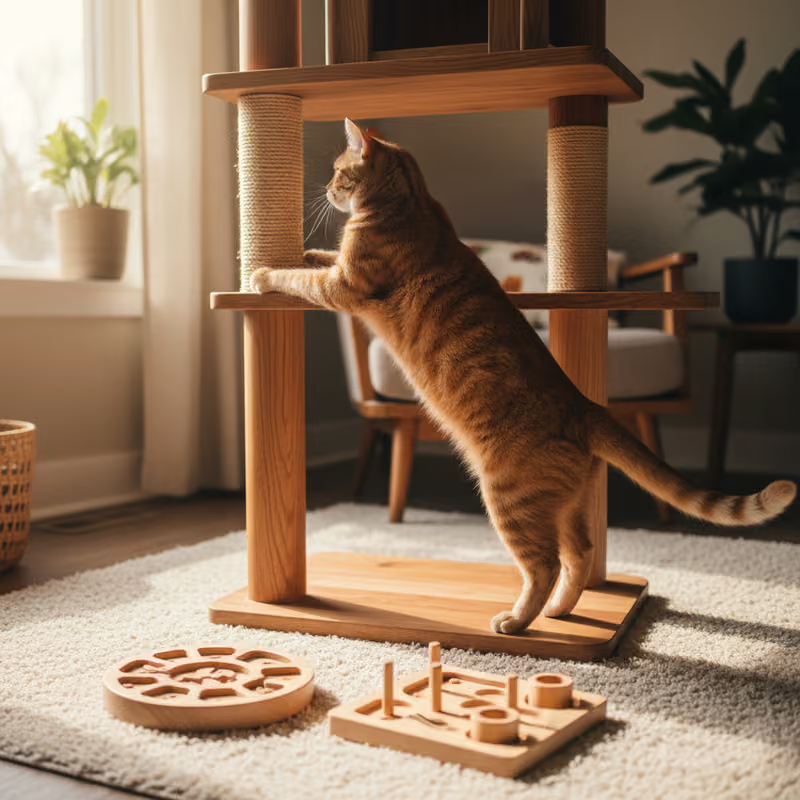
2. Create a complex, three-dimensional environment: Cats instinctively seek out high vantage points and hidden spaces. * Vertical Space: Cat trees, shelves, window perches, and hammocks allow cats to climb, observe their territory from above, and feel secure. This is particularly important in multi-cat households, as it provides escape routes and individual territories. * Hiding Places: Boxes, tunnels, cat carriers left open, and cozy beds provide secure retreats where cats can feel safe and observe without being seen.
3. Encourage exploration and novelty: Cats are curious creatures who benefit from new scents, textures, and objects. * Rotational Toys: Instead of leaving all toys out, rotate them every few days to maintain interest. * Novel Scents: Safely introduce new scents (e.g., catnip, silvervine, honeysuckle, valerian root, or even a clean cardboard box that has been outside) for short periods. Ensure any plants or items introduced are non-toxic. * Outdoor Access (Controlled): For some cats, supervised outdoor time in a secure "catio" or on a leash/harness can provide invaluable sensory enrichment. This must be done safely and only if the cat shows positive signs of adapting to a harness.
4. Provide appropriate scratching opportunities: Scratching is a natural and essential behavior for cats, serving multiple purposes: * Claw Maintenance: Removes outer sheaths, keeping claws sharp and healthy. * Stretching: Allows full body stretch. * Communication: Leaves visual and scent marks. * Variety of Scratching Surfaces: Offer both vertical (posts) and horizontal (pads) scratchers made from different materials (sisal, cardboard, wood, carpet). Place them in prominent areas where cats naturally stretch or near furniture they might be tempted to scratch.
5. Facilitate positive social interaction: While often perceived as solitary, many cats enjoy positive interaction with their human companions and compatible housemates. * Predictable Interaction: Regular, positive interactions, whether through play, petting (if the cat enjoys it), or just quiet companionship, strengthen the bond. * Multi-Cat Households: Ensure sufficient resources (litter boxes, food bowls, resting spots, scratching posts) are available to minimize competition and stress. Provide multiple, spatially separated resources, ideally "number of cats + one" for critical resources like litter boxes.
6. Maintain a clean and safe environment: A clean environment contributes to a cat's comfort and health. * Litter Box Hygiene: Cats are fastidious. Clean litter boxes regularly (scoop daily, change litter completely weekly/bi-weekly depending on litter type and number of cats). An unclean litter box can lead to inappropriate elimination. * Safety: Ensure all enrichment items are safe, non-toxic, and free from small parts that could be ingested. Supervise play with new toys.
References for these principles often include:
- The American Veterinary Medical Association (AVMA): Publishes guidelines and information on animal welfare.
- The World Small Animal Veterinary Association (WSAVA): Provides resources for veterinary professionals on feline care and welfare.
- The Cornell Feline Health Center (part of Cornell University College of Veterinary Medicine): A leading source of science-based information on cat health.
- The Ohio State University Indoor Cat Initiative: Offers comprehensive resources focused on enhancing the indoor environment for cats.
Practical daily habits
Integrating enrichment into a daily routine doesn't have to be time-consuming; small, consistent efforts can make a big difference.
- Morning Play Session (5-10 minutes): Start the day with an interactive play session using a wand toy. This mimics a successful morning hunt and provides physical activity, helping to tire the cat out and perhaps encourage a nap while you're busy. Always let the cat "catch" the toy at the end.
- Food Puzzles for Meals: Instead of serving all meals in a bowl, divide a portion of the daily food ration into several food puzzles. These can range from simple roll-about feeders to more complex puzzle boards. This slows down eating, prevents boredom, and provides mental stimulation throughout the day.
- Rotate Toys: Every day or two, swap out a few toys. Put some away and bring out others that have been stored. This keeps the toys novel and interesting.
- Vertical Exploration: Encourage your cat to use vertical spaces. Place treats on high shelves, window perches, or the top of a cat tree. Periodically move bedding to different high spots.
- Window Watching: Ensure accessible and comfortable window perches. Cats love to observe the outside world. Consider placing a bird feeder outside a favorite window to provide "cat TV."
- Evening Play Session (10-15 minutes): A second, longer interactive play session before bed can help expend any remaining energy, promoting better sleep for both the cat and the guardian. This can also reduce nocturnal activity.
- Dedicated Cuddle/Grooming Time: If your cat enjoys it, dedicate a few minutes daily to petting, brushing, or simply quiet companionship. This strengthens your bond.
- Litter Box Maintenance: Scoop litter boxes at least once daily, or more frequently if needed. Cats are less likely to use a dirty litter box, which can lead to stress and inappropriate elimination.
- Introduce Novelty (Safely): Bring in a new cardboard box, a fresh paper bag (handles removed), or a plant safe for cats (e.g., cat grass). Even a new scent on a blanket can provide mild interest.
- Catnip/Silvervine: Offer catnip or silvervine toys a few times a week for cats that respond to them. These can provide a burst of stimulating fun.
- Clicker Training/Trick Training: Cats are intelligent and can be trained. Teaching simple tricks like "sit," "stay," or "high-five" using positive reinforcement can provide significant mental enrichment and strengthen the bond.
Consistency is key. Establishing these habits makes enrichment a natural part of daily life, rather than an occasional chore.
Common mistakes to avoid
Even with the best intentions, certain approaches to cat enrichment can be ineffective or even detrimental. Being aware of these common pitfalls can help guardians provide truly beneficial environments.
- Assuming Cats Are Solitary and Don't Need Interaction: While cats are often portrayed as independent, many thrive on positive human interaction. Neglecting playtime or affection can lead to boredom, anxiety, and behavioral problems. The nature and frequency of interaction should be tailored to the individual cat's preferences.
- Leaving All Toys Out All the Time: A cat will quickly become bored with an abundance of static toys. The novelty wears off, and the toys become part of the background. Toys should be rotated to maintain interest.
- Using Only Laser Pointers for Play: Laser pointers can be a good tool for encouraging exercise, but they should never be the only form of interactive play. The cat never gets the satisfaction of "catching" the prey, which can lead to frustration, obsessive behaviors, or redirected aggression. Always end a laser play session by directing the beam onto a physical toy or treat that the cat can pounce on and "kill."
- Not Providing Enough Resources in Multi-Cat Households: Insufficient litter boxes, food bowls, water stations, scratching posts, or resting spots can lead to conflict, stress, and resource guarding among cats. The general guideline is "number of cats + one" for essential resources, spread throughout the home.
- Forcing Social Interaction: Not all cats enjoy being picked up, held, or cuddled extensively. Respecting a cat's personal space and allowing them to initiate contact or choose how they want to interact (e.g., sitting near you, playing) builds trust. Forcing interaction can lead to stress and avoidance.
- Ignoring a Cat's Preferred Scratching Surfaces: If a cat is scratching furniture, it's often because the provided scratchers aren't appealing or aren't in the right locations. Instead of punishing the cat, offer a variety of scratchers (different materials, orientations) in prominent areas and near the "target" furniture.
- Feeding Ad Libitum Without Consideration for Activity: Leaving a bowl full of food out all day, especially for a cat with a low activity level, is a primary contributor to obesity. Measured meals, often incorporating food puzzles, are generally preferable.
- Not Providing Vertical Space: Cats feel safe and secure when they can observe their surroundings from a high vantage point. A lack of vertical options can contribute to stress, especially in multi-pet households or busy environments.
- Assuming All Cats Like the Same Type of Play/Toys: Every cat has individual preferences. Some love chasing wand toys, others prefer kicking crinkle balls, and some enjoy puzzle feeders more than anything else. Experiment to find what truly engages your cat.
- Punishing Undesirable Behaviors: Punishment is largely ineffective with cats and can damage the human-animal bond, leading to fear and increased stress. Instead, focus on understanding the root cause of the behavior (often an unmet need for enrichment or a stressor) and redirecting it positively. For instance, if a cat scratches furniture, provide an appealing scratcher nearby and reward its use.
When to see a professional
While many behavioral issues can be mitigated with improved enrichment, certain signs warrant consultation with a professional. Early intervention can often prevent problems from escalating.
Consult a veterinarian if you observe:
- Sudden or unexplained changes in appetite or water consumption: Significant increases or decreases in eating or drinking can indicate underlying medical conditions.
- Changes in litter box habits: Urinating or defecating outside the litter box, straining to urinate/defecate, frequent trips to the litter box, or vocalizing in the litter box could be signs of urinary tract infections, kidney issues, or gastrointestinal problems.
- Excessive grooming, bald patches, or skin lesions: These might be stress-related overgrooming (psychogenic alopecia) or could indicate allergies, parasites, or other dermatological conditions.
- Persistent lethargy, hiding, or withdrawal: While some cats are naturally shy, a marked change in activity level or social interaction can signal illness or significant stress.
- Aggression towards humans or other pets: New onset or escalation of aggression could be pain-related, stress-related, or a sign of other medical issues impacting behavior.
- Weight loss or gain: Unintentional weight changes can be a symptom of various medical conditions.
- Vomiting or diarrhea: Persistent gastrointestinal upset should always be checked by a vet.
- Any other noticeable deviation from your cat's normal behavior or physical state.
After a veterinary check-up confirms no underlying medical issues, consider consulting a certified feline behaviorist or veterinary behaviorist if behavioral problems persist or are severe, such as:
- Chronic or severe inappropriate elimination (urination/defecation outside the litter box).
- Aggression (towards people, other cats, or other animals) that doesn't resolve with environmental changes.
- Severe anxiety or fear (e.g., extreme hiding, constant vigilance, vocalization).
- Obsessive-compulsive behaviors (e.g., wool sucking, excessive grooming, pica).
- Persistent destructive behaviors.
A veterinarian can rule out medical causes for behavioral changes. If medical causes are excluded, a feline behaviorist can provide a detailed assessment of the cat's environment and behavior, developing a tailored plan that may include environmental modifications, training techniques, and, in some cases, veterinary-prescribed medications to manage anxiety or stress in conjunction with behavioral therapy.
Recognized Professional Bodies:
- American Veterinary Medical Association (AVMA): Can provide resources for finding qualified veterinarians.
- American College of Veterinary Behaviorists (ACVB): Certifies veterinary behaviorists who are veterinarians with specialized training in animal behavior.
- International Association of Animal Behavior Consultants (IAABC): Offers certification for animal behavior consultants, including feline specialists.
- The Cat Behavior Associates: Often lists qualified feline behavior professionals.
Frequently asked questions
My indoor cat seems bored and lethargic. What's the first step I should take to enrich their environment?
Start with interactive play. Dedicate two short sessions (5-10 minutes) daily using a wand toy that mimics prey. Ensure you let your cat "catch" the toy at the end of each session. Simultaneously, introduce a food puzzle for at least one meal to provide mental stimulation and encourage foraging behavior.
My cat is scratching furniture. How can I redirect this behavior effectively?
Cats scratch for multiple reasons including claw maintenance and marking territory. Provide a variety of appropriate scratching surfaces (e.g., sisal posts, cardboard scratchers) in both vertical and horizontal orientations. Place them in prominent areas, especially near the furniture your cat targets. Reward your cat with treats or praise when they use the scratcher. You can also make the furniture less appealing temporarily with deterrents like double-sided sticky tape or foil.
How many litter boxes should I have for my multiple indoor cats?
A widely recommended guideline is "number of cats + one." For instance, if you have two cats, aim for three litter boxes. Ensure these boxes are placed in different, quiet locations throughout your home, not all clustered together. This minimizes competition and provides options if one box is occupied or seems less appealing to a particular cat.
Is a laser pointer a good enrichment toy for my cat?
Laser pointers can be effective for encouraging physical exercise and engaging a cat's prey drive. However, they should not be the sole form of interactive play. Cats need the satisfaction of "catching" their prey to complete the hunting sequence. Always end a laser pointer session by directing the beam onto a physical toy or treat that your cat can successfully pounce on and "kill" to prevent frustration and potential behavioral issues.
My cat is overweight, and I suspect boredom-eating is a factor. What are some effective strategies?
Transition from free-feeding to measured meals, often divided into multiple small portions throughout the day. Crucially, introduce food puzzles for meals. These require your cat to "work" for their food, slowing down consumption and providing mental stimulation. Increase opportunities for physical play with wand toys and explore vertical spaces to encourage more activity. Consult your veterinarian for a tailored weight management plan.
Key takeaways
Indoor cat enrichment is not merely a luxury; it is a fundamental aspect of feline health and welfare. By understanding and addressing a cat's innate behavioral needs, guardians can prevent common issues like boredom, stress, and obesity, fostering a happier, healthier, and more engaged companion.
Key takeaways include:
- Holistic Approach: Enrichment encompasses physical activity, mental stimulation, opportunities for predatory behavior, exploration, and appropriate social interaction.
- Prevention is Key: A well-enriched environment can proactively prevent many behavioral and health problems that commonly affect indoor cats.
- Predatory Play is Essential: Interactive play sessions using wand toys that allow for a "catch" are vital for fulfilling a cat's hunting instincts and promoting physical activity.
- Vertical and Horizontal Space: Provide cat trees, shelves, and hiding spots to allow cats to climb, explore, and feel secure. Offer varied scratching surfaces to meet their innate need to scratch.
- Food Puzzles: Utilize food puzzles and foraging toys to slow down eating, prevent boredom-related overeating, and provide mental stimulation.
- Individualized Care: Every cat is unique. Observe your cat's preferences and tailor enrichment activities to their specific needs and personality.
- Consistency: Integrate enrichment activities into your daily routine; even small, consistent efforts yield significant benefits.
- Professional Guidance: Do not hesitate to consult a veterinarian for any health concerns or a certified feline behaviorist for persistent or severe behavioral issues.
By actively engaging in environmental enrichment, guardians can significantly enhance the quality of life for their indoor feline companions, strengthening the human-animal bond and creating a harmonious home environment.
Related reading
Keep exploring this topic with our related, evidence-reviewed guides:
- Poultry Biosecurity: Preventing Avian Influenza on Small Farms — A practical, evidence-informed guide to poultry biosecurity — what matters, what works, common mistakes, and when to consult a pro…
- Heatstroke and Cold Stress in Animals: Prevention and Emergency Steps — A practical, evidence-informed guide to pet heatstroke — what matters, what works, common mistakes, and when to consult a professi…
- Dog Dental Care: Preventing Periodontal Disease at Home — A practical, evidence-informed guide to dog dental care — what matters, what works, common mistakes, and when to consult a profess…
- Cat Hydration and Kidney Health: Preventing Urinary Problems — A practical, evidence-informed guide to cat hydration — what matters, what works, common mistakes, and when to consult a professio…
- Dog Ear and Eye Care: Preventing Infections at Home — A practical, evidence-informed guide to dog ear infection — what matters, what works, common mistakes, and when to consult a profe…
- Farm Animal Housing and Ventilation: Preventing Respiratory Disease — A practical, evidence-informed guide to farm ventilation — what matters, what works, common mistakes, and when to consult a profes…
Sources
- American Veterinary Medical Association (AVMA): Provides information and guidelines on animal welfare and care.
- Cornell Feline Health Center (Cornell University College of Veterinary Medicine): Offers extensive, science-backed resources on feline health and behavior.
- The Ohio State University Indoor Cat Initiative: A comprehensive resource dedicated to enhancing the lives of indoor cats through environmental enrichment.
- World Small Animal Veterinary Association (WSAVA): Publishes guidelines and educational materials for veterinary professionals on companion animal welfare.
- Cochrane Library: A collection of databases that contain high-quality, independent evidence to inform healthcare decision-making, including aspects of animal welfare.
- Mayo Clinic: Provides information on human health, which can sometimes offer analogies for understanding aspects of animal well-being (e.g., stress, obesity effects).
- National Institutes of Health (NIH): Although primarily focused on human health, NIH-funded research can sometimes include comparative animal studies or fundamental biological insights relevant to feline health.
- National Health Service (NHS) (UK): Similar to Mayo Clinic, a source for human health information.
- World Organisation for Animal Health (OIE/WOAH): Develops international standards for animal health and welfare, providing broad context for animal well-being.
Sources
Evidence & citations
- Every claim in this animal health guide is backed by primary data — browse the zoonotic and one-health statistics in our sourced statistics library.
- Writing about this topic? Researchers, journalists and educators can cite our animal health guidance with ready-made APA, MLA and Chicago references.
My notes on this one
The short version of 15 minutes of reading — what stuck with me while writing “Indoor Cat Enrichment: Preventing Boredom, Stress, and”, what the sources back up, and what I'd actually do about it.
What I'd take away
01 · Why this matters
The indoor environment, while offering protection from outdoor hazards like traffic, predators, and infectious diseases, can inadvertently become monotonous without careful consideration.
02 · Key principles
Encourage exploration and novelty: Cats are curious creatures who benefit from new scents, textures, and objects.
03 · Practical daily habits
Evening Play Session (10-15 minutes): A second, longer interactive play session before bed can help expend any remaining energy, promoting better sleep for both the cat and the guardian…
04 · Common mistakes to avoid
Leaving All Toys Out All the Time: A cat will quickly become bored with an abundance of static toys. The novelty wears off, and the toys become part of the background…
What the sources I read actually say
The World Small Animal Veterinary Association (WSAVA): Provides resources for veterinary professionals on feline care and welfare.
World Health OrganizationThe indoor environment, while offering protection from outdoor hazards like traffic, predators, and infectious diseases, can inadvertently become monotonous without careful consideration.
Centers for Disease Control and PreventionNational Institutes of Health (NIH): Although primarily focused on human health, NIH-funded research can sometimes include comparative animal studies or fundamental biological insights relevant to fel…
National Institutes of Health
If you only do one thing this week
- Dedicate two short sessions (5-10 minutes) daily using a wand toy that mimics prey.
Pick the one that fits your week. None of this replaces advice from a clinician who can actually examine you.
Questions I kept coming back to
My indoor cat seems bored and lethargic. What's the first step I should take to enrich their environment?+
Start with interactive play. Dedicate two short sessions (5-10 minutes) daily using a wand toy that mimics prey. Ensure you let your cat "catch" the toy at the end of each session. Simultaneously, introduce a food puzzle for at least one meal to provide mental stimulation and encourage foraging behavior.
My cat is scratching furniture. How can I redirect this behavior effectively?+
Cats scratch for multiple reasons including claw maintenance and marking territory. Provide a variety of appropriate scratching surfaces (e.g., sisal posts, cardboard scratchers) in both vertical and horizontal orientations. Place them in prominent areas, especially near the furniture your cat targets. Reward your cat with treats or praise when they use the scratcher…
How many litter boxes should I have for my multiple indoor cats?+
A widely recommended guideline is "number of cats + one." For instance, if you have two cats, aim for three litter boxes. Ensure these boxes are placed in different, quiet locations throughout your home, not all clustered together. This minimizes competition and provides options if one box is occupied or seems less appealing to a particular cat.
Is a laser pointer a good enrichment toy for my cat?+
Laser pointers can be effective for encouraging physical exercise and engaging a cat's prey drive. However, they should not be the sole form of interactive play. Cats need the satisfaction of "catching" their prey to complete the hunting sequence. Always end a laser pointer session by directing the beam onto a physical toy or treat that your cat can successfully pounce on and "kill" to prevent frustration and potenti…
My cat is overweight, and I suspect boredom-eating is a factor. What are some effective strategies?+
Transition from free-feeding to measured meals, often divided into multiple small portions throughout the day. Crucially, introduce food puzzles for meals. These require your cat to "work" for their food, slowing down consumption and providing mental stimulation. Increase opportunities for physical play with wand toys and explore vertical spaces to encourage more activity…
Was this article helpful?
Be the first to rate this article.
Written by
FaizRuh
I write Health Hub Pro on my own — no clinical licence, no anonymous review panel. Just the published guidance, read carefully and explained plainly.
More about me →How this page was checked
Every claim above is checked against the sources listed at the bottom of this article — WHO, CDC, NIH, NHS, Cochrane and major clinical guidelines. Drafting is AI-assisted; the editing, fact-checking and final wording are mine. It's information, not medical advice. Spotted an error? Tell me and I'll fix it.
Last checked on