Moxibustion in Chinese Medicine: Uses, Safety, and Modern
A practical, evidence-informed guide to moxibustion — what matters, what works, common mistakes, and when to consult a professional.
For informational purposes only. This article is educational and is not a substitute for professional medical advice, diagnosis, or treatment. Always consult a qualified healthcare provider about anything affecting your health. Read full disclaimer.
Moxibustion in Chinese Medicine: Uses, Safety, and Modern Evidence
(Not medical or veterinary advice — consult a qualified clinician or veterinarian for personal guidance.)
Introduction
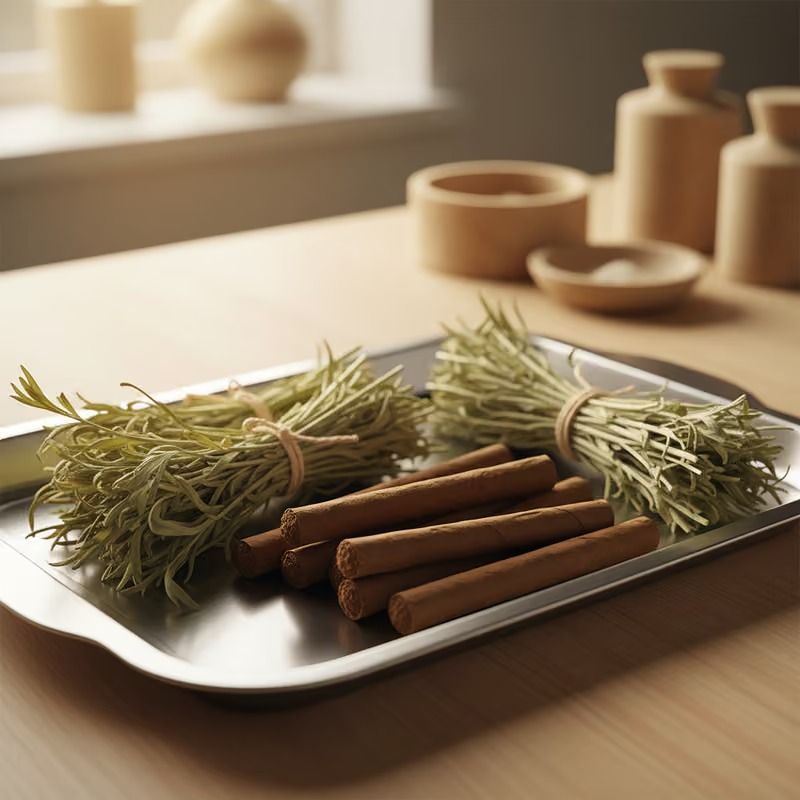
Moxibustion is a traditional therapeutic practice that originated in China, an integral component of Traditional Chinese Medicine (TCM). It involves burning a small, cone-shaped or cigar-shaped quantity of dried mugwort (Artemisia argyi) on or near the skin. The intention is to introduce warmth to specific points on the body, often corresponding to acupuncture points. This heat is believed to stimulate circulation, alleviate discomfort, and promote overall well-being by balancing the body's vital energy, known as 'Qi'.
Historically, moxibustion has been documented in ancient Chinese medical texts for thousands of years, often used in conjunction with acupuncture or as a standalone therapy. Its application spans a wide range of perceived health concerns, from musculoskeletal issues to digestive complaints and reproductive health. While deeply rooted in traditional concepts, contemporary research endeavors have sought to understand its mechanisms and efficacy through a modern scientific lens. This article will explore the principles behind moxibustion, its traditional applications, considerations for safety, and how it is viewed in the context of modern evidence.
Why this matters
Understanding moxibustion matters because it is a widely practiced traditional therapy with a long history, yet it often falls outside the conventional scope of Western medicine. For individuals seeking complementary or alternative approaches to health management, having access to evidence-informed, balanced information is crucial. Misinformation or incomplete understanding can lead to inappropriate self-treatment, delayed professional medical care, or exposure to risks if not applied correctly.
For healthcare providers, an awareness of moxibustion's principles and traditional uses can facilitate more comprehensive patient discussions, especially for those who express interest in or are already undergoing such treatments. It highlights the diversity of global health practices and encourages a broader perspective on well-being.
Furthermore, responsible discussion about moxibustion contributes to the ongoing dialogue about integrating traditional practices with modern healthcare. It encourages critical evaluation of therapeutic modalities, emphasizing the need for safety, efficacy, and ethical application. Given its increasing visibility and interest in various communities, providing a clear, respectful, and evidence-informed overview is essential for both practitioners and the general public.
Key principles (evidence-informed)
Moxibustion, within the framework of Traditional Chinese Medicine (TCM), operates on several key principles:
-
Stimulation of Meridians and Acupuncture Points: TCM theory posits that health is maintained by the harmonious flow of 'Qi' (vital energy) and 'Xue' (blood) through specific pathways called meridians. These meridians are believed to connect to internal organs and various parts of the body. Moxibustion is applied to specific acupuncture points along these meridians. The heat from the burning mugwort is thought to stimulate these points, thereby facilitating the smooth flow of Qi and Xue, addressing blockages, and promoting physiological balance. This is analogous in some ways to how physical stimulation might impact nerve or circulatory pathways in a Western physiological context, though the underlying conceptual framework differs significantly.
-
Warmth and Invigoration: In TCM, cold and dampness are often considered pathogenic factors that can impair circulation and lead to discomfort or illness. Moxibustion introduces warmth to the body. This warmth is believed to dispel cold, warm the meridians, invigorate the circulation of Qi and Xue, and support the body's natural restorative processes. The specific properties of mugwort (Artemisia argyi) are also considered important, believed to have warming and moving properties in TCM.
-
Tonifying and Harmonizing: Moxibustion is traditionally used for its "tonifying" effect, meaning it is thought to strengthen the body's functions and bolster its vital energy. It is applied to help restore balance between Yin and Yang, the fundamental opposing yet complementary forces in TCM theory. For instance, if a condition is attributed to a deficiency of Yang (coldness, weakness), moxibustion might be used to introduce warmth and strengthen Yang energy.
-
Types of Moxibustion:
- Direct Moxibustion: Involves placing a small cone of moxa directly on the skin. This can be non-scarring (removed before it burns the skin) or scarring (allowed to burn the skin, creating a blister and scar). The scarring method is less common in modern practice due to safety concerns and discomfort.
- Indirect Moxibustion: This is the most common form in modern practice. A barrier, such as ginger slices, garlic, salt, or even a layer of cloth, is placed between the moxa cone and the skin. Alternatively, a moxa stick (cigar-shaped) can be held above the skin, moving it gently to provide warmth without direct contact.
- Needle Moxibustion: Involves placing a small moxa cone on the handle of an acupuncture needle that has been inserted into an acupuncture point. The heat from the burning moxa travels down the needle into the point.
Modern Evidence Perspective: While TCM principles provide the traditional rationale, modern scientific inquiry seeks to understand moxibustion through contemporary physiological lenses. Research has explored potential mechanisms such as:
- Thermal effects: The heat generated by moxibustion can increase local blood circulation, relax muscles, and influence sensory nerves.
- Pharmacological effects: The burning mugwort produces volatile compounds, some of which may be absorbed through the skin, potentially exerting localized or systemic effects. Studies have identified compounds like cineole, camphor, and thujone in mugwort smoke, though the extent of their therapeutic action via this route is still under investigation.
- Neurophysiological effects: Like acupuncture, moxibustion might stimulate nerve endings, leading to the release of neurochemicals that could modulate pain, inflammation, and immune responses.
- Placebo effect: As with any therapeutic intervention, the patient's belief in the treatment and the therapeutic context can play a role in the perceived outcomes.
It's important to note that while some studies suggest potential benefits for certain conditions (e.g., breech presentation, certain types of discomfort), the quality and quantity of robust scientific evidence for many traditional applications of moxibustion are still developing. Organizations like the World Health Organization (WHO) have acknowledged TCM practices but emphasize the need for further rigorous research to establish efficacy and safety according to modern scientific standards. The Mayo Clinic also highlights that while some studies show promise, more high-quality research is needed.
Practical daily habits
Moxibustion is typically administered by a trained practitioner, not for daily self-application without proper guidance. However, understanding its principles can inspire related health habits:
-
Maintain Warmth: In line with moxibustion's warming principle, consider keeping your body adequately warm, especially in cooler environments or for areas prone to discomfort. This could involve dressing in layers, using heat packs, or consuming warm foods and beverages.
-
Promote Circulation: Regular, moderate physical activity is key to good circulation, mirroring moxibustion's goal of moving Qi and Xue. Even simple walks or stretches can be beneficial.
-
Mindful Self-Care: Pay attention to your body's signals. If you experience persistent coldness or localized discomfort, these observations can be discussed with a healthcare professional.
-
Informed Discussions with Professionals: If you are interested in moxibustion, discuss it with a qualified TCM practitioner or a healthcare provider who understands complementary therapies. They can assess if it's appropriate for you and provide guidance on any at-home practices, which would typically involve indirect moxibustion techniques under strict safety protocols. Never attempt direct moxibustion or unsupervised indirect moxibustion without professional instruction.
Common mistakes to avoid
When considering or undergoing moxibustion, it's crucial to be aware of potential pitfalls:
-
Self-Administering Without Training: Attempting moxibustion at home without proper instruction from a qualified practitioner can lead to burns, skin irritation, or other adverse effects. Specific points, duration, and technique are vital for safe and effective application.
-
Ignoring Safety Precautions: Moxa involves burning material. Failure to observe fire safety (e.g., not having water or a fire extinguisher nearby, using moxa near flammable materials, or applying it in poorly ventilated areas) can be extremely dangerous. Smoke inhalation can also be an issue.
-
Using it as a Sole Treatment for Serious Conditions: Moxibustion should not replace conventional medical treatment for serious or acute health conditions. It is typically considered a complementary therapy. Delaying or avoiding necessary medical care can have severe consequences.
-
Applying to Inappropriate Areas: Certain areas of the body are contraindicated for moxibustion, such as near major arteries, on inflamed skin, over sensory organs, on the face, or directly over large blood vessels or nerve pathways. Pregnant individuals also have specific contraindications, particularly for certain abdominal or sacral points, or for points that induce strong contractions.
-
Over-Treatment: Applying moxa for too long, too frequently, or with too much intensity can lead to discomfort, skin sensitivity, or burns. A qualified practitioner will determine the appropriate duration and frequency.
-
Ignoring Allergic Reactions: While rare, some individuals may be sensitive or allergic to mugwort. Watch for signs of irritation, redness, or allergic reaction.
-
Poor Ventilation: Burning mugwort produces smoke, which can be irritating to the respiratory system. Ensuring adequate ventilation during a moxibustion session is essential. Individuals with respiratory conditions should be particularly cautious.
-
Not Communicating with Practitioners: If you are seeing multiple healthcare providers, it's important to inform them about all treatments you are receiving, including moxibustion, to ensure coordinated and safe care.
When to see a professional
Consult a qualified healthcare professional or a licensed Traditional Chinese Medicine (TCM) practitioner in the following situations regarding moxibustion:
- Before starting any new therapy: If you are considering moxibustion for any health concern, it is imperative to consult with a qualified practitioner to determine if it is appropriate for your specific condition and health status.
- For persistent or worsening symptoms: If you are experiencing ongoing discomfort, pain, or any other health issues, seek professional medical advice. Moxibustion should not be used to self-diagnose or delay conventional medical treatment.
- For chronic conditions: If you have a chronic illness, such as diabetes, heart disease, or an autoimmune disorder, it is essential to discuss moxibustion with your primary care provider and a TCM practitioner to ensure it will not interfere with your existing treatment plan or medications.
- During pregnancy: Moxibustion can be contraindicated or require specific modifications during pregnancy, particularly over certain abdominal or sacral points. Always consult with your obstetrician and a qualified TCM practitioner experienced in prenatal care.
- For skin conditions or sensitivities: If you have sensitive skin, eczema, psoriasis, or any open wounds or infections, direct or indirect heat application might be harmful. A professional can assess the risk.
- If you experience adverse effects: Should you experience any discomfort, skin irritation, burns, allergic reactions, or feel unwell during or after a moxibustion session, discontinue use immediately and seek professional medical attention.
- If you are unsure about self-application: Never attempt moxibustion at home without thorough training and guidance from a qualified practitioner. If you are provided with instructions for home use, ensure you understand all safety precautions.
- For respiratory issues: Individuals with asthma, chronic obstructive pulmonary disease (COPD), or other respiratory conditions should exercise caution due to smoke inhalation. A professional can advise on safer alternatives or techniques.
Always prioritize the advice of licensed medical and TCM professionals to ensure safe and effective health management.
Frequently asked questions
What is moxibustion primarily used for in TCM?
In Traditional Chinese Medicine, moxibustion is traditionally used to address conditions believed to be caused by 'cold' and 'dampness' imbalances, to invigorate the circulation of 'Qi' and 'blood', and to tonify 'Yang' energy. This includes various forms of musculoskeletal discomfort, digestive complaints, and certain gynecological conditions. It's often employed to promote overall well-being and balance within the body's energetic system.
Is moxibustion safe?
When performed by a trained and qualified practitioner, moxibustion is generally considered safe. However, like any therapeutic procedure, it carries potential risks, including burns, skin irritation, smoke inhalation, or allergic reactions to mugwort. Self-administration without proper training is not recommended due to these safety concerns. It's crucial for practitioners to adhere to strict safety protocols and to consider individual patient contraindications.
What does moxibustion feel like?
During a moxibustion session, most individuals report feeling a pleasant, penetrating warmth at the application site. This warmth is often described as soothing and comforting. If the heat becomes too intense or uncomfortable, it's important to immediately inform the practitioner, who can adjust the technique to prevent burns or excessive heat. Some people may also notice the distinct aroma of burning mugwort, which can be strong.
How does moxibustion differ from acupuncture?
While both moxibustion and acupuncture are core components of Traditional Chinese Medicine and often used together, they differ in their primary method of stimulation. Acupuncture involves the insertion of fine needles into specific acupuncture points to stimulate 'Qi' flow. Moxibustion, on the other hand, uses heat generated by burning mugwort on or near these points to warm the meridians, dispel cold, and invigorate circulation without skin penetration. Both aim to restore balance and promote health.
Can moxibustion treat all diseases?
No single therapy, including moxibustion, can treat all diseases. Moxibustion is considered a complementary therapy within Traditional Chinese Medicine, often used alongside other TCM modalities or conventional medical treatments. Its effectiveness is believed to be specific to certain patterns of imbalance and conditions, particularly those associated with 'cold' or 'deficiency' in TCM theory. For serious or acute medical conditions, it is essential to seek conventional medical diagnosis and treatment from a qualified healthcare professional.
Key takeaways
Moxibustion is a venerable Traditional Chinese Medicine practice involving the burning of mugwort to apply warmth to specific body points. Its traditional purpose is to stimulate Qi and blood flow, dispel cold, and restore balance. While deeply rooted in ancient principles, modern inquiry seeks to understand its mechanisms through scientific lenses, considering thermal, chemical, and neurophysiological effects.
For those considering moxibustion, several key points are paramount:
- Professional Guidance: Always seek treatment from a trained and licensed practitioner to ensure safe and appropriate application. Self-treatment without expertise carries significant risks.
- Safety First: Be aware of burn risks, smoke inhalation, and potential allergic reactions. Ensure proper ventilation during treatment.
- Complementary Role: Moxibustion is typically a complementary therapy and should not replace conventional medical treatment for serious conditions.
- Individualized Approach: A qualified practitioner will assess your specific condition and health status to determine if moxibustion is suitable and to tailor the treatment.
- Open Communication: Discuss any concerns, existing health conditions, medications, or other treatments with your healthcare providers.
Adherence to these principles will help individuals make informed decisions and engage with moxibustion responsibly, whether as a patient or simply seeking understanding of diverse health practices.
Related reading
Keep exploring this topic with our related, evidence-reviewed guides:
- What Modern Science Gets Right and Wrong About Chinese Medicine — A practical, evidence-informed guide to chinese medicine evidence — what matters, what works, common mistakes, and when to consult…
- Chinese Approaches to Back Pain: Movement, Heat, and Posture — A practical, evidence-informed guide to chinese back pain remedies — what matters, what works, common mistakes, and when to consul…
- Chinese Dental and Oral Care Traditions Compared With Modern Advice — A practical, evidence-informed guide to chinese oral care — what matters, what works, common mistakes, and when to consult a profe…
- Cupping Therapy in Chinese Medicine: Benefits, Risks, and What Research Shows — A practical, evidence-informed guide to cupping therapy — what matters, what works, common mistakes, and when to consult a profess…
- Ashwagandha: Uses, Evidence, and Safety — Ashwagandha shows promise for stress and sleep in small studies; not recommended in pregnancy.
- Chinese Herbal Medicine: 12 Classic Herbs and How They Are Used — A practical, evidence-informed guide to chinese herbal medicine — what matters, what works, common mistakes, and when to consult a…
Sources
- World Health Organization (WHO)
- Mayo Clinic
- National Institutes of Health (NIH) - National Center for Complementary and Integrative Health (NCCIH)
- Cochrane Library
Sources
Evidence & citations
- Every claim in this chinese health wisdom guide is backed by primary data — browse the longevity and lifestyle health statistics in our sourced statistics library.
- Writing about this topic? Researchers, journalists and educators can cite our traditional Chinese health research with ready-made APA, MLA and Chicago references.
My notes on this one
The short version of 11 minutes of reading — what stuck with me while writing “Moxibustion in Chinese Medicine: Uses, Safety, and Modern”, what the sources back up, and what I'd actually do about it.
What I'd take away
01 · Why this matters
For healthcare providers, an awareness of moxibustion's principles and traditional uses can facilitate more comprehensive patient discussions…
02 · Key principles
Organizations like the World Health Organization (WHO) have acknowledged TCM practices but emphasize the need for further rigorous research to establish efficacy and safety according to modern scientific standa…
03 · Practical daily habits
Promote Circulation: Regular, moderate physical activity is key to good circulation, mirroring moxibustion's goal of moving Qi and Xue. Even simple walks or stretches can be beneficial.
04 · Common mistakes to avoid
Over-Treatment: Applying moxa for too long, too frequently, or with too much intensity can lead to discomfort, skin sensitivity, or burns…
What the sources I read actually say
Organizations like the World Health Organization (WHO) have acknowledged TCM practices but emphasize the need for further rigorous research to establish efficacy and safety according to modern scienti…
World Health OrganizationNo single therapy, including moxibustion, can treat all diseases.
Centers for Disease Control and Prevention
Questions I kept coming back to
What is moxibustion primarily used for in TCM?+
In Traditional Chinese Medicine, moxibustion is traditionally used to address conditions believed to be caused by 'cold' and 'dampness' imbalances, to invigorate the circulation of 'Qi' and 'blood', and to tonify 'Yang' energy. This includes various forms of musculoskeletal discomfort, digestive complaints, and certain gynecological conditions…
Is moxibustion safe?+
When performed by a trained and qualified practitioner, moxibustion is generally considered safe. However, like any therapeutic procedure, it carries potential risks, including burns, skin irritation, smoke inhalation, or allergic reactions to mugwort. Self-administration without proper training is not recommended due to these safety concerns…
What does moxibustion feel like?+
During a moxibustion session, most individuals report feeling a pleasant, penetrating warmth at the application site. This warmth is often described as soothing and comforting. If the heat becomes too intense or uncomfortable, it's important to immediately inform the practitioner, who can adjust the technique to prevent burns or excessive heat. Some people may also notice the distinct aroma of burning mugwort…
How does moxibustion differ from acupuncture?+
While both moxibustion and acupuncture are core components of Traditional Chinese Medicine and often used together, they differ in their primary method of stimulation. Acupuncture involves the insertion of fine needles into specific acupuncture points to stimulate 'Qi' flow. Moxibustion, on the other hand, uses heat generated by burning mugwort on or near these points to warm the meridians, dispel cold…
Can moxibustion treat all diseases?+
No single therapy, including moxibustion, can treat all diseases. Moxibustion is considered a complementary therapy within Traditional Chinese Medicine, often used alongside other TCM modalities or conventional medical treatments. Its effectiveness is believed to be specific to certain patterns of imbalance and conditions, particularly those associated with 'cold' or 'deficiency' in TCM theory…
Was this article helpful?
Be the first to rate this article.
Written by
FaizRuh
I write Health Hub Pro on my own — no clinical licence, no anonymous review panel. Just the published guidance, read carefully and explained plainly.
More about me →How this page was checked
Every claim above is checked against the sources listed at the bottom of this article — WHO, CDC, NIH, NHS, Cochrane and major clinical guidelines. Drafting is AI-assisted; the editing, fact-checking and final wording are mine. It's information, not medical advice. Spotted an error? Tell me and I'll fix it.
Last checked on