Steam, Salt, and Saline: Simple Remedies for Congestion
A practical, evidence-informed guide to steam inhalation — what matters, what works, common mistakes, and when to consult a professional.
For informational purposes only. This article is educational and is not a substitute for professional medical advice, diagnosis, or treatment. Always consult a qualified healthcare provider about anything affecting your health. Read full disclaimer.
Steam, Salt, and Saline: Simple Remedies for Congestion
(Not medical or veterinary advice — consult a qualified clinician or veterinarian for personal guidance.)
Introduction
Congestion, a common symptom associated with various conditions, refers to the sensation of blockage or fullness in the nasal passages or chest. This discomfort often arises when blood vessels inside the nose become inflamed and swollen, or when mucus accumulates in the airways. While typically not a severe health threat, congestion can significantly impact an individual's quality of life, leading to difficulty breathing, impaired sleep, reduced ability to concentrate, and general malaise. It can affect people of all ages, from infants to older adults, and can be triggered by a range of factors including common colds, influenza, allergies, sinus infections, and environmental irritants. The body's natural response to these triggers often involves increased mucus production and inflammation as it attempts to clear irritants and pathogens.
For centuries, individuals have sought relief from congestion using simple, accessible methods. Among the most widely recognized and frequently employed strategies are those involving steam, salt, and saline solutions. These approaches are often favored due to their perceived gentleness, minimal side effects when used correctly, and their ability to address the physical mechanisms underlying congestion. Steam inhalation aims to moisten nasal passages and loosen thick mucus, making it easier to expel. Salt, particularly in the form of saline solutions, works by helping to clear irritants and mucus from the nasal cavity through irrigation, and can also help reduce inflammation. These methods are generally considered complementary to conventional medical treatments and are often the first line of defense for mild to moderate congestion before considering pharmaceutical interventions. This article will explore the principles behind these simple remedies, discuss practical application, highlight common pitfalls, and guide on when professional medical advice becomes necessary.
Why this matters
The pervasive nature of congestion underscores the importance of understanding effective, accessible, and safe relief strategies. Conditions like the common cold, affecting millions globally each year, frequently present with nasal congestion as a primary symptom. Allergic rhinitis, another widespread condition, also contributes significantly to congestion burden. While many instances of congestion resolve on their own, the discomfort and potential complications, such as secondary infections or sleep disturbances, can be substantial.
Reliance on over-the-counter decongestants, while effective for some, is not without considerations. These medications can have side effects, including increased heart rate, elevated blood pressure, and rebound congestion if used improperly or for extended periods. They may also be contraindicated for individuals with certain pre-existing health conditions or those taking specific medications. Therefore, exploring non-pharmacological alternatives becomes crucial. Simple remedies like steam, salt, and saline offer a valuable pathway to managing symptoms, potentially reducing the need for or reliance on systemic medications. This is particularly relevant for vulnerable populations, such as young children and pregnant individuals, where medication options may be limited.
Furthermore, integrating these methods into daily routines can empower individuals to take a more proactive role in their health management. By understanding the mechanisms and proper application of steam, salt, and saline, individuals can often alleviate discomfort, prevent the escalation of symptoms, and improve overall well-being during periods of congestion. Education on these methods also contributes to health literacy, enabling informed decisions about symptom management and fostering a greater understanding of when self-care is appropriate versus when professional medical intervention is required. This balance is vital for maintaining public health and reducing the burden on healthcare systems.
Key principles (evidence-informed)
The effectiveness of steam, salt, and saline solutions for congestion relief is rooted in their physiological impact on the respiratory system. While research on these traditional methods can be complex due to variations in study design and delivery methods, the general principles underpinning their utility are widely recognized in respiratory care.
Steam Inhalation: The primary principle behind steam inhalation is the humidification and warming of the respiratory passages. Inhaling warm, moist air helps to:
- Moisten dry mucous membranes: Dry nasal passages can exacerbate discomfort and make mucus thicker and harder to clear. Steam provides hydration.
- Thin mucus secretions: Warmth and moisture can help to reduce the viscosity of thick, sticky mucus. Thinner mucus is easier to drain from the nasal passages and airways, promoting clearance.
- Reduce inflammation: While not directly anti-inflammatory, the soothing warmth can help alleviate the feeling of irritation and swelling in the nasal lining.
- Soothe irritated airways: The gentle warmth can provide a comforting sensation to sore throats and irritated airways often associated with respiratory infections.
While the exact physiological pathways are still an area of ongoing research, the subjective relief reported by many individuals and its long-standing use suggest a beneficial effect. The World Health Organization (WHO) and various national health bodies often include steam inhalation as a supportive measure for respiratory symptoms.
Saline Solutions and Nasal Irrigation: Saline solutions, essentially water with dissolved salt, are fundamental to nasal irrigation (often performed with devices like neti pots or squeeze bottles) and saline nasal sprays. The mechanisms of action include:
- Physical cleansing: Nasal irrigation mechanically flushes out irritants, allergens, pathogens (like viruses and bacteria), and excess mucus from the nasal passages and sinuses. This physical removal can significantly reduce the load of substances contributing to inflammation and infection.
- Mucus thinning: Similar to steam, the moisture from saline helps hydrate and thin thick mucus, making it easier to clear.
- Restoration of ciliary function: The cilia are tiny, hair-like structures lining the nasal passages that rhythmically beat to move mucus and trapped particles towards the back of the throat for swallowing. Congestion and inflammation can impair ciliary function. Saline irrigation can help normalize the saline environment necessary for optimal ciliary movement, improving the body's natural clearing mechanisms.
- Reduction of inflammation: While not a direct anti-inflammatory agent, by removing irritants and excess mucus, saline irrigation can indirectly help reduce inflammation in the nasal lining. Some research suggests that hypertonic saline (a solution with a higher salt concentration than body fluids) might have an osmotic effect, drawing out fluid from swollen tissues, thereby potentially reducing swelling.
Organizations like the American Academy of Allergy, Asthma & Immunology (AAAAI) and the National Institutes of Health (NIH) acknowledge the utility of saline nasal irrigation for conditions like allergic rhinitis and chronic sinusitis. The effectiveness is largely attributed to its ability to improve mucociliary clearance and reduce local irritants.
General principles for salt use (e.g., gargling): Gargling with warm salt water is a common remedy for sore throats and congestion affecting the throat area.
- Soothing effect: The warm water can provide temporary relief from pain and irritation.
- Osmotic action: Salt water can draw out fluid from inflamed tissues in the throat, potentially reducing swelling and discomfort.
- Cleansing: It helps to wash away mucus and irritants from the throat and tonsils.
These methods generally align with a holistic approach to managing respiratory symptoms, focusing on supporting the body's natural defenses and improving local conditions in the affected airways.
Practical daily habits
Incorporating steam, salt, and saline into a routine for congestion relief requires careful attention to technique and hygiene to maximize benefits and minimize risks.
Steam Inhalation:
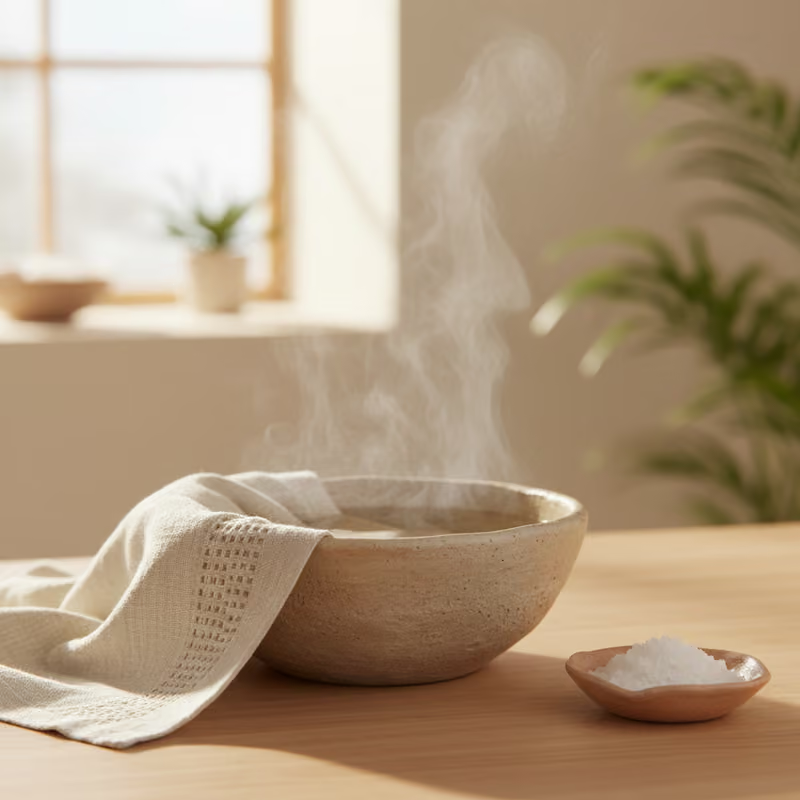
- Method 1: Bowl of hot water: Boil water and pour it into a sturdy bowl. Place the bowl on a stable surface. Drape a towel over your head, creating a tent over the bowl, and lean carefully over the steam, keeping your face a safe distance (at least 8-12 inches) to avoid burns. Inhale the steam gently through your nose and mouth for 5-10 minutes. Keep eyes closed if the steam causes irritation.
- Method 2: Steamy shower/bath: Run a hot shower or bath and sit in the bathroom for 10-15 minutes, allowing the room to fill with steam. This is a safer alternative, especially for children.
- Method 3: Humidifier/Vaporizer: Use a cool-mist humidifier or warm-mist vaporizer in your living or sleeping area. Ensure regular cleaning of the device according to manufacturer instructions to prevent mold and bacterial growth.
- Frequency: Can be done 2-4 times a day as needed.
- Safety considerations: Always maintain a safe distance from boiling water to prevent burns. Never leave children unattended with hot water.
Saline Nasal Irrigation:
- Prepare the solution: Use distilled, sterile, or previously boiled and cooled water. Tap water should never be used directly for nasal irrigation as it may contain microorganisms that are safe to drink but can be harmful if introduced into the nasal passages. Mix 1/4 to 1/2 teaspoon of non-iodized salt (e.g., pickling or canning salt) with 8 ounces (240 ml) of the prepared water. Some may add a pinch of baking soda (about 1/4 teaspoon) to make it more soothing. Pre-mixed saline packets are also available.
- Choose your device:
- Neti Pot: Fill the neti pot with the saline solution. Tilt your head sideways over a sink, insert the spout into the upper nostril, and allow the solution to flow out of the lower nostril. Breathe through your mouth.
- Squeeze Bottle: Similar to a neti pot, but often easier to control the flow. Squeeze the bottle gently to irrigate.
- Technique: Lean over a sink, tilting your head. Gently pour or squeeze the solution into one nostril. Allow it to flow out the other nostril and/or mouth. While irrigating, breathe through your mouth. Repeat on the other side.
- After irrigation: Gently blow your nose to clear any remaining solution or mucus. Avoid vigorous blowing immediately after.
- Frequency: Can be done 1-2 times a day, or as directed by a healthcare professional.
- Hygiene: Thoroughly clean and dry the irrigation device after each use to prevent contamination. Replace devices periodically.
Salt Water Gargle for Throat Congestion/Irritation:
- Preparation: Dissolve 1/4 to 1/2 teaspoon of non-iodized salt in 8 ounces (240 ml) of warm water. The warmth helps soothe the throat.
- Technique: Take a mouthful of the solution, tilt your head back, and gargle vigorously for 30-60 seconds. Spit it out; do not swallow.
- Frequency: Repeat several times a day as needed.
General Supportive Habits:
- Stay hydrated: Drinking plenty of fluids (water, herbal teas, clear broths) helps thin mucus throughout the body, making it easier to clear.
- Rest: Adequate rest supports the body's immune system in fighting off infections.
- Elevate your head: Sleeping with your head slightly elevated can help with drainage and reduce nighttime congestion.
- Avoid irritants: Steer clear of smoke, strong fumes, and allergens that can worsen nasal congestion.
Consistency and proper technique are key to safely and effectively using these simple remedies for congestion relief.
Common mistakes to avoid
While steam, salt, and saline are generally safe remedies, improper application can lead to reduced efficacy or even potential harm. Being aware of these common mistakes is crucial for safe and effective use.
Mistakes with Steam Inhalation:
- Too close to hot water: The most significant risk with steam inhalation is burns from hot water or steam. Leaning too close to a bowl of boiling water can cause severe scalds to the face and airways. Always maintain a safe distance and never immerse your face directly into the water.
- Using essential oils improperly: While some essential oils (like eucalyptus or peppermint) are sometimes added for aroma, they should be used with extreme caution. They can be irritating to airways, especially in children or individuals with asthma, and should never be applied directly to the skin or ingested. Always dilute appropriately and test for sensitivity. Consult a healthcare professional before using essential oils for therapeutic purposes.
- Over-reliance on humidifiers without cleaning: Humidifiers can be beneficial, but if not cleaned regularly and thoroughly, they can become breeding grounds for mold, bacteria, and other microorganisms. These can then be dispersed into the air, potentially worsening respiratory symptoms or leading to new infections. Follow manufacturer guidelines for cleaning and maintenance rigorously.
- Not suitable for everyone: While generally safe, individuals with certain respiratory conditions, like severe asthma, should consult a healthcare professional before using steam inhalation, as it might trigger symptoms in some cases.
Mistakes with Saline Nasal Irrigation:
- Using untreated tap water: This is perhaps the most critical mistake. Tap water, even if safe for drinking, may contain low levels of microorganisms (like Naegleria fowleri, a brain-eating amoeba, though extremely rare) or bacteria that can cause serious infections if introduced into the sterile nasal passages. Always use distilled, sterile, or previously boiled and cooled tap water for nasal irrigation.
- Incorrect salt concentration: Using too much salt can sting and irritate the nasal lining, while too little can feel uncomfortable and be less effective. Using table salt with iodine or anti-caking agents can also irritate. Always use non-iodized salt and measure accurately.
- Improper device cleaning: Nasal irrigation devices (neti pots, squeeze bottles) must be thoroughly cleaned and air-dried after each use to prevent bacterial contamination. Failure to do so can reintroduce pathogens into the nasal passages.
- Forceful irrigation: Squeezing too hard or forcing the solution can push mucus and even bacteria into the sinuses or Eustachian tubes, potentially leading to ear infections or worsening sinus issues. Use gentle pressure.
- Using while completely blocked: If nasal passages are completely blocked, irrigation might not be effective and could cause discomfort or pressure. In such cases, a steamy shower might be a better first step to loosen mucus.
- Sharing devices: Never share nasal irrigation devices between individuals due to the risk of transmitting infections.
Mistakes with Salt Water Gargling:
- Swallowing the solution: Saltwater gargle is intended for the throat and should be spit out, not swallowed, especially if using a higher salt concentration. Ingesting too much salt can be problematic for individuals with certain health conditions.
- Using extremely hot water: Just like steam inhalation, gargling with water that is too hot can scald the delicate tissues of the throat. Use warm, comfortable water.
- Excessive salt concentration: Too much salt can dry out or irritate the throat instead of soothing it. Adhere to recommended concentrations.
By avoiding these common pitfalls, individuals can safely and effectively leverage steam, salt, and saline solutions for congestion relief. When in doubt about technique or safety, especially for children or individuals with underlying health conditions, consultation with a healthcare professional is always advisable.
When to see a professional
While steam, salt, and saline remedies can provide significant relief for mild to moderate congestion, it is crucial to recognize when symptoms warrant professional medical attention. Delaying consultation can sometimes lead to complications or indicate a more serious underlying condition.
General Guidelines:
- Prolonged Symptoms: If congestion persists for more than 7-10 days without improvement, or if it seems to be worsening over time.
- Fever: A high fever (especially above 102°F or 39°C) accompanying congestion can indicate a bacterial infection (like a sinus infection) or influenza, which may require medical evaluation.
- Severe Pain: Intense facial pain or pressure, particularly around the eyes, cheeks, or forehead, or severe headache, could signal a sinus infection that needs treatment.
- Changes in Mucus: If nasal discharge becomes thick, discolored (yellow, green, or blood-tinged), and persists for several days, it might suggest a bacterial infection. While discolored mucus can be part of a viral infection, persistence is key.
- Difficulty Breathing or Shortness of Breath: Any difficulty breathing, wheezing, or shortness of breath should be promptly evaluated by a healthcare professional, as it could indicate a lower respiratory tract infection (like bronchitis or pneumonia) or an exacerbation of conditions like asthma.
- Ear Pain or Hearing Changes: Congestion can sometimes lead to ear infections, especially in children. Ear pain, a feeling of fullness in the ear, or changes in hearing should be checked.
- Sore Throat Worsening: A severe sore throat that makes swallowing difficult, or is accompanied by white spots on the tonsils, could indicate strep throat or another bacterial infection.
- Rash: The appearance of a rash along with congestion and other symptoms could be a sign of certain viral illnesses or other conditions.
- Symptoms in Infants and Young Children: Congestion can be more serious in infants and young children, as their nasal passages are smaller, and they rely more on nasal breathing. Seek medical advice if an infant or young child has persistent congestion, difficulty feeding due to congestion, high fever, lethargy, or signs of respiratory distress.
- Underlying Health Conditions: Individuals with chronic health conditions (e.g., asthma, COPD, compromised immune systems, heart disease, diabetes) should seek medical advice sooner rather than later if they develop congestion, as their risk of complications can be higher.
- Sudden Onset of Severe Symptoms: If symptoms appear very suddenly and are severe, it's advisable to seek professional help.
- Recurrent Congestion: If you frequently experience congestion without a clear cause (like seasonal allergies), a healthcare professional can help identify triggers or underlying conditions.
- Ineffectiveness of Self-Care: If simple remedies like steam, salt, and saline provide no relief after a few days, or if symptoms worsen despite their use.
In summary, while self-care methods are valuable, they are not a substitute for professional medical diagnosis and treatment when warranted. Err on the side of caution and consult a qualified clinician if you have concerns about your symptoms or if they fall into any of the above categories.
Frequently asked questions
Is steam inhalation safe for children?
Steam inhalation can be beneficial for children, but direct steam from a bowl of hot water carries a significant burn risk. For children, especially younger ones, safer alternatives include using a cool-mist humidifier in their room, running a steamy shower, or sitting with them in a steamy bathroom. Always supervise children closely during any form of steam exposure. For infants, consult a pediatrician before using any remedies.
How often can I use saline nasal irrigation?
Saline nasal irrigation can generally be used once or twice daily, or as recommended by a healthcare professional, especially during periods of congestion or allergies. Some individuals find benefit in using it more frequently during acute illness, but it's important to monitor for any irritation. Consistent use as part of a daily hygiene routine is often well-tolerated.
Can I add essential oils to my saline solution for nasal irrigation?
No, it is generally not recommended to add essential oils directly to saline solutions for nasal irrigation. Essential oils, even diluted, can be irritating to the delicate nasal lining and mucous membranes. They might cause burning, stinging, or other adverse reactions. Stick to plain saline solution for nasal irrigation.
What kind of salt should I use for saline solutions?
For saline nasal irrigation and gargling, it is crucial to use non-iodized salt. Options include pickling or canning salt, or specific nasal irrigation salt packets, which are typically pure sodium chloride. Avoid table salt that often contains iodine, anti-caking agents, or other additives, as these can irritate the nasal passages or throat.
Can saline solutions cause a dry nose?
While saline solutions are primarily designed to moisten and clear nasal passages, some individuals, particularly with frequent use of hypertonic (more concentrated) saline, might experience temporary dryness or irritation. If this occurs, consider reducing the frequency of use or switching to an isotonic (body fluid concentration) saline solution. Ensuring adequate hydration by drinking water can also help.
Key takeaways
Congestion, a common and often uncomfortable symptom, can significantly impact daily life. While generally not severe, understanding effective and safe relief methods is crucial. Steam, salt, and saline solutions offer accessible, non-pharmacological approaches to managing nasal and throat congestion by addressing the underlying physiological mechanisms.
Steam inhalation works by humidifying and warming the respiratory passages, helping to thin mucus, soothe irritated airways, and ease congestion. Practical methods include using a bowl of hot water with a towel tent, taking a steamy shower, or using a humidifier. Safety is paramount, especially regarding burns from hot water.
Saline solutions, primarily used for nasal irrigation, mechanically cleanse the nasal passages, flushing out irritants, allergens, and excess mucus. They also help restore healthy ciliary function and reduce inflammation. Proper preparation with distilled, sterile, or boiled and cooled water and non-iodized salt is essential to prevent contamination. Meticulous cleaning of irrigation devices is equally important. Saltwater gargling provides similar soothing and cleansing benefits for throat congestion.
Key considerations for effective use include proper technique, consistent hygiene for devices, and awareness of common mistakes. Avoiding untreated tap water for nasal irrigation, preventing burns from hot steam, and not using irritating additives like essential oils directly in nasal solutions are critical.
It is equally important to know when to seek professional medical advice. Persistent symptoms lasting more than 7-10 days, high fever, severe pain, changes in mucus color, difficulty breathing, ear pain, or symptoms in infants and young children warrant a consultation with a qualified clinician. These simple remedies are valuable tools for self-care but are not substitutes for professional medical diagnosis and treatment when needed. By integrating these evidence-informed practices judiciously, individuals can often find effective relief and improve their comfort during periods of congestion.
Related reading
Keep exploring this topic with our related, evidence-reviewed guides:
- Steam Inhalation Guide: Evidence-Based Guide — Discover the benefits and safe practices of steam inhalation for respiratory relief. This guide covers how to perform steam inhala…
- Salt Water Gargle Benefits: Evidence-Based Guide — Discover the long-standing benefits of saltwater gargling for oral hygiene and alleviating minor throat discomfort, a simple yet e…
- Epsom Salt Bath Benefits: Evidence-Based Guide — Discover the potential benefits of Epsom salt baths, from muscle relaxation to stress reduction, and learn how to incorporate this…
- Ginger as Natural Medicine: Evidence-Based Guide — Ginger, a common spice, boasts a long history in traditional medicine for its potential to alleviate various ailments. Modern rese…
- Peppermint Oil Uses: Evidence-Based Guide — Discover the versatile applications of peppermint oil, a popular natural remedy known for its refreshing aroma and therapeutic pro…
- Magnesium Sources Naturally: Evidence-Based Guide — Discover how to naturally boost your magnesium intake through diet for better health. Learn about the best food sources and their …
Sources
- World Health Organization (WHO): Information on respiratory infections and general hygiene practices.
- Centers for Disease Control and Prevention (CDC): Guidance on safe water for nasal rinsing and respiratory illness management.
- National Institutes of Health (NIH): Research and information on various health conditions, including respiratory and sinus issues.
- Mayo Clinic: Patient education materials on congestion, common cold, and sinusitis treatments, including home remedies.
- Cochrane Library: Systematic reviews on the effectiveness of various treatments, including nasal irrigation for sinonasal conditions.
Sources
Evidence & citations
- Every claim in this natural remedies guide is backed by primary data — browse the evidence on natural remedies and chronic disease data in our sourced statistics library.
- Writing about this topic? Researchers, journalists and educators can cite our natural remedies research with ready-made APA, MLA and Chicago references.
My notes on this one
The short version of 16 minutes of reading — what stuck with me while writing “Steam, Salt, and Saline: Simple Remedies for Congestion”, what the sources back up, and what I'd actually do about it.
What I'd take away
01 · Why this matters
By understanding the mechanisms and proper application of steam, salt, and saline, individuals can often alleviate discomfort, prevent the escalation of symptoms…
02 · Key principles
While research on these traditional methods can be complex due to variations in study design and delivery methods, the general principles underpinning their utility are widely recognized in respiratory care.
03 · Practical daily habits
Preparation: Dissolve 1/4 to 1/2 teaspoon of non-iodized salt in 8 ounces (240 ml) of warm water. The warmth helps soothe the throat.
04 · Common mistakes to avoid
Not suitable for everyone: While generally safe, individuals with certain respiratory conditions, like severe asthma, should consult a healthcare professional before using steam inhalation…
What the sources I read actually say
The World Health Organization (WHO) and various national health bodies often include steam inhalation as a supportive measure for respiratory symptoms.
World Health OrganizationSqueeze Bottle: Similar to a neti pot, but often easier to control the flow. Squeeze the bottle gently to irrigate.
Centers for Disease Control and PreventionThe mechanisms of action include: Organizations like the American Academy of Allergy, Asthma & Immunology (AAAAI) and the National Institutes of Health (NIH) acknowledge the utility of saline nasal ir…
National Institutes of Health
If you only do one thing this week
- Method 2: Steamy shower/bath — Run a hot shower or bath and sit in the bathroom for 10-15 minutes, allowing the room to fill with steam. This is a safer alternative…
- Frequency — Can be done 2-4 times a day as needed.
- Frequency — Can be done 1-2 times a day, or as directed by a healthcare professional.
- Preparation — Dissolve 1/4 to 1/2 teaspoon of non-iodized salt in 8 ounces (240 ml) of warm water. The warmth helps soothe the throat.
- Avoid irritants — Steer clear of smoke, strong fumes, and allergens that can worsen nasal congestion.
Pick the one that fits your week. None of this replaces advice from a clinician who can actually examine you.
Questions I kept coming back to
Is steam inhalation safe for children?+
Steam inhalation can be beneficial for children, but direct steam from a bowl of hot water carries a significant burn risk. For children, especially younger ones, safer alternatives include using a cool-mist humidifier in their room, running a steamy shower, or sitting with them in a steamy bathroom. Always supervise children closely during any form of steam exposure. For infants…
How often can I use saline nasal irrigation?+
Saline nasal irrigation can generally be used once or twice daily, or as recommended by a healthcare professional, especially during periods of congestion or allergies. Some individuals find benefit in using it more frequently during acute illness, but it's important to monitor for any irritation. Consistent use as part of a daily hygiene routine is often well-tolerated.
Can I add essential oils to my saline solution for nasal irrigation?+
No, it is generally not recommended to add essential oils directly to saline solutions for nasal irrigation. Essential oils, even diluted, can be irritating to the delicate nasal lining and mucous membranes. They might cause burning, stinging, or other adverse reactions. Stick to plain saline solution for nasal irrigation.
What kind of salt should I use for saline solutions?+
For saline nasal irrigation and gargling, it is crucial to use non-iodized salt. Options include pickling or canning salt, or specific nasal irrigation salt packets, which are typically pure sodium chloride. Avoid table salt that often contains iodine, anti-caking agents, or other additives, as these can irritate the nasal passages or throat.
Can saline solutions cause a dry nose?+
While saline solutions are primarily designed to moisten and clear nasal passages, some individuals, particularly with frequent use of hypertonic (more concentrated) saline, might experience temporary dryness or irritation. If this occurs, consider reducing the frequency of use or switching to an isotonic (body fluid concentration) saline solution. Ensuring adequate hydration by drinking water can also help.
Was this article helpful?
Be the first to rate this article.
Written by
FaizRuh
I write Health Hub Pro on my own — no clinical licence, no anonymous review panel. Just the published guidance, read carefully and explained plainly.
More about me →How this page was checked
Every claim above is checked against the sources listed at the bottom of this article — WHO, CDC, NIH, NHS, Cochrane and major clinical guidelines. Drafting is AI-assisted; the editing, fact-checking and final wording are mine. It's information, not medical advice. Spotted an error? Tell me and I'll fix it.
Last checked on