Tai Chi for Beginners: A 20-Minute Daily Routine for Joints
A practical, evidence-informed guide to tai chi for beginners — what matters, what works, common mistakes, and when to consult a professional.
For informational purposes only. This article is educational and is not a substitute for professional medical advice, diagnosis, or treatment. Always consult a qualified healthcare provider about anything affecting your health. Read full disclaimer.
Tai Chi for Beginners: A 20-Minute Daily Routine for Joints and Balance
(Not medical or veterinary advice — consult a qualified clinician or veterinarian for personal guidance.)
Introduction
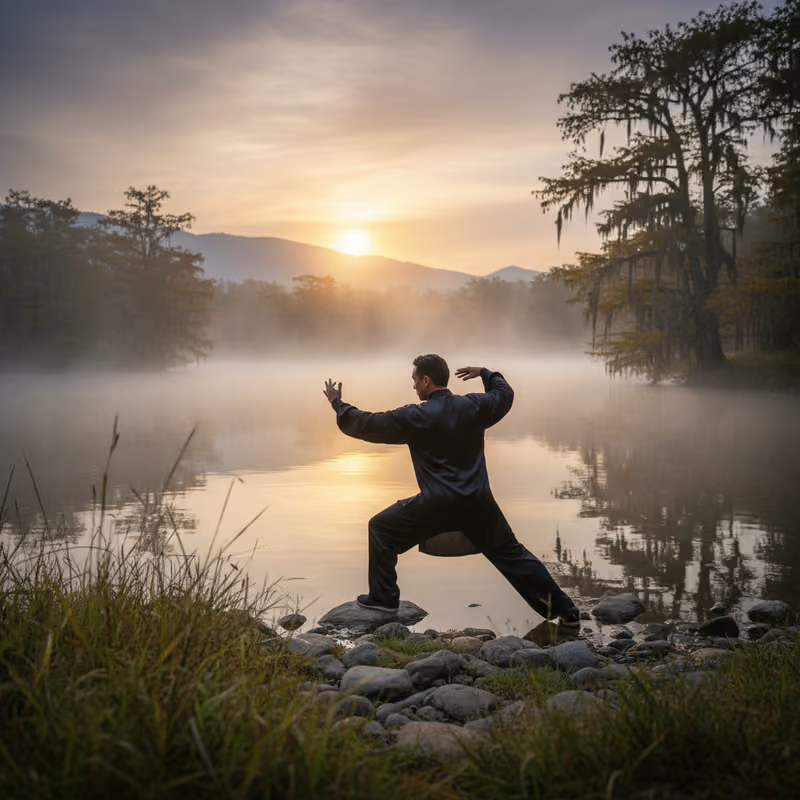
Tai Chi, an ancient Chinese martial art, has evolved over centuries into a gentle yet profound practice often described as "meditation in motion." It involves a series of slow, continuous, and graceful movements, deep breathing, and focused attention. Unlike many forms of exercise that emphasize strength or speed, Tai Chi focuses on fluid transitions, internal energy (often referred to as 'qi'), and the cultivation of mind-body harmony. For beginners, it offers an accessible entry point into physical activity, especially for those seeking low-impact options.
This practice is often performed outdoors in groups, fostering a sense of community, though it can be practiced individually in almost any setting. The movements are typically circular and flowing, designed to be executed without strain, promoting relaxation rather than tension. While its origins are rooted in self-defense, modern Tai Chi is widely practiced for its health benefits, including improved balance, flexibility, and stress reduction. Its gentle nature makes it suitable for people of varying ages and physical conditions, offering a pathway to enhanced well-being through mindful movement.
Why this matters
Engaging in regular physical activity is fundamental for maintaining overall health and preventing a range of chronic conditions. For many, high-impact exercises or complex routines can be intimidating or unsuitable due to physical limitations, age, or previous injuries. This is where practices like Tai Chi offer a valuable alternative. Its gentle, low-impact nature makes it particularly beneficial for joint health, as it promotes movement without excessive strain, helping to lubricate joints and maintain flexibility.
Furthermore, balance is a critical aspect of independent living, especially as individuals age. A decline in balance can significantly increase the risk of falls, leading to serious injuries and a loss of confidence. Tai Chi’s deliberate, slow movements and shifting of weight train the proprioceptive system, improving stability and coordination. This focus on balance can be a proactive measure against fall-related incidents.
Beyond the physical, the mindful component of Tai Chi—the emphasis on breath and focused attention—can contribute to mental well-being. In a world often characterized by high stress levels, practices that encourage relaxation and mental clarity are increasingly important. Tai Chi's meditative qualities can help reduce stress, improve concentration, and foster a sense of calm. The combination of physical and mental engagement offers a holistic approach to health, making it a relevant and valuable practice for a broad spectrum of individuals seeking sustainable wellness strategies.
Key principles (evidence-informed)
Tai Chi's effectiveness stems from several core principles that guide its practice, each contributing to its reported benefits. Understanding these principles can enhance a beginner's experience and deepen their engagement with the art form.
Slow, Fluid Movements
The hallmark of Tai Chi is its slow and continuous motion. Movements are performed smoothly, transitioning seamlessly from one posture to the next without abrupt stops or jerks. This continuous flow helps to improve coordination and proprioception, the body's ability to sense its position in space. The gentle pace allows practitioners to focus on their body mechanics, promoting muscle relaxation rather than tension, which can be particularly beneficial for joint mobility. The deliberate speed also encourages controlled weight transfer, contributing to improved balance over time.
Deep, Diaphragmatic Breathing
Breathing in Tai Chi is synchronized with the movements and is typically deep, slow, and abdominal (diaphragmatic). This type of breathing promotes relaxation and can enhance oxygen exchange. Deep breathing practices are often associated with activating the parasympathetic nervous system, which helps to calm the body and mind, reducing stress and promoting a sense of tranquility. Integrating breath with movement creates a rhythmic flow that supports both physical and mental concentration.
Centeredness and Stability
Tai Chi emphasizes maintaining a sense of centeredness, often imagined as a stable core or "dantian" in the lower abdomen. Movements originate from this center, and the spine remains upright and relaxed. This principle encourages good posture and strengthens core muscles, which are crucial for stability and balance. Maintaining a low center of gravity and evenly distributing weight between the feet are also integral to stability, reducing the likelihood of losing balance during movements.
Mind-Body Connection and Awareness
A fundamental aspect of Tai Chi is its meditative quality. Practitioners are encouraged to focus their attention inward, noticing the sensations of their body, the flow of their breath, and the subtle shifts in weight. This mindfulness cultivates a strong mind-body connection, enhancing body awareness and improving concentration. This focused attention can help to reduce mental clutter and promote a state of relaxed alertness, contributing to stress reduction and overall mental well-being.
Relaxation and Softness
Despite its martial art origins, modern Tai Chi prioritizes relaxation over muscular tension. Movements are performed with 'softness' – muscles are engaged just enough to execute the movement, avoiding rigidity. This approach helps to release tension throughout the body, improving flexibility and range of motion. The concept of 'yielding' rather than resisting is also central, encouraging practitioners to adapt to forces rather than oppose them, a principle that can extend beyond the physical practice into daily life.
These principles, when consistently applied, contribute to the wide range of health benefits associated with Tai Chi. Regular practice, even for short durations, can lead to improvements in physical function and mental state.
Practical daily habits
Incorporating Tai Chi into a daily routine doesn't require a large time commitment or specialized equipment. A consistent 20-minute practice can yield significant benefits for beginners. Here's a structured approach to integrating Tai Chi into your daily life:
Setting the Stage
Choose a quiet space where you won't be disturbed, ideally with enough room to extend your arms and legs comfortably. This could be a corner of a room, a patio, or a park. Wear loose, comfortable clothing that allows for free movement, and flat shoes or go barefoot. Consistency is more important than perfection, especially when starting.
The 20-Minute Routine for Beginners
-
Warm-up (2-3 minutes):
- Gentle rocking: Stand with feet shoulder-width apart, knees slightly bent. Gently rock your body forward and backward, shifting weight from heels to toes.
- Shoulder circles: Roll your shoulders forward and backward, slowly, to release tension.
- Neck rotations: Gently turn your head from side to side, then slowly tilt it towards each shoulder. Avoid forcing the movement.
- Arm swings: Let your arms hang loosely and gently swing them front to back, then side to side.
-
Basic Stance and Breath (3-4 minutes):
- Wu Ji Stance: Stand tall, feet shoulder-width apart, knees slightly bent ("soft"). Allow your arms to hang naturally by your sides. Imagine a string gently pulling the crown of your head upwards, elongating your spine. Relax your shoulders.
- Abdominal Breathing: Place one hand on your chest and the other on your abdomen. As you inhale, feel your abdomen expand; as you exhale, feel it contract. Focus on slow, deep, diaphragmatic breaths. Let your breath lead the movement in later stages.
-
Fundamental Movements (10-12 minutes):
- "Opening the Form": This is often the first movement in many Tai Chi styles.
- From Wu Ji stance, slowly raise your arms forward and up to shoulder height, palms facing down, as if floating.
- As you reach shoulder height, gently bend your knees a little more.
- Slowly lower your arms back down, gently straightening your knees.
- Synchronize with your breath: inhale as arms rise, exhale as arms lower. Repeat 5-10 times. This movement introduces coordination of breath and movement.
- "Cloud Hands" (Modified for Beginners): This movement is excellent for balance and weight shifting.
- From Wu Ji stance, shift your weight gently to your right foot.
- As you shift, slowly bring your left hand up in front of your chest, palm facing inward. Your right hand stays low.
- Slowly shift your weight to your left foot. As you do, bring your right hand up to your chest while your left hand moves down. Your hands move like clouds floating.
- You can also incorporate a small step to the side with the unweighted foot, maintaining a constant flow.
- Focus on smooth weight transfer from one foot to the other, keeping your upper body relaxed. Repeat 5-10 times on each side.
- "Repulse Monkey" (Simplified): Good for coordination and arm movements.
- Start with feet shoulder-width apart.
- Imagine pushing something away with one hand while the other hand comes back towards your ear, as if pulling a string.
- As you push with your right hand forward, your left hand comes back. Shift weight slightly back onto your left foot.
- Then switch: push with your left hand forward, right hand comes back. Shift weight onto your right foot.
- Keep movements soft and flowing. Repeat 5-10 times on each side.
- "Opening the Form": This is often the first movement in many Tai Chi styles.
-
Cool-down (2-3 minutes):
- Gentle body shake: Stand loosely and gently shake your arms, legs, and torso to release any lingering tension.
- Closing Breath: Return to Wu Ji stance. Take a few final deep, slow, abdominal breaths, allowing your mind to settle and observing any changes in your body. Bring your hands together in front of your lower abdomen, a common Tai Chi closing posture.
Consistency and Progression
Aim for daily practice, even if it's shorter on some days. As you become more comfortable, you might explore online resources or local classes to learn more complex forms. However, the core benefits can be achieved with a simple, consistent routine. Focus on the quality of movement and breath, rather than the quantity of forms.
Common mistakes to avoid
Beginning any new physical practice comes with a learning curve, and Tai Chi is no exception. Being aware of common pitfalls can help beginners avoid frustration, prevent potential discomfort, and ensure a more effective and enjoyable experience.
Rushing the Movements
One of the most frequent mistakes is trying to move too quickly. Tai Chi is intentionally slow. Rushing negates its meditative quality, makes it harder to focus on balance and coordination, and can lead to jerky movements that strain joints rather than lubricate them.
- Correction: Consciously slow down. Imagine moving through thick liquid. Focus on the transition between movements, making them seamless and fluid. Synchronize each phase of the movement with your breath.
Holding Your Breath or Shallow Breathing
Many beginners unconsciously hold their breath during movements or resort to shallow chest breathing. This counteracts the stress-reducing and energy-enhancing benefits of Tai Chi.
- Correction: Prioritize deep, diaphragmatic breathing. Allow your abdomen to expand on the inhale and contract on the exhale. Let the breath guide your movements, rather than the other way around. If you find yourself holding your breath, pause, re-establish your breath, and then resume the movement slowly.
Tensing the Body
Instead of relaxing, some beginners tense their shoulders, neck, or other muscles, especially when trying to maintain balance or learn a new posture. This rigidity undermines the principle of "softness" in Tai Chi.
- Correction: Regularly check for tension throughout your body. Allow your shoulders to drop, keep your knees slightly bent and "soft," and avoid clenching your jaw. The goal is to be rooted and stable, not stiff. Imagine your joints are supple and your muscles are pliable.
Focusing Too Much on Perfection
It's natural to want to perform movements correctly, but beginners can sometimes get caught up in trying to achieve perfect form right away. This can lead to frustration and distract from the internal experience of the practice.
- Correction: Embrace the learning process. Tai Chi is a journey, not a destination. Focus on the principles (slow, relaxed, centered) rather than just imitating the exact outer shape of a movement. Consistency and mindful practice will naturally improve your form over time.
Neglecting Weight Shift and Centeredness
Poor weight distribution and neglecting the core principles of centeredness can compromise balance and stability, making movements feel awkward or unstable.
- Correction: Pay close attention to how your weight shifts from one foot to the other. Ensure movements originate from your core. Keep your spine erect but relaxed, and imagine your center of gravity remaining stable as your limbs move around it. Practice "Rooting" – feeling firmly connected to the ground.
Practicing on an Unsuitable Surface
While Tai Chi is low-impact, practicing on an uneven, slippery, or excessively hard surface can increase the risk of falls or joint discomfort.
- Correction: Choose a flat, stable, and non-slippery surface. If practicing indoors, a mat can provide cushioning, but ensure it's not too soft or unstable. If outdoors, look for level ground free of debris.
By being mindful of these common mistakes, beginners can cultivate a more effective, safer, and ultimately more rewarding Tai Chi practice.
When to see a professional
While Tai Chi is a gentle and generally safe practice for most individuals, there are specific circumstances where seeking advice from a qualified healthcare professional is prudent before starting or continuing. This ensures that the practice aligns with your individual health needs and does not exacerbate any pre-existing conditions.
Consult a healthcare professional if you:
- Have Pre-existing Medical Conditions: This includes conditions such as severe cardiovascular disease, uncontrolled high blood pressure, severe osteoporosis, rheumatoid arthritis in an active flare-up, neurological conditions affecting balance (e.g., Parkinson's disease, multiple sclerosis), or chronic pain conditions. A professional can advise if Tai Chi is appropriate and if any modifications are needed.
- Are Recovering from an Injury or Surgery: If you've recently had surgery (e.g., joint replacement) or are recovering from an injury (e.g., sprain, fracture, back injury), consult your physician or physical therapist. They can determine if Tai Chi is suitable for your recovery stage and guide you on movements to avoid or modify.
- Experience Persistent Pain: If you experience new or increased pain during or after Tai Chi practice, particularly in your joints, back, or neck, discontinue the movements causing pain and consult a healthcare professional. Pain is a signal that something may be amiss.
- Have Significant Balance Issues: While Tai Chi can improve balance, individuals with severe or unexplained balance problems should be evaluated by a professional to rule out underlying medical causes before starting a new exercise program. They might recommend supervised practice initially.
- Are Pregnant: While gentle exercise is often encouraged during pregnancy, it's always advisable to consult your obstetrician or gynecologist before starting any new exercise regimen, including Tai Chi, to ensure it's safe for both you and the baby.
- Feel Dizziness or Lightheadedness: If you experience dizziness, lightheadedness, or any other unusual symptoms during practice, stop immediately and seek medical advice.
A healthcare professional can provide personalized guidance, helping you understand if Tai Chi is a suitable exercise for your specific health profile and recommending any necessary adjustments to ensure your safety and maximize the benefits.
Frequently asked questions
Is Tai Chi suitable for all ages and fitness levels?
Tai Chi is widely regarded as suitable for most ages and fitness levels due to its low-impact nature and adaptability. Its slow, controlled movements make it accessible for older adults, individuals with joint issues, or those new to exercise. Children and younger adults can also benefit from its focus on coordination and mindfulness. However, individuals with specific medical conditions should consult a healthcare professional before starting.
How long does it take to see benefits from Tai Chi?
The time it takes to observe benefits from Tai Chi can vary among individuals and depends on consistency of practice. Some people may notice improvements in relaxation and mental clarity within a few weeks. Physical benefits such as improved balance, flexibility, and joint comfort often become noticeable after 2-3 months of consistent, regular practice (e.g., 20 minutes daily or several times a week). Long-term practice yields more profound and sustained benefits.
Can Tai Chi help with weight loss?
While Tai Chi is not typically classified as a high-intensity aerobic exercise, it can contribute to weight management. Regular physical activity, even low-intensity, burns calories. More importantly, Tai Chi can help reduce stress, which is often linked to unhealthy eating habits. By improving body awareness and promoting mindfulness, it can also encourage healthier lifestyle choices. For significant weight loss, it's often recommended as part of a comprehensive program that includes dietary changes and other forms of physical activity.
Do I need special equipment or clothing for Tai Chi?
No special equipment is needed for Tai Chi. You can practice in any comfortable, loose-fitting clothing that allows for a full range of motion. Footwear should be flat and comfortable, such as sneakers, or you can practice barefoot, especially if indoors on a suitable surface. The emphasis is on comfort and freedom of movement, not specialized gear.
Where can I learn Tai Chi if I'm a beginner?
Beginners can learn Tai Chi through several avenues. Local community centers, health clubs, and senior centers often offer classes. Many martial arts studios also teach Tai Chi. Online resources, including instructional videos and virtual classes, provide flexible options for learning from home. It's often beneficial to seek guidance from a qualified instructor to ensure proper form and understanding of the principles, especially when starting.
Key takeaways
- Tai Chi is a gentle, low-impact mind-body exercise characterized by slow, fluid movements, deep breathing, and focused attention.
- It offers numerous benefits, particularly for improving balance, increasing flexibility, supporting joint health, and reducing stress.
- The core principles include slow, fluid movements, deep breathing, centeredness, mind-body connection, and relaxation.
- A consistent 20-minute daily routine can be effective for beginners, starting with warm-ups, basic stances, fundamental movements, and a cool-down.
- Common mistakes to avoid include rushing movements, shallow breathing, tensing the body, focusing too much on perfection, and neglecting proper weight shifting.
- Always consult a healthcare professional before starting Tai Chi if you have pre-existing medical conditions, are recovering from injury/surgery, or experience persistent pain.
- Tai Chi is suitable for most ages and fitness levels, requires no special equipment, and benefits can be observed with consistent practice over time.
Related reading
Keep exploring this topic with our related, evidence-reviewed guides:
- Yin and Yang in Health: The Chinese Framework for Balance and Recovery — A practical, evidence-informed guide to yin yang health — what matters, what works, common mistakes, and when to consult a profess…
- Chinese Longevity Villages: What Their Daily Routines Teach Us — A practical, evidence-informed guide to chinese longevity village — what matters, what works, common mistakes, and when to consult…
- Chinese Heart Health Habits: Salt, Tea, and Daily Activity — A practical, evidence-informed guide to chinese heart health — what matters, what works, common mistakes, and when to consult a pr…
- Acupuncture Explained: What the Evidence Says About Pain, Sleep, and Stress — A practical, evidence-informed guide to acupuncture benefits — what matters, what works, common mistakes, and when to consult a pr…
- Qigong Breathing: Simple Chinese Techniques to Calm the Nervous System — A practical, evidence-informed guide to qigong breathing — what matters, what works, common mistakes, and when to consult a profes…
- Chinese Eye Exercises for Screen Fatigue and Better Focus — A practical, evidence-informed guide to chinese eye exercises — what matters, what works, common mistakes, and when to consult a p…
Sources
- World Health Organization (WHO)
- Centers for Disease Control and Prevention (CDC)
- National Institutes of Health (NIH)
- Mayo Clinic
- Cochrane Library
Sources
Evidence & citations
- Every claim in this chinese health wisdom guide is backed by primary data — browse the longevity and lifestyle health statistics in our sourced statistics library.
- Writing about this topic? Researchers, journalists and educators can cite our traditional Chinese health research with ready-made APA, MLA and Chicago references.
My notes on this one
The short version of 14 minutes of reading — what stuck with me while writing “Tai Chi for Beginners: A 20-Minute Daily Routine for Joints”, what the sources back up, and what I'd actually do about it.
What I'd take away
01 · Why this matters
Its gentle, low-impact nature makes it particularly beneficial for joint health, as it promotes movement without excessive strain, helping to lubricate joints and maintain flexibility.
02 · Key principles
Tai Chi's effectiveness stems from several core principles that guide its practice, each contributing to its reported benefits.
03 · Slow, Fluid Movements
The gentle pace allows practitioners to focus on their body mechanics, promoting muscle relaxation rather than tension, which can be particularly beneficial for joint mobility.
04 · Deep, Diaphragmatic Breathing
Deep breathing practices are often associated with activating the parasympathetic nervous system, which helps to calm the body and mind, reducing stress and promoting a sense of tranquility.
05 · Centeredness and Stability
Maintaining a low center of gravity and evenly distributing weight between the feet are also integral to stability, reducing the likelihood of losing balance during movements.
What the sources I read actually say
In a world often characterized by high stress levels, practices that encourage relaxation and mental clarity are increasingly important.
World Health OrganizationThe deliberate speed also encourages controlled weight transfer, contributing to improved balance over time.
Centers for Disease Control and Prevention
If you only do one thing this week
- Synchronize with your breath: inhale as arms rise, exhale as arms lower. Repeat 5-10 times. This movement introduces coordination of breath and movement.
- Focus on smooth weight transfer from one foot to the other, keeping your upper body relaxed. Repeat 5-10 times on each side.
- Keep movements soft and flowing. Repeat 5-10 times on each side.
- Choose a quiet space where you won't be disturbed, ideally with enough room to extend your arms and legs comfortably.
- Aim for daily practice, even if it's shorter on some days.
Pick the one that fits your week. None of this replaces advice from a clinician who can actually examine you.
Questions I kept coming back to
Is Tai Chi suitable for all ages and fitness levels?+
Tai Chi is widely regarded as suitable for most ages and fitness levels due to its low-impact nature and adaptability. Its slow, controlled movements make it accessible for older adults, individuals with joint issues, or those new to exercise. Children and younger adults can also benefit from its focus on coordination and mindfulness. However…
How long does it take to see benefits from Tai Chi?+
The time it takes to observe benefits from Tai Chi can vary among individuals and depends on consistency of practice. Some people may notice improvements in relaxation and mental clarity within a few weeks. Physical benefits such as improved balance, flexibility, and joint comfort often become noticeable after 2-3 months of consistent, regular practice (e.g., 20 minutes daily or several times a week)…
Can Tai Chi help with weight loss?+
While Tai Chi is not typically classified as a high-intensity aerobic exercise, it can contribute to weight management. Regular physical activity, even low-intensity, burns calories. More importantly, Tai Chi can help reduce stress, which is often linked to unhealthy eating habits. By improving body awareness and promoting mindfulness, it can also encourage healthier lifestyle choices. For significant weight loss…
Do I need special equipment or clothing for Tai Chi?+
No special equipment is needed for Tai Chi. You can practice in any comfortable, loose-fitting clothing that allows for a full range of motion. Footwear should be flat and comfortable, such as sneakers, or you can practice barefoot, especially if indoors on a suitable surface. The emphasis is on comfort and freedom of movement, not specialized gear.
Where can I learn Tai Chi if I'm a beginner?+
Beginners can learn Tai Chi through several avenues. Local community centers, health clubs, and senior centers often offer classes. Many martial arts studios also teach Tai Chi. Online resources, including instructional videos and virtual classes, provide flexible options for learning from home…
Was this article helpful?
Be the first to rate this article.
Written by
FaizRuh
I write Health Hub Pro on my own — no clinical licence, no anonymous review panel. Just the published guidance, read carefully and explained plainly.
More about me →How this page was checked
Every claim above is checked against the sources listed at the bottom of this article — WHO, CDC, NIH, NHS, Cochrane and major clinical guidelines. Drafting is AI-assisted; the editing, fact-checking and final wording are mine. It's information, not medical advice. Spotted an error? Tell me and I'll fix it.
Last checked on