Miswak: The 1,400-Year-Old Natural Toothbrush of the Prophet
Discover the ancient wisdom of Miswak, the natural toothbrush cherished by the Prophet Muhammad ﷺ, and its enduring relevance.
For informational purposes only. This article is educational and is not a substitute for professional medical advice, diagnosis, or treatment. Always consult a qualified healthcare provider about anything affecting your health. Read full disclaimer.
Miswak: The 1,400-Year-Old Natural Toothbrush of the Prophet
In an age dominated by synthetic products and fleeting trends, the timeless wisdom embedded within Islamic teachings often offers profound solutions for holistic well-being. Among these, the humble miswak stands out – a natural chewing stick, revered for over 1,400 years, not just for its oral hygiene benefits but as a cherished Sunnah of the Prophet Muhammad ﷺ. This isn't merely a historical artifact; it's a testament to Islam's holistic approach to health, encompassing the body, mind, and soul.
The Prophetic Prescription: A Sunnah of Purity
The Prophet Muhammad ﷺ, whose life serves as a perfect example for humanity, emphasized purity (taharah) in all its forms. Oral hygiene was a significant aspect of this. He famously said:
"The miswak cleanses the mouth and pleases the Lord." (Sahih al-Bukhari)
This beautiful hadith encapsulates the dual benefit of the miswak: physical cleanliness and spiritual reward. It highlights that maintaining oral health is not just about preventing disease, but an act of worship that brings one closer to Allah (SWT). The Prophet ﷺ used the miswak frequently, so much so that Aisha (RA) narrated:
"He used the miswak even upon entering his home, before performing ablution, and before praying." (Sahih Muslim)
This consistent practice elevates the miswak from a simple tool to a beloved Sunnah, encouraging believers to emulate his pure and meticulous habits.
Beyond Cleanliness: The Holistic Islamic View
Islam's emphasis on health is comprehensive. The Qur'an encourages believers to reflect on the signs of Allah in creation, including the natural remedies He has provided. While not explicitly mentioned in the Qur'an, the miswak's natural origin and its recommendation by the Prophet ﷺ align perfectly with the Islamic principle of seeking a good and pure life. The holistic view holds that a healthy body supports a sound mind and a vibrant soul, all essential for fulfilling one's purpose in life.
Furthermore, the act of using miswak, especially before prayers, aligns with the concept of dignifying the act of worship. Approaching Allah (SWT) in a state of cleanliness and freshness is an act of respect and humility. This mind-body-spirit connection is a hallmark of Islamic health teachings.
Modern Science Catches Up: Confirming Ancient Wisdom
For centuries, the efficacy of miswak was observed empirically by generations of Muslims. Today, modern scientific research has begun to unravel the biochemical secrets behind its effectiveness, often validating the prophetic wisdom. Studies have confirmed that the Salvadora persica tree, from which miswak sticks are traditionally derived, contains a wealth of beneficial compounds, including:
- Antimicrobial agents: Such as benzyl isothiocyanate (BIT), which effectively combat various oral bacteria, including those responsible for plaque, gingivitis, and bad breath. (Almas & Al-Zeid, 2004)
- Abrasives: Gentle silica and calcium carbonate particles naturally present in the miswak help to remove stains and plaque without damaging tooth enamel. (Hattab, 1997)
- Fluoride: Natural levels of fluoride contribute to strengthening tooth enamel and preventing cavities. (Ezoddini et al., 2011)
- Astringents: Tannins found in miswak help to reduce gum inflammation and bleeding. (Almas & Al-Zeid, 2004)
- Analgesic properties: Some compounds may help to relieve minor toothache. (Darout et al., 2000)
Comparative studies have shown that miswak can be as effective, and in some cases, even more effective than conventional toothbrushes and toothpaste in certain aspects of plaque removal and gingivitis reduction, especially when used correctly. Its natural bristles reach into crevices, and the continuous release of its active compounds during chewing offers prolonged benefits.
Embracing the Miswak Today
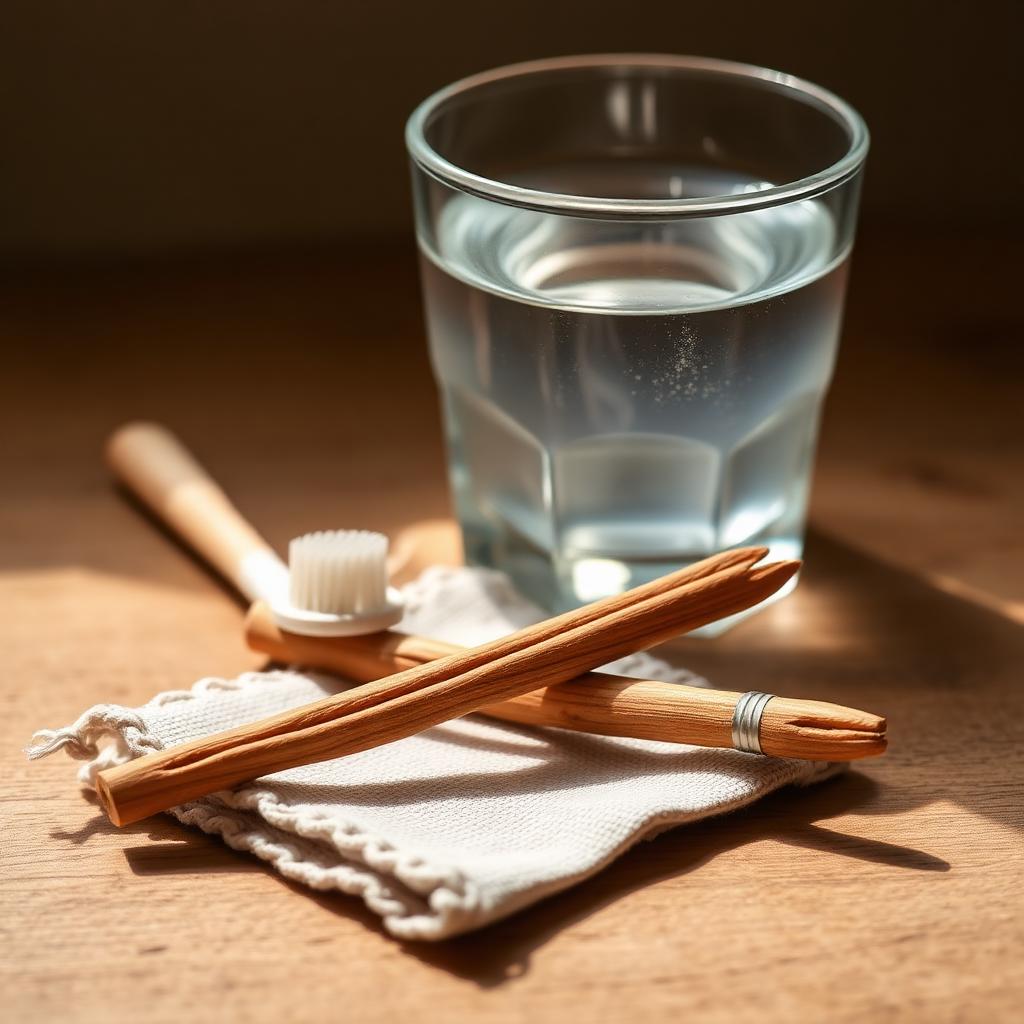
Incorporating miswak into your daily routine is simple and rewarding. It comes in a convenient, portable form, requiring no water or toothpaste, making it ideal for use throughout the day. To use, simply trim off the outer bark of one end, chew gently until bristles form, then brush your teeth and gums. Periodically trim the old bristles and expose fresh ones.
Embracing the miswak is more than adopting a natural dental tool; it’s a beautiful way to reconnect with the Sunnah of the Prophet Muhammad ﷺ, to prioritize purity, and to benefit from a natural product whose efficacy is now widely acknowledged by both tradition and science. It serves as a powerful reminder that true well-being often lies in harmonious living, guided by divine wisdom and respect for nature.
Key Takeaways
- Miswak is a natural toothbrush from the Salvadora persica tree, highly recommended by Prophet Muhammad ﷺ for oral hygiene.
- Its use is a cherished Sunnah, signifying physical cleanliness and spiritual devotion that pleases Allah (SWT).
- Modern scientific research corroborates its efficacy, identifying natural antimicrobial, abrasive, fluoride, and astringent compounds beneficial for oral health.
- Miswak embodies Islam's holistic view of health, connecting physical cleanliness with spiritual practice and natural living.
- It’s a convenient, environmentally friendly, and effective alternative/supplement to modern dental care.
Disclaimer: This article is for informational purposes only and is not intended as medical advice. Always consult with a qualified healthcare professional for any health concerns or before making any decisions related to your health or treatment.
Sources
- Sahih al-Bukhari
- Sahih Muslim
- The miswak: A periodontist's perspective
- Effectiveness of miswak on periodontal health: A systematic review
- Miswak vs. Toothbrush: A Comparative Study of their Efficacy on Oral Hygiene
- Fluoride concentration in Miswak (Salvadora persica L.) growing in different areas of Iran
Related reading
- Olive Oil in Islam: The Blessed Tree of the Quran — Discover the blessed olive tree, a cornerstone of Islamic health and wellness, marrying ancient wisdom with modern scien…
- Dates (Tamr): The Superfood of the Prophet ﷺ — Discover how dates, reverently known as Tamr, embody a holistic blueprint for health, marrying Islamic wisdom with moder…
- The Sunnah of Eating: Mindful Nutrition the Prophetic Way — Discover how Prophet Muhammad's dining habits offer a timeless guide to holistic health through mindful eating, blending…
- The Healing Power of Black Seed (Habbatus Sauda) in Islamic Tradition — Discover the ancient wisdom of Black Seed in Islamic tradition, beautifully intertwined with modern science for holistic…
- Sleep and Rest in Islam: The Prophetic Sleep Schedule for Optimal Health — Discover the profound wisdom of Prophetic sleep for optimal health, blending timeless Islamic teachings with modern scie…
Written by
Health Hub Pro Editorial
Health writer at Health Hub Pro, focused on evidence-based, Sharia-conscious wellness.
View author profile →Medically reviewed by
Health Hub Pro Editorial Board
Researched & Reviewed
Last reviewed on