Reptile Health Basics: Heat, Light, Humidity, and Nutrition
A practical, evidence-informed guide to reptile health — what matters, what works, common mistakes, and when to consult a professional.
For informational purposes only. This article is educational and is not a substitute for professional medical advice, diagnosis, or treatment. Always consult a qualified healthcare provider about anything affecting your health. Read full disclaimer.
Reptile Health Basics: Heat, Light, Humidity, and Nutrition
(Not medical or veterinary advice — consult a qualified clinician or veterinarian for personal guidance.)
Introduction
Providing appropriate care for reptiles requires a deep understanding of their specific environmental and dietary needs. These fascinating creatures, ranging from the arid-dwelling bearded dragon to the tropical green anole, depend entirely on their caregivers to replicate aspects of their natural habitats. The core elements of reptile husbandry — heat, light, humidity, and nutrition — are intricately linked and critical for their health, well-being, and longevity. Improper management of any of these factors can lead to a variety of health issues, ranging from metabolic bone disease to respiratory infections. This guide aims to provide a comprehensive, evidence-informed overview of these essential components, emphasizing the principles that underpin responsible reptile care.
Why this matters
The health and welfare of captive reptiles are directly proportional to the quality of their husbandry. Unlike mammals or birds, many reptiles are ectothermic, meaning they rely on external heat sources to regulate their body temperature. This fundamental physiological characteristic necessitates careful control over their thermal environment. Similarly, specific light spectrums, particularly ultraviolet B (UVB) radiation, are vital for vitamin D3 synthesis and calcium metabolism in many species. Humidity levels must also be maintained within species-specific ranges to support respiratory health, shedding processes, and overall hydration. Finally, a balanced and varied diet, appropriate to the species' natural foraging habits, is paramount for preventing nutritional deficiencies and promoting robust health.
Neglecting any of these critical aspects can lead to severe health consequences. For instance, inadequate UVB exposure is a primary cause of metabolic bone disease (MBD), a debilitating and often fatal condition characterized by weakened bones and skeletal deformities. Incorrect temperature gradients can impair digestion, suppress the immune system, and induce stress. Inappropriate humidity can cause respiratory infections or difficulties with ecdysis (shedding). Poor nutrition can result in vitamin deficiencies, organ damage, and failure to thrive. Therefore, understanding and diligently applying the principles of heat, light, humidity, and nutrition are not just about keeping a reptile alive, but about enabling it to thrive and express natural behaviors. Responsible care contributes significantly to the animal's quality of life and helps prevent common captive-related ailments, aligning with the ethical imperative to provide optimal conditions for animals under human care.
Key principles (evidence-informed)
The foundation of good reptile husbandry rests on replicating, as closely as possible, the specific environmental conditions and dietary requirements of each species in its natural habitat. This requires species-specific research and meticulous setup.
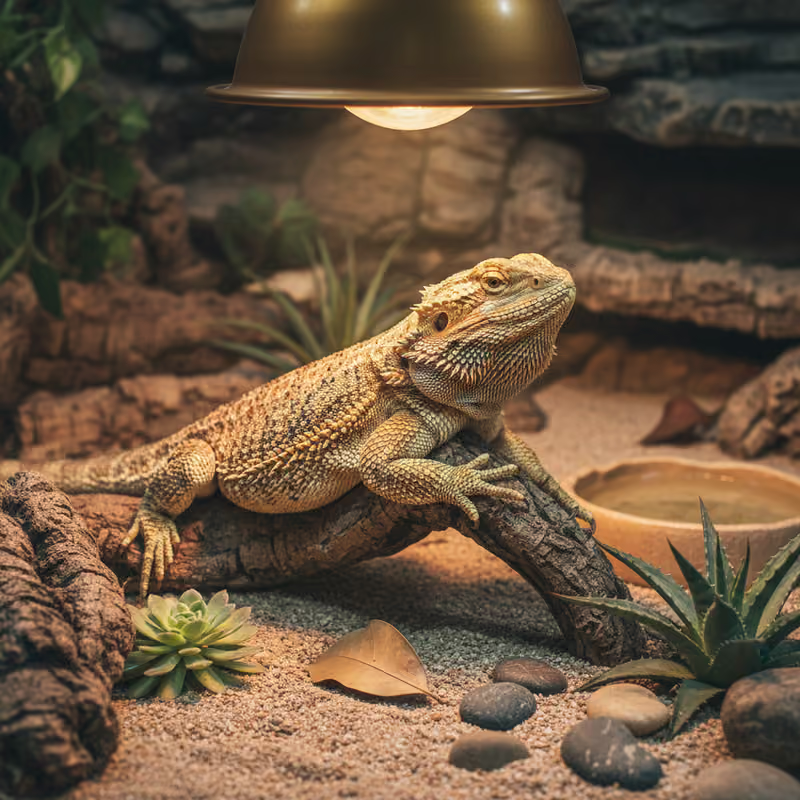
1. Heat: Reptiles are ectothermic, relying on external heat sources. A proper thermal gradient is essential, allowing the animal to move between warmer and cooler areas to regulate its body temperature.
- Basking Spot: Many species require a distinct basking spot, providing a concentrated heat source. This allows them to raise their body temperature for digestion, immune function, and activity. The temperature of this spot is crucial and should be monitored with a thermometer.
- Ambient Temperature: The overall temperature of the enclosure should also fall within a species-specific range. Cooler zones are necessary for thermoregulation, preventing overheating.
- Nighttime Temperatures: Many species tolerate a slight drop in temperature at night, mirroring natural cycles, but specific requirements vary. Some desert species may experience significant nocturnal drops, while tropical species may need more stable nighttime temperatures.
- Heat Sources: Common heat sources include ceramic heat emitters (which produce heat but no light, suitable for night), incandescent basking bulbs, and radiant heat panels. Under-tank heaters can be used for some species but must be carefully regulated and combined with overhead heating for most. All heat sources should be connected to thermostats to prevent overheating and ensure stable temperatures, and guarded to prevent direct contact burns.
- Monitoring: Reliable thermometers (e.g., digital thermometers with probes) should be used to monitor both basking spot temperatures and ambient temperatures at various points within the enclosure.
2. Light: Light provides illumination, dictates circadian rhythms, and for many species, is a source of crucial UVB radiation.
- Photoperiod: A consistent day-night cycle (typically 10-14 hours of light, 10-14 hours of dark, depending on species and season) is important for regulating natural behaviors and physiological processes. Timers are highly recommended.
- Visible Light: Sufficient visible light is necessary for the reptile to navigate its environment and for the caregiver to observe the animal. Full spectrum visible light bulbs can be beneficial.
- UVB Radiation: For many diurnal and crepuscular species, UVB radiation is critical for the synthesis of vitamin D3 in the skin. Vitamin D3 is essential for calcium absorption from the diet and its metabolism within the body, preventing metabolic bone disease (MBD).
- Species Specificity: The required intensity and type of UVB bulb vary significantly by species (e.g., desert species require higher UVB output than tropical or forest-dwelling species).
- Placement and Distance: UVB bulbs should be placed at an appropriate distance from the basking spot, as their effectiveness decreases with distance. Barriers like mesh can also filter UVB.
- Replacement: UVB bulbs have a limited lifespan for UVB output (often 6-12 months, even if they still produce visible light) and must be replaced regularly according to manufacturer guidelines.
- UVA Radiation: UVA radiation is also present in natural sunlight and may play a role in reptile behavior, appetite, and breeding cues, though it is less studied than UVB. Many full-spectrum bulbs emit UVA.
3. Humidity: Appropriate humidity levels are vital for respiratory health, successful shedding (ecdysis), and hydration.
- Species Specificity: Humidity requirements vary widely. Desert species need lower humidity (e.g., 20-40%), while tropical species require higher humidity (e.g., 60-80%).
- Monitoring: A reliable hygrometer is essential for monitoring humidity levels within the enclosure.
- Achieving Humidity: Methods include misting (daily or multiple times a day), using large water dishes that allow evaporation, incorporating humid hides (enclosed spaces with moist substrate), and selecting appropriate substrate materials (e.g., coco fiber, sphagnum moss for higher humidity).
- Ventilation: While high humidity is necessary for some species, proper ventilation is equally important to prevent stagnant air, which can foster bacterial and fungal growth, leading to respiratory infections. A balance between humidity and airflow is key.
4. Nutrition: A balanced, species-appropriate diet is fundamental for growth, energy, and preventing nutritional deficiencies.
- Dietary Classification: Reptiles can be herbivores (e.g., many tortoises, iguanas), carnivores (e.g., many snakes, monitor lizards), insectivores (e.g., many geckos, bearded dragons), or omnivores (e.g., some turtles, bearded dragons).
- Variety: Offering a diverse range of appropriate food items is crucial, even for species that eat primarily one type of food (e.g., different feeder insects for insectivores, different leafy greens for herbivores).
- Supplementation: Many captive diets lack adequate calcium and other essential vitamins and minerals.
- Calcium: Calcium supplementation (typically a phosphorus-free calcium carbonate powder) is often required, especially for growing animals and breeding females. It can be dusted onto feeder insects or leafy greens.
- Multivitamin: A multivitamin supplement containing vitamin D3 (if UVB is provided) and other essential vitamins and trace minerals is also often recommended, typically less frequently than calcium. The frequency depends on the species, diet, and UVB provision.
- Gut-Loading: For insectivorous reptiles, "gut-loading" feeder insects by feeding them a nutritious diet for 24-48 hours before feeding them to the reptile significantly enhances their nutritional value.
- Hydration: A clean, fresh water source should always be available. Water dishes should be appropriately sized and cleaned regularly. Some species drink from standing water, while others prefer to drink droplets from misting.
(WHO, CDC, NIH, NHS, Cochrane, Mayo Clinic, AVMA, WSAVA, FAO, OIE/WOAH) The principles outlined above are supported by extensive veterinary and zoological research, as reflected in guidelines published by organizations such as the Association of Reptile and Amphibian Veterinarians (ARAV) and informed by studies referenced by institutions like the National Institutes of Health (NIH) regarding vitamin D metabolism, and generally align with the welfare standards promoted by veterinary associations like the American Veterinary Medical Association (AVMA) and World Organisation for Animal Health (OIE/WOAH).
Practical daily habits
Consistent daily habits are vital for maintaining a healthy environment for your reptile.
- Temperature and Humidity Monitoring: Check thermometers and hygrometers daily. Make adjustments if readings are outside the optimal range.
- Food and Water: Provide fresh, clean water daily. Offer food according to the species' feeding schedule and age. Remove any uneaten perishable food promptly to prevent spoilage and bacterial growth.
- Spot Cleaning: Remove feces, urates, and any food debris daily. This helps maintain hygiene and prevents the build-up of harmful bacteria and odors.
- Observation: Spend time observing your reptile daily. Note any changes in behavior, appetite, activity level, skin condition, or breathing patterns. Early detection of issues can be crucial for successful intervention.
- Misting/Humidity Adjustment: For species requiring higher humidity, perform daily misting or check humid hides and replenish moisture as needed.
Weekly/Bi-weekly Habits:
- Full Enclosure Cleaning: Perform a more thorough cleaning of the enclosure, including wiping down surfaces, cleaning decorations, and replacing substrate as necessary (depending on substrate type and species).
- Water Dish Sanitization: Thoroughly clean and sanitize water dishes to prevent biofilm and bacterial growth.
- UVB Bulb Check: Note the date of installation for UVB bulbs to ensure timely replacement according to manufacturer recommendations.
Monthly/Quarterly Habits:
- Deep Clean: A complete deep clean of the enclosure, including discarding old substrate, scrubbing all surfaces and decorations, and disinfecting the enclosure with a reptile-safe disinfectant. Ensure thorough rinsing.
- Equipment Check: Inspect all heating, lighting, and misting equipment for proper function, wear, or damage. Replace as needed.
Common mistakes to avoid
Avoiding these common pitfalls is as important as implementing proper care.
- Inadequate Research: Not thoroughly researching the specific needs of the reptile species before acquiring it. Each species has unique requirements.
- Guessing Temperatures and Humidity: Relying on estimates or touch. Accurate, reliable thermometers and hygrometers are non-negotiable. Without them, you cannot ensure the correct environmental parameters.
- Incorrect Heat Sources: Using heat rocks, which can cause severe burns, or heat lamps without thermostats, leading to dangerous temperature fluctuations.
- Ignoring UVB Needs: Assuming that a window provides UVB (it doesn't, glass filters UVB), or failing to replace UVB bulbs regularly. This is a primary cause of metabolic bone disease.
- Improper Diet and Supplementation: Feeding an unbalanced diet (e.g., too much fruit for omnivores, only one type of insect for insectivores) or neglecting appropriate calcium and multivitamin supplementation.
- Poor Enclosure Size: Housing a reptile in an enclosure that is too small for its adult size, leading to stress, lack of exercise, and stunted growth.
- Lack of Hides/Enrichment: Failing to provide adequate hiding spots and environmental enrichment (climbing branches, rocks, appropriate substrate) which are crucial for reducing stress and promoting natural behaviors.
- Poor Ventilation: Especially in humid enclosures, inadequate ventilation can lead to stagnant air, promoting bacterial and fungal growth and respiratory issues.
- Mixing Species: Housing different reptile species together, which can lead to stress, aggression, disease transmission, or one species outcompeting another for resources.
- Overhandling/Stress: Overhandling some species, or failing to provide a secure, quiet environment can cause chronic stress, impacting the immune system and overall health.
When to see a professional
Recognizing signs that warrant a veterinary visit is crucial for the health and well-being of your reptile. Seek professional veterinary care promptly if you observe any of the following:
- Changes in Appetite: Significant decrease or complete refusal to eat for an extended period (beyond normal brumation/seasonal cycles).
- Weight Loss or Gain: Unexplained or rapid weight loss, or abnormal swelling.
- Lethargy or Weakness: Decreased activity, reluctance to move, or an inability to support its own weight.
- Changes in Feces or Urates: Diarrhea, constipation, presence of blood, or unusual colors/textures.
- Difficulty Breathing: Open-mouth breathing, gaping, wheezing, clicking sounds, or bubbles around the nose or mouth.
- Abnormal Shedding: Incomplete sheds, retained eye caps, or difficulty shedding that lasts more than a few days.
- Eye Issues: Swelling, discharge, cloudiness, or an inability to open eyes.
- Skin Lesions: Lumps, bumps, sores, blisters, discoloration, or scale rot.
- Skeletal Deformities: Swollen limbs, jaw deformities, bowed legs, or tremors, which can be signs of Metabolic Bone Disease.
- Parasites: Visible external parasites (mites, ticks) or signs of internal parasites (e.g., worms in feces).
- Behavioral Changes: Increased aggression, hiding more than usual, head pressing, or unusual swimming patterns for aquatic species.
- Injury: Any physical trauma, cuts, abrasions, or burns.
- Regurgitation: Repeated regurgitation of food.
It is important to seek a veterinarian experienced in reptile medicine, as their physiological needs and diseases differ significantly from those of more common companion animals. (AVMA, WSAVA)
Frequently asked questions
Q1: How often do I need to clean my reptile's enclosure?
A1: Spot cleaning (removing feces, urates, and uneaten food) should be done daily. A more thorough partial cleaning, involving wiping down surfaces and cleaning water dishes, is typically recommended weekly to bi-weekly. A deep clean, where all substrate is replaced and the enclosure is thoroughly disinfected, is usually performed monthly to quarterly, depending on the species, substrate type, and enclosure size. Consistent daily and weekly maintenance helps reduce the need for frequent full deep cleans.
Q2: Why is UVB light so important for many reptiles?
A2: For many diurnal and crepuscular reptile species, UVB radiation is critical for the synthesis of vitamin D3 in their skin. Vitamin D3 is essential for the absorption of calcium from their diet and its proper metabolism within the body. Without adequate UVB, reptiles cannot produce sufficient vitamin D3, leading to impaired calcium utilization and serious health issues like Metabolic Bone Disease (MBD), which weakens bones and can be fatal. Even if a calcium supplement is provided, it may not be properly utilized without adequate vitamin D3.
Q3: How do I know if my reptile's humidity levels are correct?
A3: To ensure correct humidity, you must use a reliable hygrometer inside the enclosure. Research your specific reptile species' natural habitat to determine its ideal humidity range (e.g., desert species need lower humidity, tropical species need higher humidity). Monitor the hygrometer daily and adjust humidity by misting, using a larger water dish, or incorporating a humid hide as needed. Ensure there is also adequate ventilation to prevent stagnant, overly damp conditions.
Q4: Can I feed my reptile only one type of insect or vegetable?
A4: While some reptiles may have a preferred food item, providing a varied diet is crucial for ensuring complete nutrition and preventing deficiencies. For insectivores, this means offering a rotation of different feeder insects (e.g., crickets, dubia roaches, black soldier fly larvae), all properly gut-loaded and dusted with calcium and multivitamins. For herbivores and omnivores, a diverse mix of appropriate leafy greens, vegetables, and small amounts of fruit (if appropriate for the species) is vital. Variety helps ensure a broad spectrum of vitamins, minerals, and other nutrients.
Q5: My reptile is not eating, should I be concerned?
A5: A temporary refusal to eat can sometimes be normal, especially during shedding cycles, seasonal changes (like brumation), or if the reptile is new to its environment. However, a prolonged lack of appetite (more than a few days to a week, depending on the species and age) can be a sign of illness, improper husbandry (e.g., incorrect temperatures, stress), or internal parasites. If accompanied by other symptoms like lethargy, weight loss, or abnormal behavior, or if it persists, it warrants a visit to a reptile veterinarian to determine the underlying cause.
Key takeaways
- Species-Specific Care: The cornerstone of good reptile husbandry is understanding and meeting the unique heat, light, humidity, and nutritional needs of each specific reptile species. There is no one-size-fits-all approach.
- Environmental Control is Paramount: Reptiles are ectothermic and rely entirely on external sources for temperature regulation. Precise control over thermal gradients, UVB provision, and humidity levels is critical for their physiological functions and preventing disease.
- Nutrition and Supplementation: A varied, species-appropriate diet, combined with proper gut-loading of prey items and appropriate calcium and multivitamin supplementation, is essential for growth, bone health, and preventing deficiencies.
- Constant Monitoring: Regular monitoring of environmental parameters (using reliable thermometers and hygrometers) and daily observation of the reptile's health and behavior are non-negotiable practices for early detection of issues.
- Proactive Health Management: Implementing consistent daily and weekly cleaning routines, understanding common mistakes to avoid, and knowing when to seek professional veterinary care are vital for ensuring the long-term health and well-being of your reptile companion.
Related reading
Keep exploring this topic with our related, evidence-reviewed guides:
- Dog Nutrition Basics: Building a Balanced Bowl at Every Life Stage — A practical, evidence-informed guide to dog nutrition — what matters, what works, common mistakes, and when to consult a professio…
- Sheep and Goat Health: Parasites, Hoof Trimming, and Nutrition — A practical, evidence-informed guide to sheep health — what matters, what works, common mistakes, and when to consult a profession…
- Horse Health Essentials: Hooves, Teeth, Colic, and Conditioning — A practical, evidence-informed guide to horse health — what matters, what works, common mistakes, and when to consult a profession…
- Cattle Health Management: Nutrition, Mastitis, and Lameness Prevention — A practical, evidence-informed guide to cattle health — what matters, what works, common mistakes, and when to consult a professio…
- Beekeeping and Hive Health: Varroa, Nutrition, and Colony Strength — A practical, evidence-informed guide to bee health — what matters, what works, common mistakes, and when to consult a professional…
- Pet First Aid: What Every Owner Should Keep and Know — A practical, evidence-informed guide to pet first aid — what matters, what works, common mistakes, and when to consult a professio…
Sources
- American Veterinary Medical Association (AVMA)
- World Organisation for Animal Health (OIE/WOAH)
Sources
Evidence & citations
- Every claim in this animal health guide is backed by primary data — browse the zoonotic and one-health statistics in our sourced statistics library.
- Writing about this topic? Researchers, journalists and educators can cite our animal health guidance with ready-made APA, MLA and Chicago references.
My notes on this one
The short version of 13 minutes of reading — what stuck with me while writing “Reptile Health Basics: Heat, Light, Humidity, and Nutrition”, what the sources back up, and what I'd actually do about it.
What I'd take away
01 · Why this matters
For instance, inadequate UVB exposure is a primary cause of metabolic bone disease (MBD), a debilitating and often fatal condition characterized by weakened bones and skeletal deformities.
02 · Key principles
Photoperiod: A consistent day-night cycle (typically 10-14 hours of light, 10-14 hours of dark, depending on species and season) is important for regulating natural behaviors and physiological processes…
03 · Practical daily habits
Food and Water: Provide fresh, clean water daily. Offer food according to the species' feeding schedule and age. Remove any uneaten perishable food promptly to prevent spoilage and bacterial growth.
04 · Common mistakes to avoid
Inadequate Research: Not thoroughly researching the specific needs of the reptile species before acquiring it. Each species has unique requirements.
What the sources I read actually say
Improper management of any of these factors can lead to a variety of health issues, ranging from metabolic bone disease to respiratory infections.
Centers for Disease Control and Prevention
If you only do one thing this week
- Replacement — UVB bulbs have a limited lifespan for UVB output (often 6-12 months, even if they still produce visible light) and must be replaced regularly according to manufacture…
- Species Specificity — Humidity requirements vary widely. Desert species need lower humidity (e.g., 20-40%), while tropical species require higher humidity (e.g., 60-80%).
Pick the one that fits your week. None of this replaces advice from a clinician who can actually examine you.
Questions I kept coming back to
How often do I need to clean my reptile's enclosure?+
Spot cleaning (removing feces, urates, and uneaten food) should be done daily. A more thorough partial cleaning, involving wiping down surfaces and cleaning water dishes, is typically recommended weekly to bi-weekly. A deep clean, where all substrate is replaced and the enclosure is thoroughly disinfected, is usually performed monthly to quarterly, depending on the species, substrate type, and enclosure size…
Why is UVB light so important for many reptiles?+
For many diurnal and crepuscular reptile species, UVB radiation is critical for the synthesis of vitamin D3 in their skin. Vitamin D3 is essential for the absorption of calcium from their diet and its proper metabolism within the body. Without adequate UVB, reptiles cannot produce sufficient vitamin D3, leading to impaired calcium utilization and serious health issues like Metabolic Bone Disease (MBD)…
How do I know if my reptile's humidity levels are correct?+
To ensure correct humidity, you must use a reliable hygrometer inside the enclosure. Research your specific reptile species' natural habitat to determine its ideal humidity range (e.g., desert species need lower humidity, tropical species need higher humidity). Monitor the hygrometer daily and adjust humidity by misting, using a larger water dish, or incorporating a humid hide as needed…
Can I feed my reptile only one type of insect or vegetable?+
While some reptiles may have a preferred food item, providing a varied diet is crucial for ensuring complete nutrition and preventing deficiencies. For insectivores, this means offering a rotation of different feeder insects (e.g., crickets, dubia roaches, black soldier fly larvae), all properly gut-loaded and dusted with calcium and multivitamins. For herbivores and omnivores…
My reptile is not eating, should I be concerned?+
A temporary refusal to eat can sometimes be normal, especially during shedding cycles, seasonal changes (like brumation), or if the reptile is new to its environment. However, a prolonged lack of appetite (more than a few days to a week, depending on the species and age) can be a sign of illness, improper husbandry (e.g., incorrect temperatures, stress), or internal parasites…
Was this article helpful?
Be the first to rate this article.
Written by
FaizRuh
I write Health Hub Pro on my own — no clinical licence, no anonymous review panel. Just the published guidance, read carefully and explained plainly.
More about me →How this page was checked
Every claim above is checked against the sources listed at the bottom of this article — WHO, CDC, NIH, NHS, Cochrane and major clinical guidelines. Drafting is AI-assisted; the editing, fact-checking and final wording are mine. It's information, not medical advice. Spotted an error? Tell me and I'll fix it.
Last checked on