Healthy Fats vs Harmful Fats: What the Evidence Shows
A practical, evidence-informed guide to healthy fats — what matters, what works, common mistakes, and when to consult a professional.
For informational purposes only. This article is educational and is not a substitute for professional medical advice, diagnosis, or treatment. Always consult a qualified healthcare provider about anything affecting your health. Read full disclaimer.
Healthy Fats vs Harmful Fats: What the Evidence Shows
(Not medical or veterinary advice — consult a qualified clinician or veterinarian for personal guidance.)
Introduction
Fats are an essential component of a balanced diet, playing numerous vital roles in the human body. Far from being uniformly detrimental, fats are crucial for energy production, absorption of fat-soluble vitamins (A, D, E, K), hormone synthesis, insulation, and the protection of organs. However, not all fats are created equal. The distinction between "healthy" and "harmful" fats is significant for maintaining optimal health. Understanding these differences and how to incorporate beneficial fats while limiting less healthy ones is a cornerstone of evidence-informed nutrition. This article aims to clarify these distinctions, drawing upon current scientific understanding to provide practical guidance for everyday dietary choices.
Why this matters
The types of fats consumed have a profound impact on overall health, influencing everything from cardiovascular well-being to inflammatory responses and brain function. Dietary fat quality has been consistently linked to the risk of developing various chronic conditions. For instance, diets rich in certain fats have been associated with increased risks of heart disease, type 2 diabetes, and certain cancers, while diets emphasizing other fats are linked to protective effects.
Beyond disease prevention, the right balance of fats contributes to better energy levels, improved mood, and enhanced nutrient absorption. Misinformation or a lack of understanding about fats can lead to dietary choices that inadvertently undermine health goals. By discerning healthy fats from those that should be consumed in moderation, individuals can make informed decisions that support long-term well-being and contribute to a healthier lifestyle. The quality of fat in one's diet is often more important than the total quantity, making this distinction a critical area of focus for public health.
Key principles (evidence-informed)
Understanding the different categories of dietary fats is fundamental to making informed food choices.
Unsaturated Fats: The "Healthy" Category
Unsaturated fats are generally considered beneficial for health when consumed in moderation and as part of a balanced diet. They can help lower low-density lipoprotein (LDL) cholesterol levels, often referred to as "bad" cholesterol, and raise high-density lipoprotein (HDL) cholesterol, or "good" cholesterol, thereby reducing the risk of heart disease.
Monounsaturated Fats (MUFAs)
These fats have one double bond in their chemical structure.
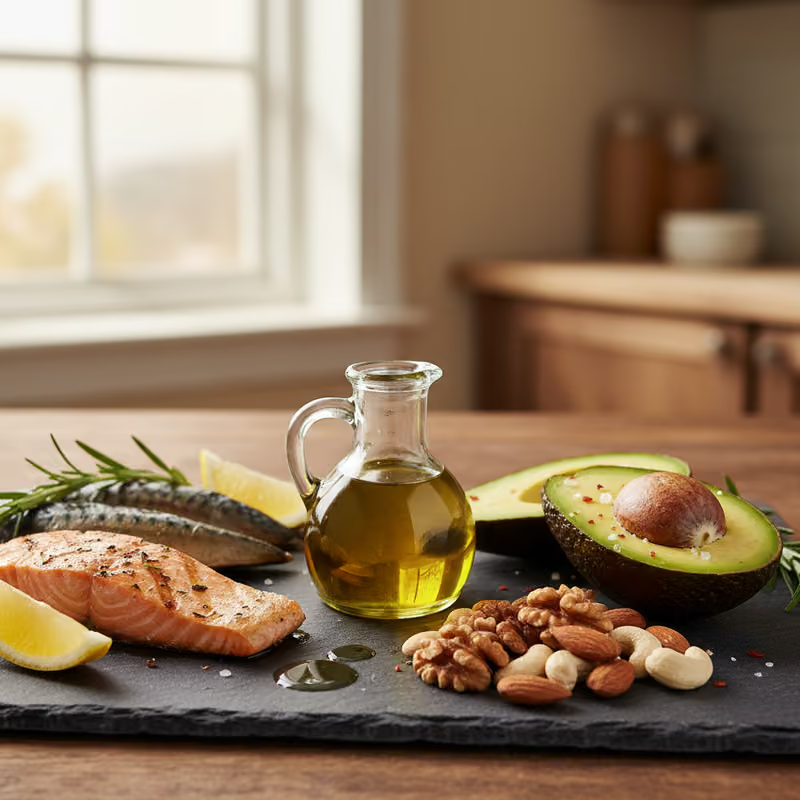
- Sources: Abundant in olive oil, avocado, nuts (almonds, cashews, pecans), and seeds (sesame, pumpkin).
- Benefits: Known for their role in improving cholesterol levels, reducing inflammation, and potentially aiding in blood sugar control.
Polyunsaturated Fats (PUFAs)
These fats have more than one double bond. They are essential fats, meaning the body cannot produce them and must obtain them from the diet.
- Omega-3 Fatty Acids: A crucial type of PUFA.
- Types: Alpha-linolenic acid (ALA) is found in plants, while eicosapentaenoic acid (EPA) and docosahexaenoic acid (DHA) are primarily found in marine sources.
- Sources: Fatty fish (salmon, mackerel, sardines, trout), flaxseeds, chia seeds, walnuts, and some fortified foods.
- Benefits: Strongly associated with reduced risk of heart disease, improved brain function, anti-inflammatory effects, and eye health.
- Omega-6 Fatty Acids: Another type of PUFA.
- Sources: Vegetable oils (soybean, corn, sunflower oil), nuts, and seeds.
- Benefits: Essential for energy and cell growth. While necessary, a high intake relative to omega-3s is thought to potentially promote inflammation. The key is balance.
Saturated Fats: Consume in Moderation
Saturated fats primarily come from animal products and some plant-based oils. For a long time, saturated fats were broadly considered "unhealthy" due to their link with increased LDL cholesterol. Current understanding suggests a more nuanced perspective, where the overall dietary pattern and the specific food sources of saturated fats play a role. However, major health organizations generally advise limiting their intake.
- Sources: Red meat, poultry with skin, butter, cheese, full-fat dairy products, coconut oil, and palm oil.
- Impact: Can raise LDL cholesterol levels, potentially increasing the risk of heart disease when consumed in excess.
Trans Fats: The "Harmful" Category
Trans fats are considered the most harmful type of dietary fat. There are two main types: naturally occurring trans fats (found in small amounts in meat and dairy) and artificial trans fats (created through an industrial process called partial hydrogenation).
- Sources: Artificial trans fats are found in some processed foods like baked goods (pastries, cookies), fried foods, and certain margarines and shortenings, although their use has been largely restricted or banned in many regions due to public health initiatives.
- Impact: Dramatically raise LDL cholesterol and simultaneously lower HDL cholesterol, significantly increasing the risk of heart disease, stroke, and type 2 diabetes. Leading health bodies recommend avoiding artificial trans fats entirely.
General Dietary Fat Recommendations
Major health organizations, such as the World Health Organization (WHO), Centers for Disease Control and Prevention (CDC), and National Institutes of Health (NIH), provide general guidelines:
- Overall Fat Intake: Should generally range between 20-35% of total daily calories, though specific needs vary.
- Saturated Fat: Limit to less than 10% of total daily calories. Some guidelines suggest even lower, around 5-6% for individuals needing to lower LDL cholesterol.
- Trans Fat: Avoid artificial trans fats as much as possible.
- Focus: Prioritize unsaturated fats, especially omega-3s, from whole food sources.
Practical daily habits
Incorporating healthy fats and limiting harmful ones can be achieved through conscious daily food choices.
- Choose Healthy Cooking Oils: Opt for olive oil, canola oil, and avocado oil for cooking and salad dressings, as they are rich in monounsaturated and polyunsaturated fats.
- Increase Omega-3 Intake:
- Fish: Aim for at least two servings of fatty fish (e.g., salmon, mackerel, sardines, trout) per week.
- Plant-based: Incorporate ground flaxseeds, chia seeds, and walnuts into meals (e.g., in oatmeal, smoothies, salads).
- Snack Smart: Replace processed snacks with nuts and seeds (almonds, walnuts, pecans, pumpkin seeds), which provide healthy fats, fiber, and protein. A small handful is usually sufficient.
- Embrace Avocados: Add avocado slices to sandwiches, salads, or make guacamole for a dose of monounsaturated fats.
- Limit Processed Foods: Many processed snacks, baked goods, and fried foods can contain artificial trans fats and excessive saturated fats. Reading food labels carefully is crucial to identify these.
- Reduce Red and Processed Meats: Opt for leaner cuts of meat, poultry without skin, or plant-based protein sources like beans and lentils more frequently. When consuming meat, choose cooking methods that don't add excessive fat, like grilling or baking.
- Dairy Choices: Select lower-fat dairy options (e.g., skim milk, low-fat yogurt) or plant-based alternatives to reduce saturated fat intake.
- Ingredient Awareness: When dining out or purchasing pre-packaged meals, be mindful of ingredients. Restaurant foods can often be high in less healthy fats.
By integrating these habits, individuals can systematically improve their fat intake profile without drastic dietary overhauls. Small, consistent changes tend to be more sustainable and impactful over time.
Common mistakes to avoid
Navigating the world of dietary fats can be complex, and several common misconceptions or errors can undermine efforts to eat healthily.
- Fearing All Fats: A significant mistake is assuming all fats are detrimental and attempting to eliminate them from the diet. This can lead to deficiencies in essential fatty acids and fat-soluble vitamins, negatively impacting overall health. The body needs healthy fats to function properly.
- Over-reliance on "Low-Fat" Products: Many "low-fat" or "fat-free" processed foods compensate for the removal of fat by adding extra sugar, refined carbohydrates, or artificial ingredients, which can be equally or more detrimental to health than the original fat content. It's important to look at the overall nutritional profile, not just the fat content.
- Ignoring Portion Sizes for Healthy Fats: While healthy fats are beneficial, they are still calorie-dense. Consuming excessively large portions of olive oil, nuts, seeds, or avocados can lead to an energy surplus, potentially contributing to weight gain if not balanced with overall calorie intake and activity levels.
- Misinterpreting "Natural" Fats: The term "natural" on food labels does not automatically equate to healthy. For instance, coconut oil and palm oil are natural, but they are high in saturated fats, which should be consumed in moderation according to most health guidelines.
- Focusing Solely on Total Fat vs. Type of Fat: Historically, dietary advice often focused on limiting total fat intake. However, current evidence emphasizes that the type of fat is far more important than the total quantity (within reasonable ranges). An intake dominated by healthy fats is preferable to a low-fat diet high in refined carbohydrates.
- Believing "Healthy" Means Unlimited Consumption: Even healthy foods have limits. For example, while omega-6 fatty acids are essential, an excessive intake compared to omega-3s can shift the body's inflammatory balance. Balance and variety are key.
- Neglecting Food Preparation Methods: Even healthy foods can become less healthy depending on how they are prepared. For instance, deep-frying vegetables in unhealthy oils can negate their nutritional benefits. Opt for baking, grilling, steaming, or sautéing with healthy oils.
Avoiding these common pitfalls can help ensure that dietary fat choices truly contribute to improved health and well-being.
When to see a professional
While general dietary guidelines are beneficial for most individuals, there are specific circumstances when consulting a healthcare professional or a registered dietitian is advisable for personalized guidance on fat intake and overall nutrition.
- Existing Health Conditions: If you have pre-existing health conditions such as heart disease, high cholesterol, type 2 diabetes, metabolic syndrome, or certain digestive disorders, tailored dietary advice is crucial. A professional can help you understand how specific fats impact your condition and how to adjust your diet accordingly.
- Medication Use: Certain medications can interact with dietary components or require specific nutritional considerations. A healthcare provider can advise on any necessary dietary modifications.
- Unexplained Symptoms: If you experience symptoms that you suspect might be related to your diet, such as persistent digestive issues, unexplained weight changes, or unusual fatigue, a professional can help diagnose the cause and offer appropriate dietary strategies.
- Dietary Restrictions or Allergies: Individuals with food allergies, intolerances, or specific dietary restrictions (e.g., vegan, vegetarian, or religious dietary laws) may need professional guidance to ensure they are meeting all their nutritional needs, including adequate intake of essential fatty acids.
- Pregnancy or Lactation: Nutritional needs significantly change during pregnancy and breastfeeding. A dietitian can ensure adequate intake of essential fats, particularly omega-3s, which are vital for fetal and infant development.
- Performance or Body Composition Goals: Athletes or individuals with specific body composition goals (e.g., muscle gain, significant weight loss) may benefit from professional advice to optimize their macronutrient intake, including fats, to support their objectives safely and effectively.
- Confusion or Overwhelm: If you feel overwhelmed by conflicting dietary information or are unsure how to apply general guidelines to your specific situation, a professional can provide clarity and create a personalized eating plan.
- Suspected Nutrient Deficiencies: If you suspect you might be deficient in certain nutrients, such as essential fatty acids, a healthcare provider can order tests and recommend appropriate interventions.
A registered dietitian or a healthcare provider can assess your individual health status, dietary habits, and lifestyle to provide evidence-based, personalized recommendations for fat intake and overall nutrition.
Frequently asked questions
Q: Are all saturated fats equally harmful?
A: While general recommendations suggest limiting saturated fat intake, research indicates that the impact of saturated fats might depend on the specific type of saturated fatty acid and the food source. For example, some dairy products and dark chocolate, which contain saturated fats, also offer beneficial nutrients. However, consuming saturated fats in excess, particularly from processed meats and foods high in unhealthy fats, is generally discouraged by health organizations like the WHO and NIH due to their potential to raise LDL cholesterol. The overall dietary pattern matters more than isolated nutrients.
Q: Can healthy fats cause weight gain?
A: Yes, if consumed in excessive quantities. While healthy fats are crucial for health, they are also calorie-dense, providing about 9 calories per gram compared to 4 calories per gram for carbohydrates and protein. Eating large portions of even healthy fat sources like nuts, avocados, or olive oil without adjusting overall calorie intake can lead to consuming more calories than your body burns, which can result in weight gain. Portion control remains important for all foods, including those rich in healthy fats.
Q: What are good sources of omega-3s for vegetarians or vegans?
A: Vegetarians and vegans can obtain alpha-linolenic acid (ALA), a type of omega-3, from various plant sources. Excellent sources include flaxseeds (ground), chia seeds, walnuts, hemp seeds, and canola oil. The body can convert some ALA into EPA and DHA, but this conversion rate is limited. For more direct sources of EPA and DHA, some fortified foods or algae-based omega-3 supplements can be considered, particularly for those with higher needs, and after consulting a healthcare professional.
Q: How can I identify artificial trans fats on food labels?
A: To identify artificial trans fats, look for ingredients like "partially hydrogenated oil" or "hydrogenated vegetable oil" in the ingredient list. Even if a product claims "0 grams trans fat" on the nutrition label, it can legally contain up to 0.5 grams of trans fat per serving. Therefore, checking the ingredient list for partially hydrogenated oils is the most reliable method to avoid artificial trans fats. Many countries and regions have implemented restrictions or bans on artificial trans fats, leading to their reduction in many processed foods.
Q: Is coconut oil considered a healthy fat?
A: Coconut oil is high in saturated fat, primarily lauric acid. While some proponents suggest benefits, major health organizations like the American Heart Association and the National Institutes of Health advise limiting its consumption due to its potential to raise LDL (bad) cholesterol levels, similar to other sources of saturated fat. While it can be used in moderation as part of a balanced diet, it's generally recommended to prioritize oils rich in unsaturated fats, such as olive oil or canola oil, for regular cooking.
Key takeaways
- Fats are Essential: Fats are vital for numerous bodily functions, but the type of fat consumed is critical.
- Prioritize Unsaturated Fats: Monounsaturated (MUFAs) and polyunsaturated (PUFAs), especially omega-3s, are beneficial for heart health, brain function, and reducing inflammation. Sources include olive oil, avocados, nuts, seeds, and fatty fish.
- Limit Saturated Fats: Consume saturated fats, found in red meat, butter, and full-fat dairy, in moderation. They can raise LDL cholesterol.
- Avoid Artificial Trans Fats: These are the most harmful fats, found in partially hydrogenated oils, and should be avoided entirely due to their severe negative impact on cardiovascular health.
- Read Labels and Choose Whole Foods: Be mindful of ingredient lists, especially for processed foods. Prioritize whole, unprocessed foods to ensure a healthier fat profile.
- Portion Control Matters: Even healthy fats are calorie-dense. Consume them in appropriate portions as part of an overall balanced diet.
- Seek Professional Advice: For specific health conditions, dietary restrictions, or personalized guidance, consult a healthcare professional or a registered dietitian.
Related reading
Keep exploring this topic with our related, evidence-reviewed guides:
- Healthy Fats vs. Harmful Fats: Evidence-Based Guide — Unsaturated fats from olive oil, nuts, and fish support health; trans fats are best avoided.
- Plant-Based Protein Sources: Evidence-Based Guide — Beans, lentils, tofu, tempeh, and nuts can meet protein needs when combined thoughtfully.
- Understanding Macronutrients: Evidence-Based Guide — Macronutrients – carbohydrates, proteins, and fats – are essential for energy, growth, and bodily functions. Understanding their r…
- Healthy Breakfast Ideas: Evidence-Based Guide — Discover a variety of nutritious and delicious breakfast ideas to fuel your day, improve energy levels, and support overall health…
- The Truth About Detox Diets: Evidence-Based Guide — Your liver and kidneys handle detoxification. Sustainable eating outperforms any short detox.
- Protein Requirements by Age and Activity Level, Explained — A practical, evidence-informed guide to protein needs — what matters, what works, common mistakes, and when to consult a professio…
Sources
- World Health Organization (WHO)
- Centers for Disease Control and Prevention (CDC)
- National Institutes of Health (NIH)
- Cochrane Library
- Mayo Clinic
Sources
Evidence & citations
- Every claim in this nutrition & diet guide is backed by primary data — browse the nutrition and diet health statistics in our sourced statistics library.
- Writing about this topic? Researchers, journalists and educators can cite our nutrition research with ready-made APA, MLA and Chicago references.
My notes on this one
The short version of 12 minutes of reading — what stuck with me while writing “Healthy Fats vs Harmful Fats: What the Evidence Shows”, what the sources back up, and what I'd actually do about it.
What I'd take away
01 · Why this matters
For instance, diets rich in certain fats have been associated with increased risks of heart disease, type 2 diabetes, and certain cancers, while diets emphasizing other fats are linked to protective effects.
02 · Key principles
Understanding the different categories of dietary fats is fundamental to making informed food choices.
03 · Unsaturated Fats: The "Healthy" Category
They can help lower low-density lipoprotein (LDL) cholesterol levels, often referred to as "bad" cholesterol, and raise high-density lipoprotein (HDL) cholesterol, or "good" cholesterol…
04 · Monounsaturated Fats
Benefits: Known for their role in improving cholesterol levels, reducing inflammation, and potentially aiding in blood sugar control.
05 · Polyunsaturated Fats
Benefits: Essential for energy and cell growth. While necessary, a high intake relative to omega-3s is thought to potentially promote inflammation. The key is balance.
What the sources I read actually say
However, major health organizations generally advise limiting their intake.
World Health OrganizationFor instance, diets rich in certain fats have been associated with increased risks of heart disease, type 2 diabetes, and certain cancers…
Centers for Disease Control and PreventionMajor health organizations, such as the World Health Organization (WHO), Centers for Disease Control and Prevention (CDC), and National Institutes of Health (NIH)…
National Institutes of Health
If you only do one thing this week
- Choose Healthy Cooking Oils — Opt for olive oil, canola oil, and avocado oil for cooking and salad dressings, as they are rich in monounsaturated and polyunsaturated fats.
- Limit Processed Foods — Many processed snacks, baked goods, and fried foods can contain artificial trans fats and excessive saturated fats…
- Overall Fat Intake — Should generally range between 20-35% of total daily calories, though specific needs vary.
- Saturated Fat — Limit to less than 10% of total daily calories. Some guidelines suggest even lower, around 5-6% for individuals needing to lower LDL cholesterol.
- While healthy fats are crucial for health, they are also calorie-dense, providing about 9 calories per gram compared to 4 calories per gram for carbohydrates and protein.
Pick the one that fits your week. None of this replaces advice from a clinician who can actually examine you.
Questions I kept coming back to
Are all saturated fats equally harmful?+
While general recommendations suggest limiting saturated fat intake, research indicates that the impact of saturated fats might depend on the specific type of saturated fatty acid and the food source. For example, some dairy products and dark chocolate, which contain saturated fats, also offer beneficial nutrients. However, consuming saturated fats in excess…
Can healthy fats cause weight gain?+
Yes, if consumed in excessive quantities. While healthy fats are crucial for health, they are also calorie-dense, providing about 9 calories per gram compared to 4 calories per gram for carbohydrates and protein. Eating large portions of even healthy fat sources like nuts, avocados, or olive oil without adjusting overall calorie intake can lead to consuming more calories than your body burns…
What are good sources of omega-3s for vegetarians or vegans?+
Vegetarians and vegans can obtain alpha-linolenic acid (ALA), a type of omega-3, from various plant sources. Excellent sources include flaxseeds (ground), chia seeds, walnuts, hemp seeds, and canola oil. The body can convert some ALA into EPA and DHA, but this conversion rate is limited. For more direct sources of EPA and DHA, some fortified foods or algae-based omega-3 supplements can be considered…
How can I identify artificial trans fats on food labels?+
To identify artificial trans fats, look for ingredients like "partially hydrogenated oil" or "hydrogenated vegetable oil" in the ingredient list. Even if a product claims "0 grams trans fat" on the nutrition label, it can legally contain up to 0.5 grams of trans fat per serving. Therefore, checking the ingredient list for partially hydrogenated oils is the most reliable method to avoid artificial trans fats…
Is coconut oil considered a healthy fat?+
Coconut oil is high in saturated fat, primarily lauric acid. While some proponents suggest benefits, major health organizations like the American Heart Association and the National Institutes of Health advise limiting its consumption due to its potential to raise LDL (bad) cholesterol levels, similar to other sources of saturated fat. While it can be used in moderation as part of a balanced diet…
Was this article helpful?
Be the first to rate this article.
Written by
FaizRuh
I write Health Hub Pro on my own — no clinical licence, no anonymous review panel. Just the published guidance, read carefully and explained plainly.
More about me →How this page was checked
Every claim above is checked against the sources listed at the bottom of this article — WHO, CDC, NIH, NHS, Cochrane and major clinical guidelines. Drafting is AI-assisted; the editing, fact-checking and final wording are mine. It's information, not medical advice. Spotted an error? Tell me and I'll fix it.
Last checked on