Posture Exercises for Office Workers
Discover simple yet effective posture exercises tailored for office workers to combat the negative effects of prolonged sitting and improve overall well-being. Enhance your spinal health and comfort throughout your workday.
For informational purposes only. This article is educational and is not a substitute for professional medical advice, diagnosis, or treatment. Always consult a qualified healthcare provider about anything affecting your health. Read full disclaimer.
Posture Exercises for Office Workers
Understanding the Impact of Poor Posture
Sitting for hours often leads to slouching, hunching over a keyboard, or craning the neck to view a monitor. This puts undue stress on the spine, muscles, and ligaments, potentially leading to chronic pain, headaches, fatigue, and affecting breathing and digestion. Over time, these poor postural habits can contribute to conditions like sciatica, disc herniation, and carpal tunnel syndrome.
What the evidence says
Key Posture Muscles to Target
Symptoms and warning signs
Recognizing the early signs of poor posture or its consequences can help you intervene before conditions become chronic. Be attentive to your body:
- Persistent Aches and Pains:
- Neck and Shoulder Pain: Often described as a dull ache, stiffness, or sharp pain, especially at the base of the skull, between the shoulder blades, or across the top of the shoulders.
- Low Back Pain: A common complaint, ranging from a nagging discomfort to sharp, radiating pain.
- Headaches: Tension headaches originating at the base of the skull are often linked to neck and upper back tension caused by forward head posture.
- Visible Postural Deviations:
- Rounded Shoulders: Shoulders appear to curve forward.
- Forward Head Posture (Text Neck): Head juts forward.
- Hunchback (Kyphosis): An excessive outward curve of the upper back.
- Anterior Pelvic Tilt: Pelvis tilts forward, increasing the arch in your lower back.
- Numbness or Tingling: In the arms, hands, or fingers, potentially indicating nerve compression.
- Reduced Range of Motion: Difficulty turning your head, reaching overhead, or bending.
- Fatigue: Incorrect posture requires muscles to work harder, leading to fatigue.
- Difficulty Breathing Deeply: A slouched posture can compress the diaphragm.
- Digestive Issues: Chronic slouching can put pressure on abdominal organs.
If you notice any of these symptoms becoming persistent or severe, consult with a healthcare professional.
Simple Exercises for Your Workday
These exercises can be performed discreetly at your desk or during short breaks throughout your workday. Aim to incorporate a few every hour or two.
1. Chin Tucks
- How to do it: Sit or stand tall. Gently pull your chin straight back, as if making a double chin, without tilting your head. Hold for 5 seconds. Repeat 10-15 times.
- Benefits: Strengthens deep neck flexors and helps realign the head over the shoulders, counteracting 'forward head posture'.
- Mechanism: Forward head posture stretches the deep neck flexors. Chin tucks strengthen these muscles, alleviating tension headaches and neck pain.
2. Shoulder Blade Squeezes
- How to do it: Sit or stand tall. Gently squeeze your shoulder blades together and slightly downwards. Keep shoulders relaxed. Hold for 5-10 seconds. Release slowly. Repeat 10-15 times.
- Benefits: Strengthens the rhomboids and middle trapezius muscles, which help pull the shoulders back and improve upper back posture.
- Mechanism: Prolonged desk work weakens scapular retractors. This exercise strengthens them, bringing shoulders back and reducing strain.
3. Chest Stretch at a Doorway
- How to do it: Stand in a doorway. Place forearms on the doorframe, elbows bent at 90 degrees. Step one foot forward until you feel a gentle stretch across your chest. Hold for 20-30 seconds. Repeat 2-3 times.
- Benefits: Stretches tight pectoral muscles, which often become shortened from prolonged computer use, leading to rounded shoulders.
- Mechanism: Shortened pectoral muscles contribute to hunching. Stretching them restores length, allowing shoulders to settle back.
4. Seated Thoracic Extension
- How to do it: Sit upright. Interlace fingers behind your head. Gently arch your upper back over the chair back while looking slightly upwards. Hold for 5-10 seconds. Repeat 5-8 times.
- Benefits: Improves mobility in the upper and middle back, counteracting hunched posture.
- Mechanism: The thoracic spine can become rigid from sitting. This exercise mobilizes it, reducing a hunched appearance.
5. Hip Flexor Stretch (Standing Lunge)
- How to do it: Stand with one foot forward and one foot back. Keep your back straight, and gently tuck your pelvis under. You should feel a stretch in the front of the hip of your back leg. Hold for 20-30 seconds. Repeat on both sides, 2-3 times.
- Benefits: Stretches tight hip flexors, which become shortened from prolonged sitting and can contribute to lower back pain.
- Mechanism: Shortened hip flexors pull the pelvis into an anterior tilt. Stretching them helps restore proper pelvic alignment.
6. Glute Squeezes (Seated or Standing)
- How to do it: While sitting or standing, squeeze your gluteal muscles tightly for 5-10 seconds. Release. Repeat 10-15 times.
- Benefits: Activates and strengthens gluteal muscles, supporting the pelvis and lower back.
- Mechanism: Inactive glutes can lead to reliance on hamstrings and lower back muscles. Activating them helps to stabilize the pelvis.
7. Wall Angels
- How to do it: Stand with your back flat against a wall, feet about 6 inches away. Ensure your head, shoulders, and glutes touch the wall. Bring your arms up with elbows bent at 90 degrees, forearms touching the wall. Slowly slide arms upwards until fully extended overhead. Reverse slowly. Repeat 8-12 times.
- Benefits: Improves upper back mobility, strengthens shoulder blade muscles, and stretches the chest, addressing rounded shoulders.
- Mechanism: This exercise reinforces proper scapular retraction, countering the internal rotation common in desk posture.
8. Desk Ergonomic Adjustments (Active Breaks)
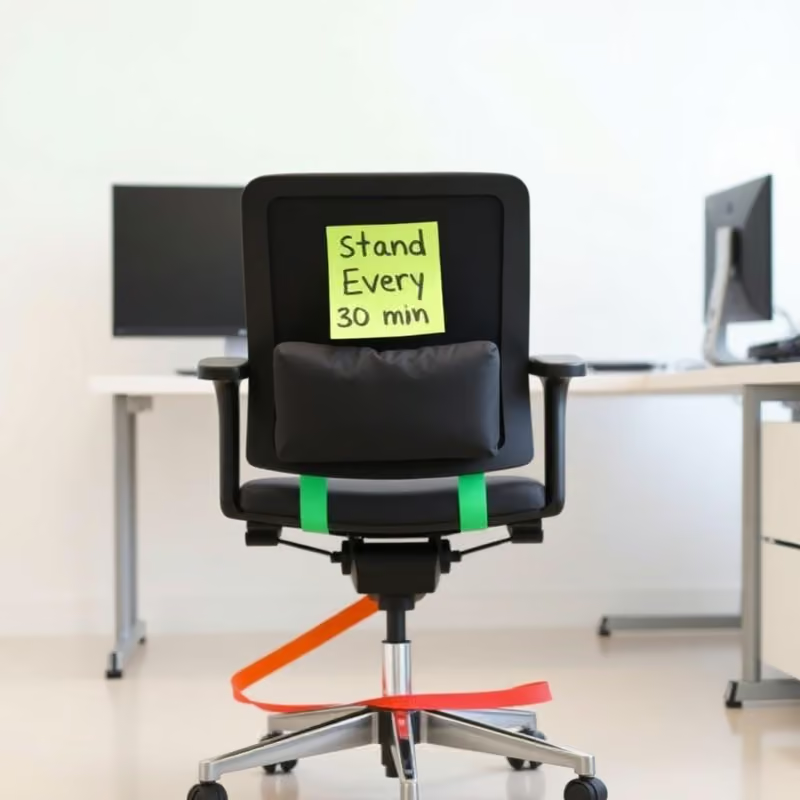
- Micro-Breaks: Every 20-30 minutes, stand up, walk a few steps, and gently stretch.
- Hydration: Keep a water bottle nearby to encourage short walks.
- Phone Calls: Stand up and walk around while on phone calls.
- Standing Desk: If available, alternate between sitting and standing throughout the day.
When to see a clinician
While many postural issues can be managed with exercises and ergonomic adjustments, there are instances when professional medical advice is essential. Consult a clinician if you experience any of the following:
- Severe or persistent pain: If your back, neck, or shoulder pain is intense, unrelenting, or significantly interferes with your daily activities.
- Numbness, tingling, or weakness: Especially if these symptoms radiate into your arms, hands, legs, or feet, as this could indicate nerve compression (e.g., sciatica, cervical radiculopathy).
- Loss of bladder or bowel control: This is a medical emergency and requires immediate attention, as it could signal a severe spinal cord issue.
- Pain following an injury: If your pain started after a fall, accident, or other trauma.
- Unexplained weight loss or fever: If your pain is accompanied by these systemic symptoms.
- Failure of conservative measures: If you have diligently tried ergonomic adjustments and consistent exercises for several weeks without any improvement.
- Progressive worsening of symptoms: If your pain or other symptoms are getting worse over time.
- Suspected specific conditions: If you suspect you have conditions like carpal tunnel syndrome, disc herniation, or scoliosis.
A clinician, such as a general practitioner, physical therapist, chiropractor, or orthopedic specialist, can accurately diagnose the cause of your symptoms, rule out serious conditions, and recommend an appropriate treatment plan.
Treatment and management options
Managing posture-related issues and chronic pain often requires a multi-faceted approach. Beyond the exercises detailed above, several other strategies can contribute to lasting relief and improved spinal health.
- Physical Therapy: A physical therapist can provide a comprehensive assessment of your posture and muscle imbalances. They design personalized exercise programs and educate on proper body mechanics.
- Chiropractic Care: Chiropractors focus on spinal adjustments to restore proper alignment and function.
- Massage Therapy: Regular massage helps release tension, improve circulation, and reduce pain, especially in the neck, shoulders, and back.
- Ergonomic Consultation: A professional assessment of your workstation can identify specific areas for improvement, including recommendations for chairs, monitors, and standing desks.
- Pain Management: For acute pain, a clinician may recommend over-the-counter or prescription medications. Injections may be considered for nerve-related pain.
- Mind-Body Techniques: Practices such as yoga, Pilates, and Tai Chi can significantly improve posture, flexibility, strength, and body awareness, as well as reduce stress.
- Lifestyle Modifications:
- Regular Movement: Incorporate more general physical activity into your daily life.
- Hydration and Nutrition: Staying well-hydrated keeps discs healthy, and a balanced diet supports musculoskeletal health.
- Stress Management: High stress levels can lead to muscle tension.
- Adequate Sleep: Sleeping on a supportive mattress and pillow is crucial for recovery and maintaining good posture.
The most effective treatment plan is often a combination of these strategies, tailored to the individual's needs and guided by healthcare professionals.
Prevention and daily habits
Preventing the negative effects of prolonged sitting and maintaining good posture requires a conscious and consistent effort.
- Set Up an Ergonomic Workspace: This is foundational.
- Chair: Choose a chair that supports your spine's natural curve. Adjust height so feet are flat on the floor and knees are at about a 90-degree angle.
- Monitor: Position your monitor directly in front of you, about an arm's length away. The top of the screen should be at or slightly below eye level.
- Keyboard and Mouse: Keep them close to your body. Elbows should be at a 90-degree angle, wrists straight.
- Lighting: Ensure adequate lighting to prevent eye strain.
- Take Frequent Movement Breaks: The single most important habit.
- "Micro-breaks" (Every 20-30 minutes): Stand up, stretch, or do a few desk exercises for 1-2 minutes.
- "Macro-breaks" (Every hour): Take a 5-10 minute walk or go to a standing desk if available.
- Practice Mindful Posture: Periodically check in with your body. Gently correct your posture, bringing your ears over your shoulders, shoulders over hips, and engaging your core.
- Stay Hydrated: Drinking enough water is vital for spinal disc health.
- Incorporate Regular Exercise: Engage in a well-rounded fitness routine including:
- Strength Training: Focus on core, glutes, and upper back.
- Flexibility/Mobility: Yoga, Pilates, and general stretching.
- Cardiovascular Exercise: Improves overall health.
- Sleeping Posture: Use a supportive mattress and pillow that keeps your spine in neutral alignment.
- Footwear: Choose comfortable, supportive shoes.
- Avoid Slumped Driving Posture: Adjust your car seat to support your lumbar curve.
- Limit Screen Time (Outside Work): Reduce prolonged use of smartphones and tablets to avoid "tech neck."
By consistently integrating these preventive measures and daily habits, office workers can significantly reduce their risk of posture-related issues and improve overall long-term health.
Frequently asked questions
Q1: How often should I do these exercises throughout the workday?
A: Aim to incorporate a few of these exercises every 1-2 hours. Short, frequent breaks are more effective than one long session at the end of the day. Even 1-2 minutes of mindful movement and stretching can make a significant difference. Set reminders on your phone or computer.
Q2: Can good posture really relieve chronic back pain?
A: For many individuals, yes. Correcting postural imbalances can significantly reduce strain on the spine, muscles, and ligaments. By strengthening weakened muscles, stretching tight ones, and aligning the spine properly, pressure on pain-sensitive structures can be alleviated. However, consult with a clinician to rule out other causes of chronic back pain.
Q3: What's the single most important thing I can do for my posture at the office?
A: The most critical action is to break up prolonged sitting with frequent movement. Even with a perfectly ergonomic setup, static postures for extended periods are detrimental. Stand up, stretch, and walk around for 1-2 minutes every 20-30 minutes. This intermittent movement helps to re-engage muscles, improve circulation, and prevent stiffness.
Q4: Are standing desks truly better for posture than sitting desks?
A: Standing desks can be beneficial, but they are not a magic solution. The key is to alternate between sitting and standing throughout the day. Standing for too long can also lead to fatigue. When using a standing desk, ensure your monitor is at the correct height, use an anti-fatigue mat, and still take short movement breaks. The benefit comes from the variety of positions and increased movement.
Q5: I feel self-conscious doing exercises at my desk. Are there discreet options?
A: Absolutely. Many exercises can be done subtly. Chin tucks, glute squeezes, and shoulder blade squeezes are almost imperceptible. You can also stand up for a quick hip flexor stretch, or perform gentle neck rolls and shoulder shrugs. Even getting up for a short walk to the printer or water cooler is a form of discreet movement.
Key takeaways
- Prolonged sitting is a health risk: It leads to muscle imbalances, pain, and can contribute to serious health conditions.
- Posture is dynamic: It’s about maintaining natural spinal curves and balance, not rigid stiffness.
- Muscles are key: Strengthen core, glutes, and upper back; stretch chest and hip flexors.
- Ergonomics matters: Set up your workstation to support neutral spinal alignment.
- Movement is non-negotiable: Take frequent micro-breaks to stand, stretch, and walk.
- Consistency is crucial: Small, regular efforts yield significant long-term benefits.
- Listen to your body: Address pain and discomfort early, and consult a clinician if symptoms are severe or persistent.
Maintaining good posture is not just about aesthetics; it's fundamental to your musculoskeletal health and energy levels. By taking proactive steps and incorporating these simple exercises and ergonomic adjustments, office workers can significantly reduce discomfort and foster a healthier, more productive workday.
Disclaimer: This information is for general knowledge and informational purposes only, and does not constitute medical advice. Always consult with a qualified healthcare professional, such as a doctor, physical therapist, or chiropractor, before starting any new exercise program, particularly if you have any pre-existing health conditions or concerns.
Related reading
Keep exploring this topic with our related, evidence-reviewed guides:
- Desk Health: Preventing Neck, Wrist, and Back Strain While Working — A practical, evidence-informed guide to desk ergonomics — what matters, what works, common mistakes, and when to consult a profess…
- Posture and Long-Term Health: Evidence-Based Guide — Good posture is more than just looking presentable; it's a foundational element of long-term health, impacting everything from mus…
- Hydrotherapy and Wellness: Evidence-Based Guide — Discover the therapeutic benefits of hydrotherapy, using water for pain relief, muscle relaxation, and overall wellness. This arti…
- Chinese Breathing and Posture Habits for Office Workers — A practical, evidence-informed guide to chinese posture habits — what matters, what works, common mistakes, and when to consult a …
- Building an Ergonomic Home Office — Neutral wrist, elbow, and neck angles paired with movement breaks reduce musculoskeletal strain.
- Breathing Exercises for Anxiety — Discover simple yet powerful breathing exercises that can significantly reduce anxiety. Learn how to incorporate these techniques …
Sources
- World Health Organization (WHO)
- National Institutes of Health (NIH)
- Centers for Disease Control and Prevention (CDC)
- American Heart Association (AHA)
- Mayo Clinic
- National Health Service (NHS)
- Cochrane Library
Sources
Evidence & citations
- Every claim in this health & wellness guide is backed by primary data — browse the global health and wellness statistics in our sourced statistics library.
- Writing about this topic? Researchers, journalists and educators can cite our health and wellness articles with ready-made APA, MLA and Chicago references.
My notes on this one
The short version of 7 minutes of reading — what stuck with me while writing “Posture Exercises for Office Workers”, what the sources back up, and what I'd actually do about it.
What I'd take away
01 · Understanding the Impact of Poor Posture
This puts undue stress on the spine, muscles, and ligaments, potentially leading to chronic pain, headaches, fatigue, and affecting breathing and digestion.
02 · Symptoms and warning signs
Neck and Shoulder Pain: Often described as a dull ache, stiffness, or sharp pain, especially at the base of the skull, between the shoulder blades, or across the top of the shoulders.
03 · Simple Exercises for Your Workday
These exercises can be performed discreetly at your desk or during short breaks throughout your workday.
04 · 1. Chin Tucks
How to do it: Sit or stand tall. Gently pull your chin straight back, as if making a double chin, without tilting your head. Hold for 5 seconds. Repeat 10-15 times.
05 · 2. Shoulder Blade Squeezes
Mechanism: Prolonged desk work weakens scapular retractors. This exercise strengthens them, bringing shoulders back and reducing strain.
What the sources I read actually say
Consult a clinician if you experience any of the following: A clinician, such as a general practitioner, physical therapist, chiropractor, or orthopedic specialist…
Mayo Clinic — Patient Care & Health Information
If you only do one thing this week
- Set Up an Ergonomic Workspace — This is foundational.
- "Micro-breaks" (Every 20-30 minutes) — Stand up, stretch, or do a few desk exercises for 1-2 minutes.
- "Macro-breaks" (Every hour) — Take a 5-10 minute walk or go to a standing desk if available.
- Avoid Slumped Driving Posture — Adjust your car seat to support your lumbar curve.
- Limit Screen Time (Outside Work) — Reduce prolonged use of smartphones and tablets to avoid "tech neck."
Pick the one that fits your week. None of this replaces advice from a clinician who can actually examine you.
Questions I kept coming back to
How often should I do these exercises throughout the workday?+
Aim to incorporate a few of these exercises every 1-2 hours. Short, frequent breaks are more effective than one long session at the end of the day. Even 1-2 minutes of mindful movement and stretching can make a significant difference. Set reminders on your phone or computer.
Can good posture really relieve chronic back pain?+
For many individuals, yes. Correcting postural imbalances can significantly reduce strain on the spine, muscles, and ligaments. By strengthening weakened muscles, stretching tight ones, and aligning the spine properly, pressure on pain-sensitive structures can be alleviated. However, consult with a clinician to rule out other causes of chronic back pain.
What's the single most important thing I can do for my posture at the office?+
The most critical action is to break up prolonged sitting with frequent movement. Even with a perfectly ergonomic setup, static postures for extended periods are detrimental. Stand up, stretch, and walk around for 1-2 minutes every 20-30 minutes. This intermittent movement helps to re-engage muscles, improve circulation, and prevent stiffness.
Are standing desks truly better for posture than sitting desks?+
Standing desks can be beneficial, but they are not a magic solution. The key is to alternate between sitting and standing throughout the day. Standing for too long can also lead to fatigue. When using a standing desk, ensure your monitor is at the correct height, use an anti-fatigue mat, and still take short movement breaks. The benefit comes from the variety of positions and increased movement.
I feel self-conscious doing exercises at my desk. Are there discreet options?+
Absolutely. Many exercises can be done subtly. Chin tucks, glute squeezes, and shoulder blade squeezes are almost imperceptible. You can also stand up for a quick hip flexor stretch, or perform gentle neck rolls and shoulder shrugs. Even getting up for a short walk to the printer or water cooler is a form of discreet movement.
Was this article helpful?
Be the first to rate this article.
Written by
FaizRuh
I write Health Hub Pro on my own — no clinical licence, no anonymous review panel. Just the published guidance, read carefully and explained plainly.
More about me →How this page was checked
Every claim above is checked against the sources listed at the bottom of this article — WHO, CDC, NIH, NHS, Cochrane and major clinical guidelines. Drafting is AI-assisted; the editing, fact-checking and final wording are mine. It's information, not medical advice. Spotted an error? Tell me and I'll fix it.
Last checked on