Posture Exercises for Office Workers
Discover simple yet effective posture exercises tailored for office workers to combat the negative effects of prolonged sitting and improve overall well-being. Enhance your spinal health and comfort throughout your workday.
For informational purposes only. This article is educational and is not a substitute for professional medical advice, diagnosis, or treatment. Always consult a qualified healthcare provider about anything affecting your health. Read full disclaimer.
Posture Exercises for Office Workers
For many, the office chair has become a second home. While modern workplaces often prioritize comfort, prolonged sitting has been consistently linked to a myriad of health issues, including back pain, neck stiffness, and poor posture. The human body is designed for movement, and static positions over extended periods can lead to muscle imbalances, weakened core muscles, and reduced flexibility. Fortunately, incorporating simple posture exercises into your daily routine can significantly mitigate these risks, improving your comfort, productivity, and long-term health.
Understanding the Impact of Poor Posture
When we sit for hours, gravity and our habits often conspire against us. Slouching, hunching over a keyboard, or craning our necks to view a monitor can put undue stress on our spine, muscles, and ligaments. This sustained strain can lead to chronic pain, headaches, fatigue, and even affect our breathing and digestion. Over time, these poor postural habits can contribute to conditions like sciatica, disc herniation, and carpal tunnel syndrome. Recognizing the problem is the first step towards a healthier posture.
Key Posture Muscles to Target
Effective posture exercises focus on strengthening and lengthening specific muscle groups. We need to strengthen the muscles that support an upright spine – primarily the core muscles (abdominals and back extensors) and the muscles between the shoulder blades (rhomboids and traps). Equally important is stretching the muscles that tend to get tight from sitting, such as the chest muscles (pectorals) and hip flexors.
Simple Exercises for Your Workday
These exercises can be performed discreetly at your desk or during short breaks throughout your workday. Aim to incorporate a few every hour or two.
1. Chin Tucks
- How to do it: Sit or stand tall with your head level. Gently pull your chin straight back, as if making a double chin, without tilting your head up or down. You should feel a stretch at the base of your skull. Hold for 5 seconds.
- Benefits: Strengthens deep neck flexors and helps realign the head over the shoulders, counteracting 'forward head posture'.
2. Shoulder Blade Squeezes
- How to do it: Sit or stand tall. Gently squeeze your shoulder blades together as if trying to hold a pencil between them. Keep your shoulders down and relaxed, not shrugged up to your ears. Hold for 5-10 seconds.
- Benefits: Strengthens the rhomboids and middle trapezius muscles, which help pull the shoulders back and improve upper back posture.
3. Chest Stretch at a Doorway
- How to do it: Stand in a doorway. Place your forearms on the doorframe, with elbows bent at 90 degrees and slightly above shoulder height. Step one foot forward through the doorway until you feel a gentle stretch across your chest. Hold for 20-30 seconds. Repeat 2-3 times.
- Benefits: Stretches tight pectoral muscles, which often become shortened from prolonged computer use, leading to rounded shoulders.
4. Seated Thoracic Extension
- How to do it: Sit upright and interlace your fingers behind your head. Gently arch your upper back over the back of your chair (if it has a supportive backrest) while looking slightly upwards. Avoid arching your lower back excessively. Hold for 5-10 seconds, then return to neutral. Repeat 5-8 times.
- Benefits: Improves mobility in the upper and middle back (thoracic spine), counteracting the hunched posture.
5. Hip Flexor Stretch (Standing Lunge)
- How to do it: Stand with one foot forward and one foot back, as if in a lunge stance. Keep your back straight, and gently tuck your pelvis under. You should feel a stretch in the front of the hip of your back leg. Hold for 20-30 seconds. Repeat on both sides.
- Benefits: Stretches tight hip flexors, which become shortened from prolonged sitting and can contribute to lower back pain.
Ergonomic Considerations in the Office
Beyond exercises, optimizing your workstation is crucial. Ensure your chair provides good lumbar support, and your feet are flat on the floor or a footrest. Your monitor should be at arm's length, with the top of the screen at or slightly below eye level. Your keyboard and mouse should be positioned so your elbows are at a 90-degree angle and your wrists are straight. Consider a standing desk option to alternate between sitting and standing throughout the day.
Consistency is Key
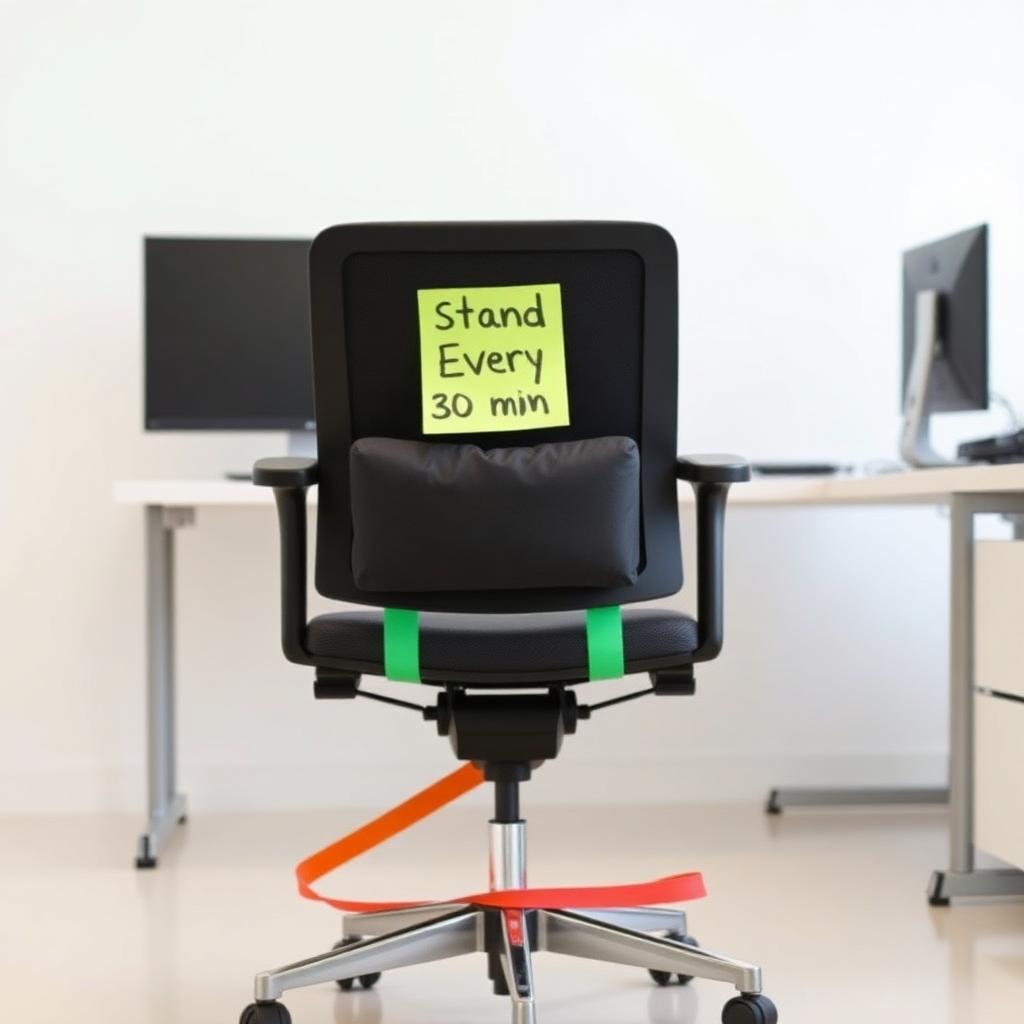
Integrating these exercises into your daily routine is more effective than sporadic attempts. Set reminders on your phone or use small breaks to stand up, stretch, and move. Even 1-2 minutes of mindful movement every hour can make a significant difference. Hydrating regularly and taking short walking breaks also contribute to overall well-being and better posture.
Maintaining good posture is not just about aesthetics; it's fundamental to your musculoskeletal health and energy levels. By taking proactive steps and incorporating these simple exercises and ergonomic adjustments, office workers can significantly reduce discomfort and foster a healthier, more productive workday.
Disclaimer: This information is for general knowledge and informational purposes only, and does not constitute medical advice. Always consult with a qualified healthcare professional, such as a doctor, physical therapist, or chiropractor, before starting any new exercise program, particularly if you have any pre-existing health conditions or concerns.
Related reading
- Breathing Techniques for Wellness — Discover how simple breathing techniques can significantly enhance your well-being, reduce stress, and improve focus. Le…
- Mindfulness for Beginners — Discover how mindfulness can reduce stress, improve focus, and enhance overall well-being. This beginner's guide provide…
- Bodyweight Training at Home — Discover the incredible benefits of bodyweight training, a versatile and effective way to build strength, improve endura…
- Probiotics Foods Guide — Discover how probiotic-rich foods can enhance your gut health and overall well-being. This guide explores the best sourc…
- Breathing Exercises for Anxiety — Discover simple yet powerful breathing exercises that can significantly reduce anxiety. Learn how to incorporate these t…
Written by
Health Hub Pro Editorial
Health writer at Health Hub Pro, focused on evidence-based, Sharia-conscious wellness.
View author profile →