Skin Cancer Prevention Basics
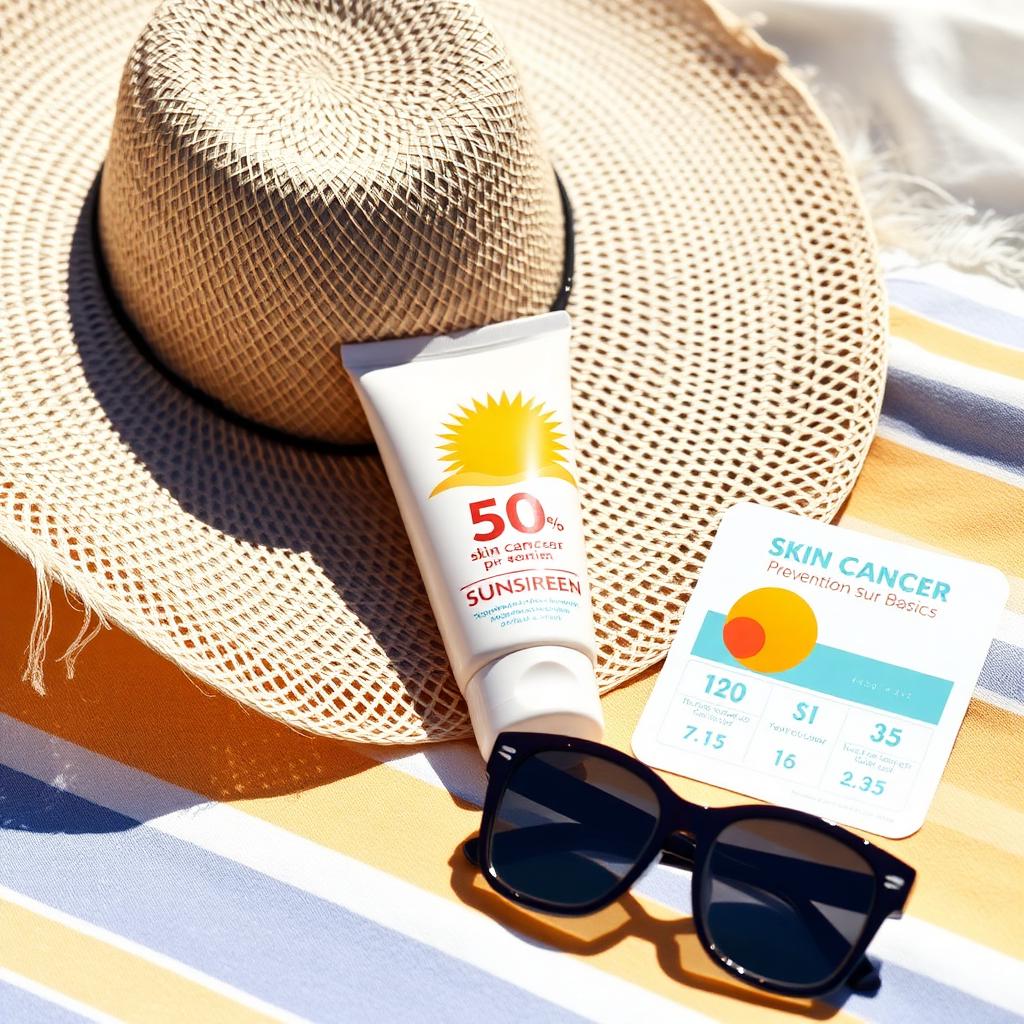
Daily SPF, shade, protective clothing, and annual skin checks reduce risk.
For informational purposes only. This article is educational and is not a substitute for professional medical advice, diagnosis, or treatment. Always consult a qualified healthcare provider about anything affecting your health. Read full disclaimer.
Introduction
Skin cancer is the most common type of cancer, with millions of cases diagnosed globally each year. While often treatable, certain forms, such as melanoma, can be aggressive and life-threatening if not detected and managed early. The good news is that most skin cancers are preventable, primarily by reducing exposure to harmful ultraviolet (UV) radiation from the sun and artificial sources like tanning beds. This comprehensive guide outlines the evidence-based strategies for preventing skin cancer, recognizing its early signs, and understanding available treatment and management options. By adopting consistent protective habits and engaging in regular self-examinations and professional screenings, individuals can significantly lower their risk and contribute to their long-term skin health.
What causes it (evidence-based)
The primary cause of most skin cancers is exposure to ultraviolet (UV) radiation. UV radiation damages the DNA within skin cells, leading to uncontrolled cell growth and the formation of cancerous lesions.
There are three main types of UV radiation:
- UVA rays: These rays penetrate deeply into the skin and contribute to skin aging, wrinkles, and immune suppression. They also play a significant role in increasing the risk of melanoma and other skin cancers.
- UVB rays: These rays primarily affect the outer layer of the skin and are the main cause of sunburns. They are directly linked to DNA damage and are a major contributor to basal cell carcinoma, squamous cell carcinoma, and melanoma.
- UVC rays: Most UVC rays are absorbed by the Earth's ozone layer and do not reach the surface.
Sources of UV radiation include:
- Sunlight: The sun is the most significant natural source of UV radiation. The intensity of UV radiation varies depending on geographical location, time of day, season, and altitude.
- Tanning beds and lamps: These artificial sources emit concentrated UVA and sometimes UVB radiation, significantly increasing the risk of skin cancer, especially among younger users. The World Health Organization (WHO) classifies tanning devices as Group 1 carcinogens, meaning they are definitively cancer-causing.
Other contributing factors to skin cancer risk include:
- Fair skin type: Individuals with lighter skin, red or blonde hair, and blue or green eyes have less melanin, a pigment that helps protect the skin from UV radiation, making them more susceptible to sun damage.
- History of sunburns: Especially blistering sunburns during childhood or adolescence, significantly increases the risk of melanoma later in life.
- Numerous moles or atypical moles: Individuals with many moles (especially more than 50) or dysplastic (atypical) moles have a higher risk of developing melanoma.
- Family history of skin cancer: A genetic predisposition can increase the risk, particularly for melanoma.
- Weakened immune system: Individuals with compromised immune systems due to medical conditions (e.g., HIV/AIDS) or immunosuppressive medications (e.g., after organ transplant) have a higher risk of developing skin cancers.
- Exposure to certain chemicals: Contact with some industrial chemicals, such as arsenic, can increase skin cancer risk.
- Radiation therapy: Previous radiation therapy for other conditions can increase the risk of skin cancer in the treated area.
- Certain genetic syndromes: Rare genetic conditions like xeroderma pigmentosum can significantly increase sensitivity to UV radiation and elevate skin cancer risk.
(Sources: American Academy of Dermatology, National Cancer Institute, World Health Organization)
Symptoms and warning signs
Recognizing the early signs of skin cancer is crucial for timely diagnosis and effective treatment. Skin cancer can manifest in various ways, and it's essential to regularly examine your skin for any new or changing spots, moles, or lesions.
The three main types of skin cancer are basal cell carcinoma, squamous cell carcinoma, and melanoma. Each type can present with distinct characteristics:
1. Basal Cell Carcinoma (BCC): This is the most common type of skin cancer. It typically appears as:
- A pearly or waxy bump.
- A flat, flesh-colored, or brown lesion.
- A sore that heals, then bleeds again.
- Often found on sun-exposed areas like the face, neck, and arms.
2. Squamous Cell Carcinoma (SCC): This is the second most common type and often appears on sun-exposed skin. It may look like:
- A firm, red nodule.
- A flat lesion with a scaly, crusted surface.
- Can develop from actinic keratosis (pre-cancerous rough patches).
3. Melanoma: This is the most serious type of skin cancer due to its potential to spread (metastasize) to other parts of the body. It often develops from an existing mole or appears as a new dark spot on the skin. The "ABCDE" rule is a widely recognized mnemonic for identifying suspicious moles:
- A - Asymmetry: One half of the mole does not match the other half.
- B - Border irregularity: The edges of the mole are ragged, notched, or blurred.
- C - Color variation: The mole has uneven color, with shades of brown, black, tan, or even red, white, or blue.
- D - Diameter: The mole is larger than 6 millimeters (about the size of a pencil eraser). Any mole growing in size, regardless of its initial diameter, should be checked.
- E - Evolving: The mole is changing in size, shape, color, elevation, or any new symptoms like bleeding, itching, or crusting.
Other general warning signs to watch for include:
- Any new growth, sore, or spot that doesn't heal within a few weeks.
- A spot that bleeds, oozes, or becomes scaly or crusted.
- A change in sensation, such as itching, tenderness, or pain in a mole or skin lesion.
It is crucial to remember that not all suspicious-looking moles are cancerous, and not all skin cancers follow these typical appearances. If you notice any of these signs, or any other persistent or changing features on your skin, consult a healthcare professional for evaluation. Regular self-skin exams, ideally once a month, can help you become familiar with your skin and identify any new or changing lesions.
(Sources: American Academy of Dermatology, Mayo Clinic)
When to see a clinician
It is important to understand when to seek professional medical advice regarding your skin health. While regular self-skin exams are vital, certain observations warrant prompt consultation with a clinician.
You should make an appointment with a dermatologist or another qualified healthcare provider if you notice any of the following:
- Any new skin growth, mole, or lesion that appears spontaneously.
- Any existing mole or freckle that changes in size, shape, color, or elevation beyond normal variations. Pay particular attention to the "ABCDE" warning signs for melanoma.
- A sore or lesion that does not heal within a few weeks, especially if it bleeds, oozes, or crusts repeatedly.
- Any spot on your skin that feels unusual, such as persistent itching, tenderness, pain, or appears scaly.
- If you have a strong family history of melanoma or other skin cancers, regular professional skin checks may be recommended even without specific concerns.
- If you have a large number of moles (e.g., more than 50) or many atypical (dysplastic) moles.
- If you have a history of blistering sunburns, especially during childhood or adolescence, as this significantly increases your lifetime risk.
- If you have a weakened immune system, as this increases your susceptibility to skin cancers.
Do not delay seeking professional advice for any concerning skin changes. Early detection of skin cancer, particularly melanoma, significantly improves prognosis and treatment outcomes. A clinician can perform a thorough examination, including dermoscopy, and recommend further steps such as a biopsy if necessary, to accurately diagnose any suspicious lesions.
(Sources: American Academy of Dermatology, National Cancer Institute)
Treatment and management options
The treatment and management of skin cancer depend on several factors, including the type of skin cancer, its size, location, stage, and the patient's overall health. Early detection generally leads to less invasive treatment options and better outcomes.
1. Basal Cell Carcinoma (BCC) and Squamous Cell Carcinoma (SCC):
These types of skin cancer are typically localized and less likely to spread if detected early. Common treatment options include:
- Surgical Excision: The tumor and a margin of healthy tissue are surgically removed. This is a common and highly effective treatment.
- Mohs Surgery: A specialized surgical technique, particularly useful for cancers on the face, hands, or feet, or recurrent cancers. The surgeon removes thin layers of skin one at a time and examines each layer under a microscope until no cancer cells remain. This method minimizes the removal of healthy tissue.
- Curettage and Electrodesiccation: The cancerous tissue is scraped away (curettage) and then the remaining cancer cells are destroyed with an electric needle (desiccation). Often used for smaller, superficial BCCs and SCCs.
- Cryosurgery: Liquid nitrogen is used to freeze and destroy superficial skin cancer cells.
- Radiation Therapy: High-energy rays are used to destroy cancer cells. This may be an option for cancers that are difficult to treat surgically, or for patients who are not candidates for surgery.
- Topical Medications: Creams containing imiquimod or 5-fluorouracil can be used for very superficial skin cancers, particularly in patients who cannot undergo surgery.
- Photodynamic Therapy (PDT): A Photosensitizing agent is applied to the skin, making cancer cells sensitive to light. The area is then exposed to a special light source, destroying the cancer cells.
2. Melanoma:
Melanoma treatment depends heavily on the stage of the cancer. Early-stage melanoma is primarily treated with surgery, while advanced melanoma may require more systemic approaches.
- Surgical Excision: For early-stage melanoma, the tumor and a wider margin of surrounding healthy tissue are surgically removed.
- Lymph Node Biopsy: If the melanoma has a certain thickness, a sentinel lymph node biopsy may be performed to check if cancer cells have spread to nearby lymph nodes. If positive, further lymph node dissection may be recommended.
- Immunotherapy: These drugs stimulate the body's immune system to recognize and destroy cancer cells. They are often used for advanced melanoma.
- Targeted Therapy: These medications target specific genes or proteins involved in cancer growth. They are used for melanomas with certain genetic mutations (e.g., BRAF mutation).
- Chemotherapy: Traditional chemotherapy drugs kill rapidly dividing cells, including cancer cells. It is less commonly used for melanoma than immunotherapy or targeted therapy but may be an option in certain cases.
- Radiation Therapy: Can be used to treat melanoma that has spread to other areas (e.g., brain) or to help prevent recurrence after surgery in high-risk areas.
Follow-up Care: After treatment, regular follow-up appointments with a dermatologist are crucial to monitor for recurrence and check for new skin cancers. The frequency of these check-ups will depend on the type of skin cancer, its stage, and individual risk factors. Patients are also encouraged to continue self-skin exams and sun protection practices.
(Sources: American Academy of Dermatology, National Cancer Institute, Mayo Clinic)
Prevention and daily habits
Preventing skin cancer primarily revolves around reducing exposure to harmful ultraviolet (UV) radiation. Consistent adoption of sun-safe practices into daily habits can significantly lower the risk of developing skin cancers, including melanoma.
Key prevention strategies and daily habits include:
-
Seek Shade:
- Limit direct sun exposure, especially during peak UV hours, typically between 10 a.m. and 4 p.m., when the sun's rays are strongest.
- Even on cloudy days, UV rays can penetrate clouds, so shade is still beneficial.
-
Wear Sun-Protective Clothing:
- Cover up with long-sleeved shirts, long pants, and skirts made of tightly woven fabrics.
- Some clothing is specifically designed with a UPF (Ultraviolet Protection Factor) rating, indicating its effectiveness in blocking UV radiation. Look for UPF 30 or higher.
- Wear a wide-brimmed hat that shades your face, neck, and ears.
-
Use Broad-Spectrum Sunscreen Regularly:
- Apply a broad-spectrum sunscreen with an SPF (Sun Protection Factor) of 30 or higher. Broad-spectrum means it protects against both UVA and UVB rays.
- Apply generously to all exposed skin at least 15-30 minutes before going outdoors. Guesstimate roughly one ounce (a shot glass full) for the entire body.
- Reapply every two hours, or more frequently if swimming, sweating, or towel drying.
- Do not rely solely on sunscreen; it should be used in conjunction with other sun protection measures.
-
Wear UV-Blocking Sunglasses:
- Choose sunglasses that block 99% or 100% of both UVA and UVB rays to protect your eyes and the delicate skin around them from UV damage. Look for labels like "UV400" or "100% UV protection."
-
Avoid Tanning Beds and Lamps:
- Artificial tanning devices emit concentrated UV radiation and significantly increase the risk of skin cancer. There is no such thing as a "safe" tan from these devices.
-
Perform Regular Self-Skin Exams:
- Examine your skin from head to toe once a month. Become familiar with your moles, freckles, and other skin markings to detect any new or changing lesions.
- Use a full-length mirror and a hand-held mirror to check hard-to-see areas like your back, scalp, and buttocks. Look for the "ABCDE" warning signs.
-
Schedule Professional Skin Exams:
- Regular check-ups with a dermatologist or another qualified healthcare provider are recommended, especially for individuals with increased risk factors (e.g., family history of skin cancer, numerous moles, fair skin). The frequency will depend on your individual risk profile.
-
Educate Children and Be a Role Model:
- Instill sun-protective habits from a young age. Children are particularly vulnerable to sun damage, and blistering sunburns in childhood significantly raise the risk of melanoma later in life.
By consistently integrating these prevention strategies into daily life, individuals can substantially reduce their lifetime risk of developing skin cancer.
(Sources: American Academy of Dermatology, Centers for Disease Control and Prevention, National Institutes of Health)
Frequently asked questions
Q: Does daily sunscreen use prevent all skin cancer?
A: While daily use of broad-spectrum sunscreen with an SPF of 30 or higher significantly reduces the risk of skin cancer by blocking harmful UV rays, it does not offer 100% protection. Sunscreen should be part of a comprehensive sun protection strategy that also includes seeking shade, wearing protective clothing, and avoiding peak sun hours. No single method provides complete immunity.
Q: Can skin cancer develop in areas not exposed to the sun?
A: Yes, while sun exposure is the primary cause, skin cancer can develop in areas not typically exposed to the sun. Melanoma, for example, can occur on the soles of the feet, palms of the hands, under fingernails or toenails, and even in mucous membranes. While less common, basal cell and squamous cell carcinomas can also occur in less sun-exposed areas. This underscores the importance of full-body skin self-exams.
Q: Are tanning beds safer than sun tanning?
A: No, tanning beds are not safer than sun tanning; in fact, they can be more dangerous due to emitting concentrated UV radiation. The World Health Organization classifies UV-emitting tanning devices as Group 1 carcinogens, the highest risk category. Using tanning beds, particularly before the age of 35, significantly increases the risk of developing melanoma, as well as basal cell and squamous cell carcinomas.
Q: How often should I get a professional skin check?
A: The frequency of professional skin checks depends on your individual risk factors. If you have a low risk (no personal or family history of skin cancer, few moles), an annual check-up might be sufficient, or less frequent if advised by your clinician. However, if you have a personal or family history of skin cancer, numerous or atypical moles, fair skin, or a history of severe sunburns, your clinician may recommend more frequent examinations, potentially every 3-6 months. Always follow your clinician's personalized advice.
Q: What is SPF, and what SPF level do I need?
A: SPF stands for Sun Protection Factor, and it indicates how well a sunscreen protects against UVB rays. An SPF of 30 means that, when applied correctly, it would take 30 times longer for your skin to burn than if you weren't wearing any sunscreen. Clinicians generally recommend using a broad-spectrum sunscreen (protects against both UVA and UVB) with an SPF of 30 or higher for daily use. For prolonged outdoor activity, an SPF of 50 or higher might be advised. Remember that higher SPF numbers do not offer proportionally higher protection (e.g., SPF 100 is not twice as protective as SPF 50).
Key takeaways
- UV Radiation is the Primary Cause: Most skin cancers are caused by exposure to harmful ultraviolet (UV) radiation from sunlight and artificial sources like tanning beds.
- Sun Protection is Key: Implement daily habits to reduce UV exposure, including seeking shade, wearing protective clothing, using broad-spectrum SPF 30+ sunscreen, and wearing UV-blocking sunglasses.
- Avoid Tanning Beds: These devices significantly increase skin cancer risk and are not a safe alternative to natural sun exposure.
- Early Detection is Crucial: Regularly perform self-skin exams using the "ABCDE" rule to identify new or changing moles or lesions.
- Seek Professional Guidance: Consult a clinician promptly for any suspicious skin changes, or for routine professional skin checks, especially if you have risk factors.
- Prevention Works: Consistent adherence to sun-protective measures and vigilance in monitoring skin changes are the most effective strategies to prevent skin cancer and ensure early diagnosis.
Sources
- American Academy of Dermatology (AAD): www.aad.org
- Centers for Disease Control and Prevention (CDC): www.cdc.gov
- Mayo Clinic: www.mayoclinic.org
- National Cancer Institute (NCI): www.cancer.gov
- National Institutes of Health (NIH): www.nih.gov
- World Health Organization (WHO): www.who.int
Disclaimer: This article provides general information and is not a substitute for professional medical advice, diagnosis, or treatment. Always seek the advice of your physician or other qualified health provider with any questions you may have regarding a medical condition.
Related reading
- Kidney Health Basics — Learn the fundamentals of kidney health, including their vital functions, common risk factors for kidney disease, and ac…
- Preventing Type 2 Diabetes: Practical Steps — Weight management, activity, sleep, and diet quality strongly reduce type 2 diabetes risk.
- Connecting With Community — Discover how fostering strong community connections can significantly enhance mental well-being, reduce feelings of isol…
- Breathing Exercises for Anxiety — Discover simple yet powerful breathing exercises that can significantly reduce anxiety. Learn how to incorporate these t…
- Running Form Fundamentals — Mastering proper running form can significantly reduce injury risk and improve performance. This article delves into key…
Written by
Health Hub Pro Editorial
Health writer at Health Hub Pro, focused on evidence-based, Sharia-conscious wellness.
View author profile →Medically reviewed by
Dr. A. Rahman, MD
Board-certified in Internal Medicine
Last reviewed on